Dr. Savita Borle
Lecturer, Department of Dental Surgery Tenure 1980–2015 Lifespan 21 November 1960, Daryapur — 30 October 2015, Sevagram Education BDS, Government Dental College Nagpur (1982)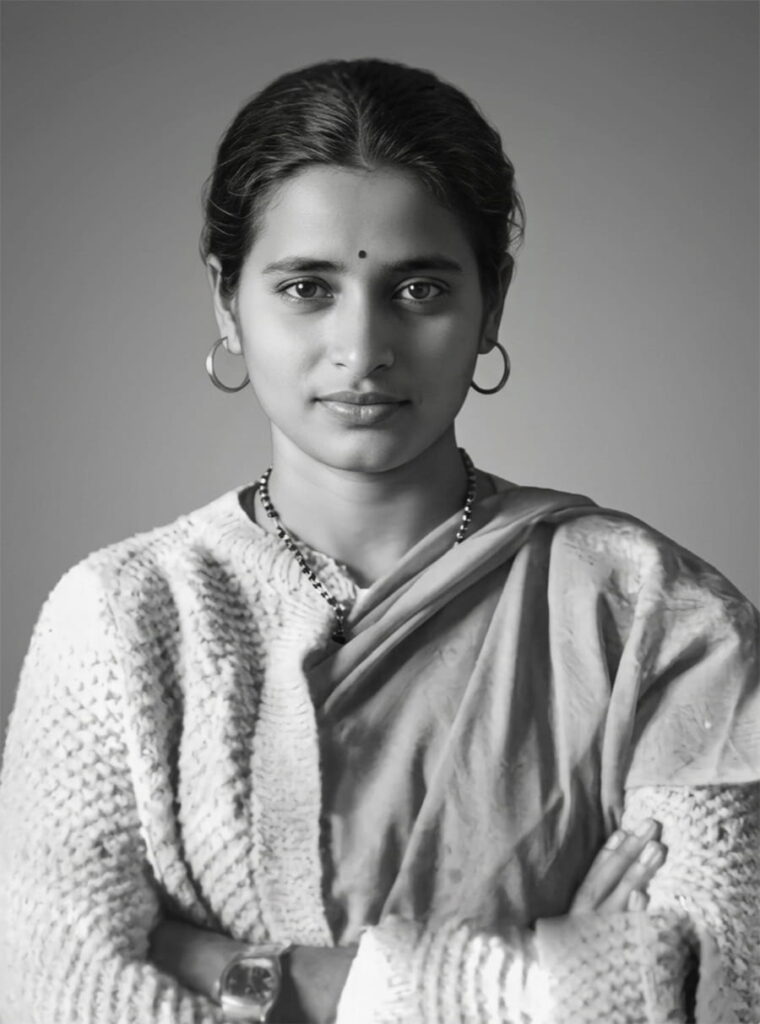
The Ultimate Measure of Character
In the fiercely hierarchical world of academic medicine, titles are the absolute currency of success. To watch the people you trained rise past you, claim those titles, and eventually become your superiors is a bitter pill that very few doctors can swallow.
Dr. Savita Borle swallowed it without a single grimace.
Her juniors—doctors she had personally taught how to run a busy OPD with patience and precision—went on to become Heads of Departments. In a space where egos constantly clashed, she moved effortlessly, simply because she refused to feed one of her own. She bore absolutely no resentment when working under the very people she had mentored. She simply did what she had always done: she showed up, she treated everyone as an equal, and she did the work beautifully.
She left behind no grand academic pronouncements and no frantic pursuit of accolades. Instead, she left something far more enduring: a thirty-five-year lesson to the entire institution on how to live with absolute, unshakeable grace.
The Medical Bloodline
Savita Dawande was born on November 21, 1960, in Daryapur. Medicine ran thick in her blood. Her grandfather, Dr. Purushottam Laxman Gawande, had been a doctor. Her father, Dr. Markand Dawande, was a physician of the old school—a man with steady hands, a sharp mind, and an unwavering sense of duty who belonged to the very first batch of GMC Nagpur.
Her childhood moved to the unpredictable rhythm of her father’s government postings. She attended Jubilee High School in Chandrapur before shifting to New English High School in Wardha, where her father took charge as the Resident Medical Officer (RMO) of the district hospital in 1971. The frequent transfers and hostel living disrupted her studies, but they also forged her resilience.
After completing her 11th grade at Jankidevi Bajaj Science College and her B.Sc. at Vidarbha Maha Vidyalaya, she initially secured admission in physiotherapy. She spent a month there and began to like the subject. But fate, and the rigid medical admission system, nudged her elsewhere. Her admission was upgraded, and at her father’s behest, she joined Government Dental College, Nagpur, in 1977.
Vasant Panchami and the Quiet Vows
It was at Dental College that Savita met Rajiv Borle. What began as a natural, easy friendship soon grew into something much deeper. Their bond was unshakeable, but their traditional families were entirely unready to accept the union.
Undeterred, they chose love over convention. Instead of a grand, crowded Indian wedding, they exchanged vows in a strikingly simple registered ceremony on Vasant Panchami in February 1984. Neither Savita’s nor Rajiv’s parents were present. Only a handful of friends attended, including Sitaram, the beloved MGIMS artist, who stood as a quiet, steadfast witness to their commitment.
Acceptance came slowly, but when it finally arrived, it was complete. Over time, their families fully embraced the marriage, showering the couple with a love that eventually bound them all together. For seven years, Savita continued to use her maiden name, Dawande. It wasn’t until August 1991 that she formally changed it to Borle—marking not just a legal transition, but a quiet, loving affirmation of the life she had successfully built with Rajiv.
The Casual Command
Savita’s introduction to Sevagram happened years before she ever held a dental drill. When her father served as the RMO at the Wardha District Hospital, Sevagram’s senior doctors—titans like Dr. O.P. Gupta and Dr. Ravindra Narang—frequently visited. She watched them work, listened to their intense clinical conversations, and quietly absorbed the atmosphere of medicine.
After earning her BDS, she returned to Wardha and accompanied her father on a visit to Dr. Gupta. Over a simple cup of tea, the formidable physician casually inquired about her career plans. She admitted she had none set in stone. Without a moment of hesitation, Dr. Gupta made the choice for her. “Join as a house officer in dental surgery at MGIMS,” he instructed.
With that simple suggestion, Savita stepped into Sevagram’s medical world. It was a bond that would endure for thirty-five years.
The Anchor of the Dental OPD
She served as a House Officer from November 1982 to April 1984, then as a Registrar until 1986. She slowly climbed the modest rungs available to her, becoming an Assistant Lecturer a decade later, and finally a Lecturer in August 2004. Unlike most dentists who came to Sevagram, stayed briefly to gain experience, and quickly left for lucrative city practices, Savita remained. She became the quiet anchor witnessing the entire evolution of the dental department firsthand.
The early years were grueling. She lived in the modest, no-frills Dharmananda Nursing Hostel, where duty strictly took precedence over comfort. Working under Dr. K.K. Hariharan, Dr. Shyam Singh, and Dr. Ashok Pakhan, the days were punishingly long, the patients were endless, and the resources were painfully scarce. Savita worked quietly and efficiently. No complaints. No demands.
At one critical juncture, she had an opportunity to pursue postgraduate studies in oral pathology at Nagpur. But by then, Rajiv’s practice had taken deep root, and their young son, Firoze, was still in school. She chose to stay. It was a silent decision, made entirely out of love, and carried without a single ounce of regret.
She was always draped in a sari. Slightly short, moving with an unhurried grace, she never actively sought attention yet was completely impossible to overlook. Her large, expressive eyes carried both warmth and wit. She spoke flawless Marathi to absolutely everyone—the patients in pain, the senior professors, the technicians, and the security guards at the gate. Hierarchy held zero weight with her.
Books, Spices, and Great Danes
Beyond the sterile walls of the dental clinic, her life was a vibrant, sensory masterpiece.
A voracious reader, she had an uncanny ability to find books wherever she went, raiding the libraries of Sevagram, Sawangi, and Wardha. Marathi literature was her sanctuary. But she didn’t just read; she actively shared. Books flowed constantly from her hands to her friends and children, each gift carefully chosen as a quiet invitation into the stories she cherished.
Her kitchen was a place of equal magic. The sizzle of spices, the rhythmic chopping, the warm aromas curling through the air—she moved through her kitchen with the grace of a conductor leading a silent symphony. Guests never left her home hungry. For Dr. Borle, cooking wasn’t just about food; it was her primary love language, spoken fluently in every carefully prepared dish.
Perhaps the most beautiful irony of her life was her relationship with animals. As a child, she would freeze in pure terror at the sight of a stray dog, instinctively clutching someone’s arm for safety. Yet, years later, those exact same hands gently scratched behind floppy ears and stroked wagging tails. Her Sevagram home eventually filled with half a dozen massive dogs—a Labrador, a Golden Retriever, a German Shepherd, a Doberman, a Great Dane. Mornings began with eager paws tapping at her doorstep; evenings closed with a chorus of joyful barks. She welcomed them all, whispering their names like a mother calling her children home.
The Final Grace
Illness came quietly, and entirely without warning: metastatic thyroid carcinoma.
The brutal disease took a heavy physical toll, but it never once touched her spirit. She endured the grueling treatments with staggering grace. Her trademark smile remained completely unchanged; her deep kindness was totally undiminished.
On October 30, 2015, at the age of fifty-four, she passed away.
Her son, Firoze, carries her deep medical legacy forward as a plastic surgeon at Jawaharlal Nehru Medical College in Sawangi. But Savita was never just a dentist, just a mother, or just a spouse. She was the steady ground beneath the feet of everyone who knew her. In the bustling corridors of the hospital, in the hushed, affectionate exchanges between her colleagues, and in the gentle confidence of the rural patients who once sat in her creaky dental chair, her spirit lingers.
She never asked for more than she was given. She never wished for what she did not have. She simply lived fully, loved deeply, and showed an entire campus the quiet, staggering power of an ego that never was
Key Milestones
| 1960 | Born, 21 November, Daryapur — father Dr. Markand Dawande, GMC Nagpur first batch; grandfather also a doctor |
| 1971 | Family moved to Wardha — father RMO, Wardha District Hospital; first encounters with MGIMS doctors |
| 1977 | Joined Government Dental College, Nagpur — at father’s behest after admission upgraded from physiotherapy |
| 1982 | Joined MGIMS, 1 November — House Officer in Dental Surgery; Dr. O.P. Gupta’s casual suggestion over tea |
| 1984 | Married Rajiv Borle, Vasant Panchami — registered ceremony; only a handful of friends present including artist Sitaram |
| 1986 | Completed Registrar tenure — continued as Assistant Lecturer |
| 1991 | Formally changed name from Dawande to Borle, August |
| 2004 | Promoted Lecturer in Dental Surgery, August |
| 2015 | Died, 30 October — metastatic thyroid carcinoma; aged fifty-four; thirty-three years at MGIMS |