The Man Who Changed the Trajectory
I first noticed Madhukar Pai at an annual meeting of the Medico Friend Circle — one of those gatherings where idealism and exhaustion arrive in equal measure, and where the conversations that matter happen not in the sessions but over tea.
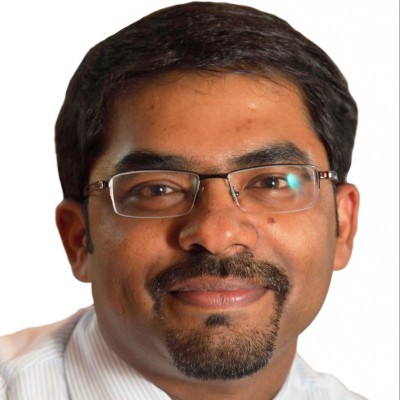
He was younger than me by thirteen years, but he carried himself with the quiet certainty of someone who had already decided what kind of doctor he wanted to be. A Madras Medical College graduate from the 1987 batch, he had chosen Community Medicine at CMC Vellore over the safer, shinier clinical specialties — a choice that, in Indian medicine, requires either courage or indifference to peer opinion. Madhu had both.
He spoke about public health, epidemiology, and biostatistics with the ease of a man discussing the weather. Most clinicians treat these subjects the way they treat difficult relatives: greeted politely at family functions and avoided thereafter. Madhu treated them as the most interesting problems in medicine. Slowly, over several such meetings, his enthusiasm began to do what enthusiasm sometimes does — it became contagious.
The Workshop That Started Everything
Around 2000, between sessions at one of those MFC meetings, Madhu turned to me and said: “Why don’t we do a workshop on epidemiology at MGIMS?”
I said yes before he could change his mind.
What followed became a small legend in Sevagram. For three days, thirty residents from Medicine, Paediatrics, and OBGYN sat through eight-hour sessions and — remarkably — did not attempt to escape. Madhu had a gift I have rarely seen in academic medicine: he could make a P-value feel like a story. He explained how bias enters a study the way a draught enters a room — quietly, through gaps you did not know existed. He turned confidence intervals from a source of examination anxiety into something you could actually use at a bedside.
For residents drowning in their MD theses, he was not simply a visiting faculty member from Canada. He was a lifeline.
I watched him work. I watched how he held a room — not through authority, but through clarity. I noticed how he nudged my younger colleagues, Rajnish Joshi, Kaustubh Gokhale, and Anurag Bhargava, not with instructions but with questions. Have you thought about this? Have you read that? Have you considered why the study was designed this way? He was building researchers the way a good gardener builds a garden — by improving the soil, not by pulling at the plants.
Somewhere between the tea breaks and the chalkboard scribbles, a friendship formed. I did not fully understand, at the time, where it would lead.
The Email That Crossed the Digital Divide
The internet arrived at Sevagram around 2003 — late, unreliable, and rationed like electricity during the monsoon.
I remember the day I opened a Rediffmail account for the first time. I typed the address into the browser with the concentration of a man attempting a procedure he had never tried before. Then I wrote to Madhu in Canada and pressed send. The screen flickered. Somewhere across the world, a server received what I had written. I sat back and waited, not entirely sure I believed it had worked.
I had held a USA.net account before that, but rarely used it, and whatever was exchanged there is lost now — Rediffmail offers to retrieve old messages for a fee, but two decades have defeated even that. What I do have is the memory of what came back.
Madhu’s reply arrived like a small celebration.
He wrote,“When I received your email, I almost fell off my chair! I know downloading a 10 MB PDF takes ages at your end, but it is worth the wait. I am so happy MGIMS has joined the World Wide Web.”
It was through this thin, fragile thread — dial-up connection, flickering screen, the occasional power cut mid-sentence — that he planted the idea that would alter the course of my professional life.
It did not arrive as a grand proposal. It came as a single line, almost casual, tucked at the end of a message:
Apply for an MPH at Berkeley.
Six words. I read them twice, then a third time. I was not sure if he was serious
The Hesitation
I sat with that suggestion for longer than I should have.
I was a full professor with a ward full of patients, a department that depended on its routines, and a family in Sevagram. My daughter was young. Bhavana was managing a career and a household simultaneously, as she always had. Leaving for a year felt selfish in the specific way that only physicians understand — the guilt of abandoning the people who need you, compounded by the knowledge that someone else will manage, and the uncomfortable suspicion that they might manage perfectly well.
But something had begun to shift in me. I had spent two decades practising medicine with skill and sincerity, but I had not always known why some things worked and others did not. I wanted to understand research from the inside — not just read papers but know how to interrogate them. I wanted to ask better questions. I wanted to know how to answer them honestly, with the right tools, in the right sequence.
Madhu understood this before I had fully articulated it to myself. He did not lecture me or send a prospectus. He simply kept the door open — a question here, a paper there, a gentle nudge at the right moment. He had received support from the Fogarty AIDS International Training Program, which had taken him first to UC Berkeley for an MPH and later a PhD. He knew what the year could give a person. He wanted me to find out for myself.
In the winter of 2003, I finally wrote back.
“I’m ready.”
The Paper Chase
The application process was not romantic. It was paperwork, queues, and the small humiliations that Indian bureaucracy reserves for its most motivated citizens.
First came IELTS. I scored 8 out of 9 and felt absurdly pleased — the particular satisfaction of a man in his late forties who has just proved something to no one in particular.
Then came the real test: transcripts.
I needed validated mark sheets from Nagpur University and Government Medical College, Nagpur. The records were a tangle. At one counter, a clerk informed me with complete administrative serenity that I had not completed a mandatory rural posting and owed a fine of several lakhs. I stood there for a moment, genuinely trying to remember a rural posting I had apparently skipped without noticing, in the middle of a career spent almost entirely in rural Maharashtra.
It was a clerical error. The rule did not apply to my batch.
My classmate Dr. Abhimanyu Niswade, then Professor of Paediatrics at GMC Nagpur, stepped in and quietly untangled the knots. Without him, my Berkeley dream might have ended its life in a dusty government file, stamped and shelved and forgotten.
While I chased signatures in Nagpur, Madhu was doing his own quiet work in California. He spoke to Dr. Art Reingold, Dr. Warren Lee, and Dr. Jack Colford Jr. about me — mentioning my name in rooms I would never enter, building a small argument on my behalf with people whose opinion mattered. I did not know this at the time. I learnt it later, gradually, the way you learn most of the important things people have done for you.
The Manifesto
On 5 November 2003, I sat down to write my Statement of Purpose.
It was not simply an application form. It was, as these things sometimes become when you take them seriously, an argument with myself — written neatly, in the hope that someone in California would find it convincing.
I wrote that MGIMS had a tradition of service but that clinical research remained thin because we lacked trained mentors. That in India, for too many doctors, the MD thesis was the first paper and the last. That I wanted to return from Berkeley with the tools of evidence-based medicine and build, in Sevagram, a culture of inquiry — the habit of asking not just what but why, and then finding a rigorous way to answer.
It sounded ambitious on paper. But it was honest. And honesty, as I have learnt, is the one quality that a good Statement of Purpose cannot disguise.
The Golden Ticket
On 12 February 2004, the letter arrived.
I had been accepted.
The School of Public Health at UC Berkeley had opened its doors. The Fogarty programme offered a stipend of $2,519 per month for living expenses and $200 per semester for books. I read those numbers again and again, half expecting them to rearrange themselves into something more modest.
The final hurdle was the US Consulate in Mumbai. I had heard enough horror stories about visa interviews to lose sleep over them. On 2 July 2004, I walked into the embassy with my heart doing something that felt less like beating and more like insisting.
The officer looked at my papers. He looked at me.
“Where are you going?”
“UC Berkeley,” I said.
He smiled — the particular smile of a man who likes the answer he has just heard — and handed everything back.
“Good luck. You are going to a great university.”
That was it. No drama. No interrogation. A simple sentence that unlocked a door.
Roots and Wings
News travels fast in Wardha. Pride travels faster.
The Maheshwari Mandal insisted on a felicitation. I tried to protest — I had achieved nothing yet, I told them; I had only secured admission — but they were not interested in my logic. A function was arranged. Dr. Ved Prakash Mishra was the Chief Guest, and Shri Narayandasji Jajoo presided. Dr. Mishra spoke for forty-five minutes in his grand, rolling Urdu-Hindi, turning my scholarship into a victory for the entire city. I sat in my chair, shrinking by degrees, embarrassed by the praise yet genuinely warmed by the affection behind it.
When my turn came, I spoke for three minutes. I thanked them. I promised to do my best. And I understood something clearly that evening, in the way you sometimes understand things not when you think about them but when you are forced to speak about them in public: Berkeley might give me wings, but Sevagram would always be my roots.
In the first week of August 2004, I boarded a British Airways flight from Mumbai to San Francisco. I left behind my hospital, my ward rounds, my routines, and my family. I flew, at forty-seven, towards a new identity.
Somewhere in the USA, I imagine, Madhukar Pai already knew I would be fine
***