Pargaon
In 2013, our daughter Amrita moved through her MBBS with the focus of someone on a private mission. While others studied in bursts before exams, she kept a steady routine, rising early, reading late, and treating each posting as if it already mattered. She finished first in her first year, then again in her second, and once more in her final year, collecting gold medals so regularly that relatives stopped sounding surprised and simply nodded, as though this was expected.
At MGIMS, achievement came with an obligation. Before postgraduate training, every graduate had to serve two years at a rural health centre. Postings were allotted strictly by merit, and ranked second in her class, Amrita could have chosen something comfortable and close to home. Instead, she chose Pargaon near Kolhapur.
Pargaon was little more than a health centre, a few houses, and long stretches of road that dissolved into fields. Evenings fell early, buses were uncertain, and silence lingered. She cooked for herself, washed her own clothes, and often ate alone with a book propped against a tumbler. What sustained her was friendship. Every Friday, Girish Mote rode twenty-five kilometres to drop her at the highway so she could catch the bus to Pune for coaching classes, while Apurva Kulkarni, Anuj Birbal, and Prerna, Anuj’s fiancée cared for her in Pune with food, gossip, or simply company. Her eventual DNB in Radiology belonged as much to that small circle as to her own effort.
The proposal
The proposal that would take her from Pargaon to Delhi began one evening at our dining table. We had finished dinner and were lingering over ice cream when Shaily, my daughter-in-law, mentioned an old classmate from Raigarh. She said his name casually, almost as an afterthought: Sahaj Rathi. The conversation moved on, but the name stayed.
Sahaj had trained at the Armed Forces Medical College and later completed his MD at University College of Medical Sciences. His father was a cardiologist at Max Super Speciality Hospital Saket and his mother ran ultrasound clinics in Patparganj. Vidushi, his sister, was doing Medicine at Lady Hardinge. They belonged to the polished world of Delhi medicine. We were Sevagram people, shaped by a village campus where excitement meant a good seminar or a generous monsoon, and we worried that our simplicity might appear provincial.
When we visited them in Delhi that December, we carried that nervousness with us. Dr Rajiv opened the door himself and ushered us in, and within minutes we were seated around the table with tea and snacks, talking over one another like relatives. Later, at the Hilton Garden Inn Mayur Vihar, they casually suggested hosting the wedding there. We thanked them and asked for Nagpur instead. They agreed at once, and the ease of that conversation told us everything we needed to know.
Finding a hall
We fixed the date for June 20, 2014. Rani Kothi, our first venue on Wardha Road turned out to be an unfinished construction site, and two months before the wedding we began again. One evening we drove to Nagpur and walked into the Radisson Blu Hotel Nagpur with a list of requirements. Shri Parmanand Tapdiya sat across the manager with his small notebook and patiently negotiated each line, crossing out numbers until a fresh sheet appeared. The hall was booked that day. When we still fell short of rooms, my nephew Amit Singh suggested the Airport Centre Point Nagpur, which solved the problem neatly.
Those weeks meant repeated journeys on the old Wardha–Nagpur road, dusty and broken, but slowly the confusion settled into order.
Friends as workers
As the wedding approached, friends arrived not as guests but as workers. Alumni returned from Delhi, Haryana, Bhopal and elsewhere, and the reception ground near GC Commerce College Wardha felt less like a venue and more like a reunion. Old ward stories resurfaced, jokes travelled from group to group, and for a few hours we were residents again.
Work happened in the background. Rupesh Sinhal and Om Jogani stood at the railway station from dawn, receiving each arrival. Tarvinder Singh Oberoi placed his fleet of cars at our disposal. Ashok Goenka handed over the keys to his new car without ceremony. Ajay Rathi opened his newly built house near the hotel to our volunteers, and it became our refuge, with mattresses on the floor and tea constantly brewing. Years later, when he died of a sudden stroke in that same room, the memory returned with unexpected force; the house that once sheltered our celebration had also witnessed his final hours.
Even the banquet hall offered its own small comedy when two friends (Vinod Sinhal and Vinod Fattepuria) caught staff removing untouched plates to inflate the bill, after which several of them began sharing plates in mock protest, laughing as though they were back in hostel days.
Vidai
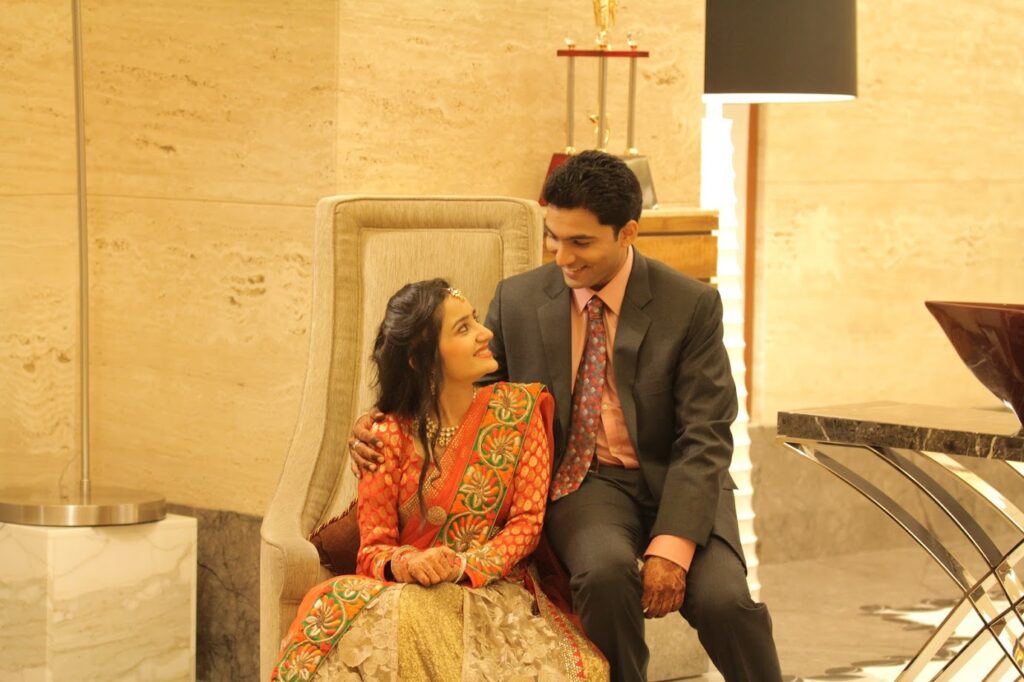
On the wedding day, Amrita stood beside Sahaj, radiant and composed, and I found myself thinking of the young doctor riding pillion on a motorcycle along the Pargaon highway, clutching her bag against the wind. The journey from that lonely health centre to this bright hall seemed impossibly long and yet perfectly natural. She was leaving for the capital, but she carried Sevagram with her—its grit, its friendships, its quiet strength.
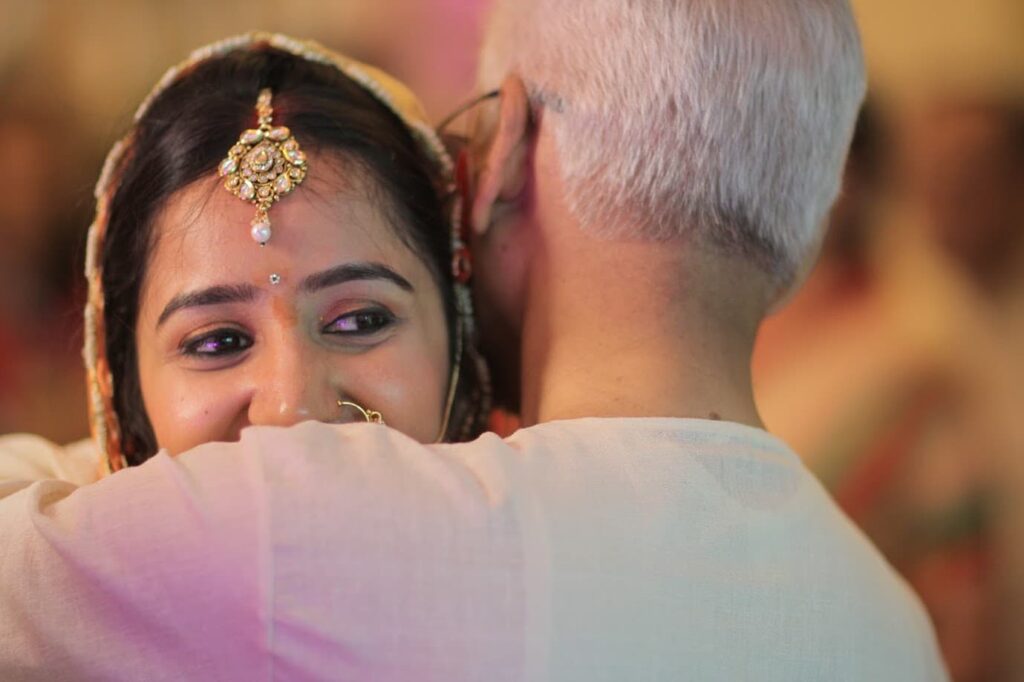
By the time the vidai came, the hall had grown still. Garlands lay wilted, chairs were stacked aside, and relatives embraced her one by one. She hugged everyone steadily and smiled, giving small practical instructions about calling when they reached home. Not a single tear fell. Bhavana stood beside her, calm as always. When the car pulled away, Amrita simply waved through the window, and that quiet steadiness, more than any display of grief, stayed with us long after the lights went out.
Coming home to Wardha
The festivities did not end with the departure of the baratis from Nagpur. The next morning, the centre of gravity shifted back to Wardha. If Nagpur had been about bookings, room lists, and the choreography of arrivals, Wardha felt like a return home. This was where the people who had watched Amrita grow up gathered to celebrate—the nurses who remembered her wandering through hospital corridors as a toddler, the professors who had guided her through exams and postings, and the neighbours who had seen her wobble past on her moped with a satchel slung over one shoulder. They came not merely as guests, but as people who had helped raise her.
Friends and relatives travelled in from every corner of the country. A large group of alumni from MGIMS—now practising in Delhi, Mumbai, Punjab, Haryana, and Bhopal—found their way back to Sevagram as though memory itself had called them home. They arrived with small bags and large memories, slipping easily into the old ease of hostel days.
I was particularly moved to see Dr Manoj Singh, my student from the 1990 batch and now an accomplished intensivist. He had flown in from Australia for no reason other than this wedding—no conference, no errand, simply affection.
The reunion
By evening, the open ground near GS Commerce College Wardha looked less like a reception and more like a reunion. Groups formed and dissolved. Someone revived a chaotic night duty from years ago; someone else retold a hostel prank. Laughter travelled across the field, hands clapped shoulders, and for a few hours the years fell away. We were residents and students again, speaking the effortless language of a shared past.
As I watched Amrita and Sahaj on the stage, greeting each well-wisher with folded hands and patient smiles, a steady calm settled over me. She was leaving for the capital, yes, but not empty-handed. She carried the blessings of the village that had raised her and the city that had shaped her.
An event of this scale, moving between Sevagram and Nagpur, needed more than plans. It needed people—many of them, each doing a small task without fuss, until the day seemed to arrange itself.
What follows is the circle of friends and family who took charge, each doing a small part, and together making the day flow without a ripple.
The Hands That Made It Happen
At the centre: Shri Parmanand Tapdiya, who quietly held every thread together, with Ashok Goenka, ready wherever an extra pair of hands was needed.
Welcoming our guests: Rajendra Fattepuria, Bhogibhai Gorsia, Vijay Rathi, Bharat Somani, Parmanand Taori, Bharat Doshi, Suhas Jajoo, Chandu Fattepuria, and Shrikant Gandhi, who managed hotels, rooms, and late-night arrivals with unfailing patience.
Travel and transport: Om Jogani and Rupesh Sinhal at the railway station, Vinod Sinhal with the vehicles, and Sunil Patel bringing guests safely from Wardha.
Arrangements and provisions: Gopi Jajodia, Sunil Kela, Sanjay Taori, Atul Patel, Raju Verma, Ajay Rathi, and Parsan Kothari, who ensured that every ceremony had what it needed — from fruit baskets to train tiffins.
Hospitality: Bhogibhai Gorsia, Suhas Jajoo, Chandu Fattepuria, and Shrikant Gandhi, whose warm manuhar made every guest feel at home.