The Men Who Built the Department
A department isn’t built only with bricks, beds, and budgets. It is built with people — especially the kind who stay long enough to leave something of themselves behind.
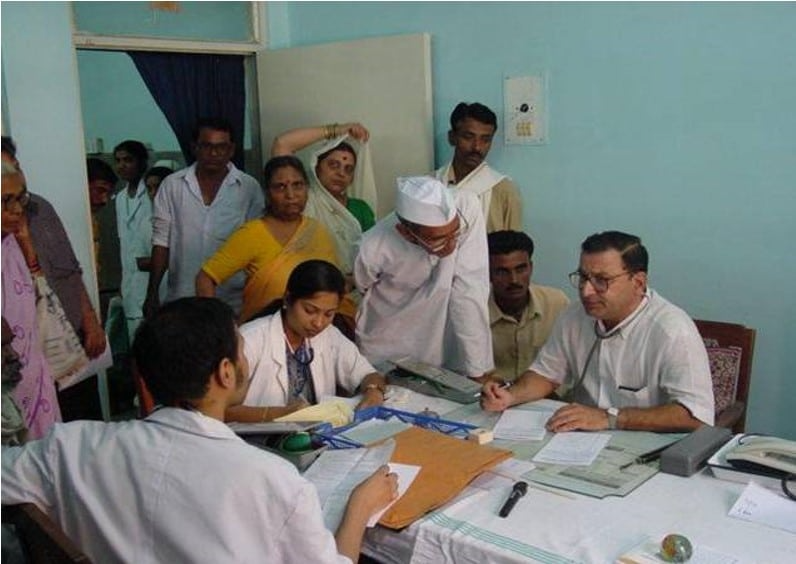
When I joined MGIMS, the Department of Medicine stood on three legs: Dr. O.P. Gupta, Dr. A.P. Jain, and Dr. Ulhas Jajoo. They were different men — different in temperament, style, and the particular way each of them occupied a room. But together, they gave the department something that no infrastructure grant could have provided: a standard worth inheriting.
Every morning at eight, they gathered in the HOD’s chamber for what the medicine residents—Hari Om, Ashok Birbal, Krishan, Kapil Gupta, Vijay Kathuria, the late Ashish Kulkarni, Madhusoodanan, Rakesh Sood, Samir Mewar, and Anil Gombar—quietly called “court.” ECGs were spread out on the table like evidence. A diagnosis was never accepted at face value; it had to be explained, defended, sometimes withdrawn. Mistakes were discussed openly, without embarrassment but without escape. And in that small room, with everyone listening and no one able to hide, learning happened in a way that stayed.
I walked in their shadow first. Later, I had the privilege of walking alongside them. What follows is what I remember — and what I cannot forget.
Professor of Medicine
Dean, MGIMS (1994–2002)
Professor of Medicine
MGIMS Sevagram
Professor of Medicine
MGIMS Sevagram
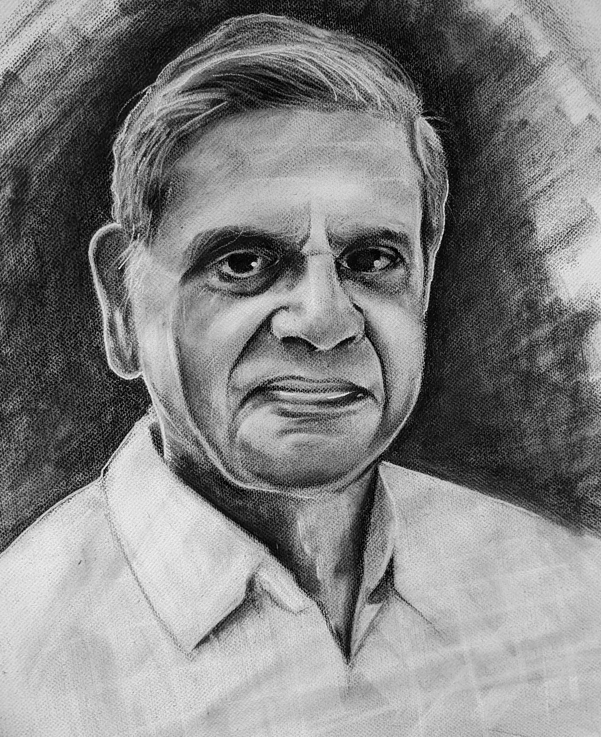
Dr. O.P. Gupta — The Quiet Builder
Dr. Gupta was the anchor.
I joined his unit as a lecturer in June 1983, and my first impression of him was not what I expected. I had braced for the formal distance that senior professors maintain. What I found instead was warmth. Soon after my wedding, he and his wife Geeta invited Bhavana and me for lunch. I was a junior lecturer — barely known, easily overlooked. They treated us like family. That small gesture told me more about the kind of man he was than any ward round ever could.
He had joined MGIMS in 1971, when the department was still finding its feet. In those early years, there were only a handful of physicians. They did everything — OPD, wards, teaching, emergencies, administration — often in the same breath, on the same morning, without complaint. Dr. Gupta carried that habit his entire career. He never seemed to distinguish between what was his job and what simply needed doing.
For years, his unit ran out of the old Birla guest house. The walls peeled. The tube lights flickered weakly. The wards looked more like dormitories than a teaching hospital. But he practised medicine there with the seriousness of a man in the finest metropolitan institution. He never used the building as an excuse for his standards.
He also had a strict streak that kept us alert. Living in MLK Colony, he would sometimes appear in the ward without warning — just to check if the residents were awake and doing what they were supposed to do. It kept us nervous. It also kept us honest. We were better doctors because we never quite knew when he might walk through the door.
As Dean, between 1994 and 2002, he changed how MGIMS examined its students. He pushed for MCQ-based entrance exams, bringing objectivity into a system that could otherwise bend with influence and mood. It was the kind of reform that people resist at first and quietly thank you for later.
Even after a heart attack and bypass surgery, he never stopped learning. When we moved to the new building in 2012, his office sat close to mine. I would often look across and find him bent over a computer screen — reading, searching, figuring things out — like a student who had never quite finished his education.
He retired on 31 July 2023, at the age of eighty. The department didn’t just lose a senior professor that day. It lost a habit of discipline.
***
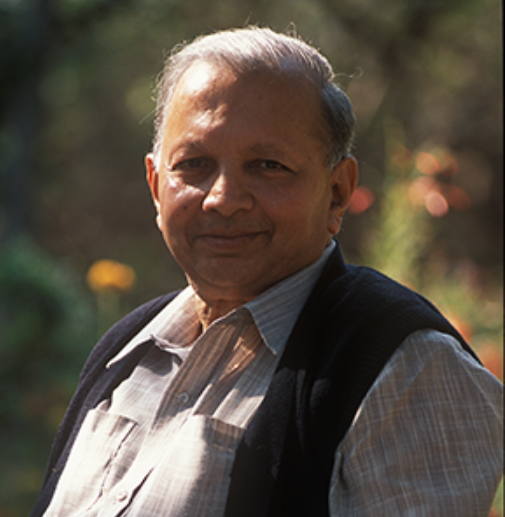
Dr. A.P. Jain — The Clinician Who Used Fewer Words
If Dr. Gupta was the steady hand, Dr. Jain was the sharp blade.
He came from Uttar Pradesh and joined MGIMS in 1974. For a time, he had considered psychiatry, but medicine claimed him instead—and, I think, got the better of the bargain. Dr. Jain believed in the bedside more than the machine. He had little patience for unnecessary tests, superfluous labels, or the kind of medical theatre that impressed families while helping no one. His consultations were spare and precise, like a well-edited sentence.
He often quoted Osler: “The good physician treats the disease; the great physician treats the patient who has the disease.” But with Dr. Jain, this was never merely a quotation. It was a way of practising medicine, visible in everything he did.
I experienced that approach as a patient myself. In the mid-1990s, I developed severe Plasmodium falciparum malaria with cerebral involvement. Although I remained neurologically intact, the infection was serious enough to keep me in hospital for a week. Dr. Jain looked after me.
He did not rush through my bedside visits. He spent time listening to my story, examined me from head to toe, and returned each day to reassess me. Then he wrote his notes.
Bhavana still remembers those notes. They were meticulous, often spilling onto the next page of a full A4 sheet. His handwriting was beautiful, almost calligraphic, and the prose was grammatically correct, precise and clinically accurate. Nothing seemed to be written merely to fill a page. Every sentence had a purpose.
This was not simply good documentation. It was a habit Jain had cultivated throughout his career, and one of the few things about his practice of which he was openly proud. He believed that a doctor should record what he had heard, what he had found and what he thought—carefully, completely and in language that could withstand scrutiny.
He could be intimidating, and his wit could sting. If you tried to disguise ignorance with confidence, he could puncture it with a single sentence. But behind that sharpness was something solid: a clinician’s integrity that patients recognised long before they could articulate it. In 1995, when Dr. Sushila Nayar suffered a massive heart attack, she chose Dr. Jain as her physician—without sending for anyone from Delhi or seeking a more famous name. That choice said more about him than any award could.
He built things, too, quietly and without fanfare: the Dialysis Unit, the Geriatric OPD and the DNB Family Medicine programme, which grew into one of the strongest in the country. But perhaps his most enduring contribution was less tangible—the generations of doctors he taught to think before they ordered a test, to listen before they labelled, and to see the patient rather than merely the disease.
When Parkinson’s disease arrived in 2018, he did not announce it; he simply carried it. His hands trembled, his gait became unsteady, yet he continued his ward rounds, journal clubs and teaching. He never dramatized his illness and refused to let it define him.
He retired on 31 July 2023—the exact same day as Dr. Gupta. Two pillars left together on a single afternoon. The hospital felt quieter after that. It still does.
Four days before his fall, Dr. A. P. Jain walked into my office in the Department of Medicine and sat down. We spoke for an hour about the past, the present and what he still hoped to do. His hands shook and his steps were uncertain, but there was no trace of fear in his voice.
“I take life as it comes,” he said simply.
Then he pushed back his chair with trembling hands and walked away.
On February 6, 2025, he slipped in his bathroom and suffered bleeding on both sides of the brain. The blood accumulated around the brain and began to compress it.When I was called, I went to his home and brought him to our hospital, where he was rushed to the ICU. A CT scan confirmed the extent of the bleeding. Along with his son Manish and Pramod, both members of the MGIMS faculty, we discussed his condition and arranged his transfer to a neurological hospital in Nagpur. He spent two weeks there without regaining consciousness before we brought him back to Sevagram for another fortnight.
What followed was the relentless machinery of modern critical care: ventilators, central lines, dialysis and, one after another, infections. For someone who had spent his life thinking carefully about the benefits and burdens of medical treatment, this was a difficult and deeply ironic ending.
I tried gently to counsel the family toward comfort-focused care and the possibility of allowing him to die without further invasive treatment. His wife, understandably, wanted everything possible to be done. I understood her wish, but I could not escape the sadness of watching a man who had spent his professional life weighing the benefits and burdens of medical intervention become subject to them himself.
For four weeks, he moved between critical-care units in Nagpur and Sevagram. He never regained consciousness. On 15 March 2025, he died in the very ICU where, for nearly fifty years, he had taught, treated and mentored generations of doctors.
In the end, he lay connected to the very dialysis machines he had helped bring to the hospital two decades earlier.
Jain once cared for me as a patient; nearly three decades later, I was among those caring for him when he could no longer speak for himself.
His given name, Ajeet, meant unconquerable. For those who knew him, it could not have been more fitting.
He is gone now. But the way he thought about patients—that precise, unsentimental, deeply humane way of thinking—lives on in the doctors he trained.
Few legacies endure more quietly, or more completely.
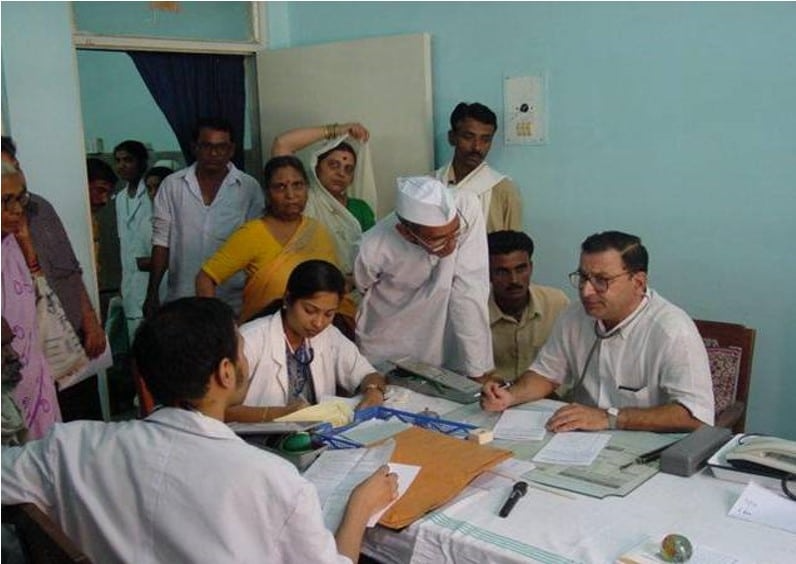
Dr. Ulhas Jajoo — The Humanist Who Never Hurried
And then there was Ulhas.
To the world, he is Dr. Ulhas Jajoo. To me, he has always been Ulhas Bhaiyya — and that is the only name I am able to write here without feeling that something essential has been left out.
Our story began long before Sevagram, in Nagpur, when I was still a student and he was the senior who decided newspapers were more dangerous than cigarettes. He cancelled our newspaper subscription to protect two young boys from distraction. At the time, I thought it was strict. Later I understood it was care — the particular, slightly interfering kind that only people who genuinely invest in you will bother to offer.
In 1982, when I stood uncertain at the crossroads between private practice and hospital life, it was Ulhas who looked at me and said, almost without ceremony: “Why don’t you join us at Sevagram?”
That one sentence changed the direction of my life. I have thought about it many times since.
He practised medicine like an art, not a transaction. He trusted experience and intuition in ways that kept younger colleagues slightly uneasy — because he was so often right. He would remind us, with a half-smile, that statistics speak in averages while patients arrive one at a time. He never forgot the difference.
His ward rounds had their own unmistakable rhythm. Khadi shirt. Chappals. A crowd of students trailing behind him, notebooks ready. Questions fired like arrows — not to embarrass, but to awaken. He asked about symptoms, yes. But he also asked about money, family, fear, and the long walk to reach us. The patient was never just a case to him. The patient was always a person who had arrived at the hospital carrying more than their illness.
He was a storyteller, and that made his teaching impossible to forget. Students didn’t remember only his prescriptions. They remembered his tone, his patience, the particular way he sat beside a bed and listened without glancing at the clock.
Every year on February 14, social media fills with tributes written by people he trained. One student once wrote something that has stayed with me: “I saw Jajoo Sir speaking with patients with compassion, and I wanted to be just like him.” That one sentence, I think, is the most complete description of what he gave us.
Ulhas taught us that the most sophisticated instrument in medicine is not the CT scanner. It is the ear. And the willingness to use it without hurrying.
He retired on 28 February 2026, a fortnight after his seventy-fifth birthday. To everyone’s surprise, he soon began private practice, sitting every morning and evening in his younger brother Suhas’s OPD in Wardha.
I still find myself looking at his OPD papers—meticulously written, with careful notes on history, physical signs, diagnosis, and the do’s and don’ts for each patient. Even in retirement, his habits remain unchanged.
He also bought ten acres of agricultural land three kilometres from Sevagram, where he plans to take up organic farming with the help of three local farmers.
I have tried, without much success, to imagine the department without him. I still cannot.
***
What They Left Behind
Gupta, Jain, and Jajoo built the department I later inherited. They demonstrated, over decades and without ever saying so directly, that serious medicine could be practised in a village. That a hospital need not have the finest equipment to produce the finest doctors. That what a department really runs on is standards, discipline, and a moral spine.
They were, by any measure, giants.
And for many of us — for me, certainly — it was enough that they let us walk beside them.