Annasaheb Sahastrabuddhe
Vice President, Kasturba Health Society Tenure 1968 – 1980 Lifespan 7 October 1897, Pune — 11 March 1980, Bombay Education Freedom Fighter & Sarvodaya LeaderVice President, Kasturba Health Society (1968–1980)
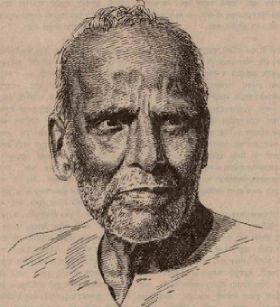
Most people walking past the quiet stretch along the Dean’s office at MGIMS today do not know the story behind Anna Sagar. They see a serene pond, but they do not hear the echo of the hands that dug it—medical students, nurses, clerks, technicians, doctors, petty shopkeepers, and villagers, all working side by side in the soil. Fewer still know the man whose vision brought that water to the surface: Annasaheb Sahastrabuddhe. He was a man who actively avoided the limelight, yet possessed a willpower that fundamentally shaped the soul of Sevagram.
Between 1968 and 1980, the first and most fragile decade of the Mahatma Gandhi Institute of Medical Sciences, Annasaheb served as the Vice President of the Kasturba Health Society. His name rarely appeared in official administrative records. He was not one to sit at the center of group photographs. But behind the scenes, he was an unshakable pillar of strength for Dr. Sushila Nayar. As she navigated the colossal task of building India’s first rural medical college, Annasaheb offered the quiet advice, encouragement, and moral clarity required to keep the institution anchored to its village roots.
* * *
The Crucible of Poverty
Anant Vasudev Sahastrabuddhe was born on 7 October 1897 in Gupchup Wada, Shaniwar Peth, Pune. His father, a primary school teacher, was subjected to frequent postings across the remote villages of the Amravati district—Daryapur, Elichpur (now Achalpur), and Karajgaon. Each transfer meant packing the family’s meager belongings into a bullock cart and journeying over muddy, unforgiving tracks. Consequently, young Anant attended a new school nearly every year until the sixth grade.
In 1910, he returned to Pune to live with his grandfather and study at the New English School. There, he was taught by Ram Ganesh Gadkari, though it was only years later that Anant realized he had been in the presence of the great Marathi dramatist. Academically, the boy struggled, finding far more joy in the physicality of sports and the discipline of wrestling.
“The worst period in my life was 1908 to 1914,” he would later write in his autobiography. Following his grandfather’s death, Anant and his mother were forced to live in tiny, cramped rented homes while his father continued teaching in distant Vidarbha. Milk became an unattainable luxury. Dignity was hard to find. Yet, this intense poverty did not break him; it opened his eyes to the profound suffering of others.
The true turning point of his youth occurred when he began teaching in the Mang colony in Pune. Brought face to face with brutal caste-based discrimination and utter deprivation, young Anant found his life’s purpose. He organized night schools for Harijan children, offering them not merely literacy, but a radical sense of self-worth. The psychological impact of this experience never left him.
By 1920, deeply inspired by the fiery intellect of Lokmanya Tilak and moved by Mahatma Gandhi’s call for non-cooperation, he took two vows that would dictate the rest of his life: he would never accept a government job, and he would never marry. From that moment forward, service became his only calling.
* * *
The Vow and the Wheel
Annasaheb spent transformative time at the Sabarmati Ashram, internalizing the rigors of khadi and the inherent dignity of voluntary physical labor. Between 1921 and 1925, he taught at the National School in Chinchwad and worked in agriculture in Belapur. In 1926, he formally immersed himself in the khadi movement. Unlike those who merely spun yarn symbolically, Annasaheb learned the hard, practical ropes of both production and marketing, training extensively at the Kalbadevi Khadi Bhandar.
In 1929, at the invitation of Jamnalal Bajaj, he moved to Wardha. He would remain spiritually and physically bound to this region for the rest of his life. He became the secretary of the Charkha Sangh in 1935 and later established a Khadi Vidyalaya in Mul, Vidarbha.
During the tumultuous decades of the 1930s and ’40s, Annasaheb threw himself into the thick of India’s freedom struggle. He marched in the Salt Satyagraha, faced repeated imprisonments, and operated underground during the Quit India movement under the alias “Sunderlal.” Though he was initially convinced that bombs and conspiracies were the only way to shatter British rule, he soon underwent a profound shift, aligning entirely with Gandhiji’s long-term vision of constructive village work. In 1942, he was imprisoned once again in connection with the Capital Bomb Case.
When independence finally dawned, Annasaheb did not seek political office. Instead, he poured his boundless energy into village upliftment—championing Bhudan, Gramdan, Sarvodaya, and Khadi. Working closely with the Sarva Seva Sangh, he traveled the length and breadth of the country to spread Gandhian ideals of equity.
* * *
The Pragmatic Gandhian
In 1959, Annasaheb returned to Sevagram and launched a new chapter focused on rural development through agriculture. He was instrumental in helping the Nai Talim educational philosophy rise like a phoenix from the ashes of neglect, establishing a regional planning institute in 1960. As Vice President of the Khadi and Village Industries Commission, and later as head of the Planning Commission’s rural industries committee, he fought to completely reimagine how the Indian state planned for its villages. Though bureaucratic red tape frequently blocked his vision, his persistence was absolute.
He worked alongside stalwarts like Shrikrishnadas Jajoo, Raghunath Dhotre, and Achyut Patwardhan, and drew deep inspiration from Vinoba Bhave and Sane Guruji. Yet, Annasaheb was entirely unique in his independence of thought. Although Vinoba was only two years his senior, Annasaheb considered him a contemporary rather than a guru to be followed unquestioningly.
Throughout his life, he steadfastly refused to be a blind follower—even of Gandhi or Vinoba. He relied on his own accumulated wisdom and grounded insight to choose paths that were both appropriate and pragmatic. He was guided by an unyielding internal compass: honesty, ethical conduct in public life, total accountability, and self-effacement. Having witnessed it up close in his youth, he viewed poverty as a grave, systemic affliction. His life’s mission was to help the poor escape the vicious cycle of debt and become fiercely self-reliant.
Collaborating with economists like Dr. D.R. Gadgil and Dr. Prabhakar Nair, he built grassroots district planning models that sought to integrate small, forgotten workers—tea sellers, barbers, grocers—into the formal village economy. His visionary Panchsutra framework, tested in Koraput, Odisha, tackled alcoholism, illiteracy, fear, poverty, and dependence simultaneously. It offered the young Indian nation one of its earliest and most holistic templates for rural development.
* * *
The Architect of the Soil
When Dr. Sushila Nayar set out to build MGIMS, Annasaheb was immediately by her side. True to his nature, he was not found in boardrooms or posed for press photographs; he was out in the field. He advised her on land use, helped shape the rural ethos of the college, and quietly ensured that the village and the campus grew in tandem, rather than the hospital swallowing the community.
Anna Sagar, the campus pond, was born of his philosophy. He envisioned it not merely as a functional water source, but as a profound symbol of collective ownership. When villagers, hospital staff, and medical students picked up shovels together, it ceased to be an act of charity. It became the forging of a community.
Annasaheb held numerous high-profile positions over his life—chief secretary of the Gandhi Seva Sangh, president of the Sevagram Ashram, and advisor to national boards. Yet, power and prestige slid off him like water. When Prime Minister Indira Gandhi offered him the prestigious Padma Bhushan in 1970, he accepted it quietly, and never mentioned it again.
He was a man who had mastered the rare art of loving people freely—without drama, without conditions. He seamlessly blended into the lives of those he met, sharing their joys and sorrows with a calm, deeply attentive presence.
He had no family, no home, and no property. He lived by the maxim: “Nadi behti bhali, sadhu chalta bhala”—a flowing river is good, a wandering sadhu even better. He lived exactly like that river, always in motion, never tied down.
Among the many Gandhians of his era, Anna stood apart. Publicity meant nothing to him. Dressed in a simple khadi shirt, a dhoti, and worn-out chappals, he carried only an extra pair of clothes. Any money he received, he quietly routed to those in need. He rarely stayed more than two nights in one place, except when he returned to Sevagram or the ashrams he considered his spiritual home. In those ashrams, he was not a guest; he was the patriarch. He helped people solve their everyday domestic problems with the exact same gravity he brought to international economic issues.
Once, a curious observer asked him why he had never married. Anna smiled warmly and replied, “When I was of marriageable age, I was in love with social work. And when that fire settled… it was too late.”
* * *
Small is Beautiful
Anna Saheb earned national respect as an authority on rural development not through academic theory, but through calloused hands. He had tilled land, raised cattle, and worked alongside laborers. In 1961, when Prime Minister Nehru launched the Planning Commission’s efforts on rural development, Anna was invited to join a working group tasked with defining a national minimum standard of living. Alongside experts like D.R. Gadgil and Ashok Mehta, he helped draft a landmark report recommending a poverty line of Rs. 100 per month for a five-member household, calculated on essential needs like food, clothing, housing, and fuel. (They notably excluded health and education, firmly believing the State was morally obligated to provide those for free).
However, the sterile bureaucracy of Delhi clashed violently with his action-oriented soul. Frustrated by endless red tape and political inertia, he quietly resigned and took the train back to Sevagram—preferring to serve in the dirt rather than sit in an office. Even during that short, lucrative government stint, he lived on a floor mat and sent his entire salary, by money order, to support eight impoverished children.
His connection to Sevagram was visceral. It was the laboratory where he proved that even the most modest village activity could become self-sustaining. When Prof. Madhu Dandavate became Minister of Railways in 1977, Anna personally insisted that local vendors be allowed to sell fresh cow’s milk at Wardha and nearby railway stations—a small, highly specific victory that perfectly illustrated his insistence on rural economic independence.
He was not trapped by historical ideology. He admired E.F. Schumacher’s philosophy of Small is Beautiful and personally brought the famed economist to Sevagram. He also invited two agricultural scientists from Israel to the ashram, deeply believing in “appropriate technology”—modern solutions specifically tailored to suit the rural poor.
* * *
The Final Chant
In his later years, Anna’s body grew frail. A serious accident left his hands trembling and his neck shaking, but he refused to slow down. His speeches remained simple, clear, and full of nishtha—unshakable commitment. His eyes still burned with quiet determination.
He found profound comfort in spiritual practice, regularly reciting the Vishnu Sahasranama. Often, he would pause mid-verse, chanting with deep, overwhelming feeling, drawing immense solace from its sacred rhythm.
At the age of 83, his heart began to fail, its rhythm fluctuating dangerously. True to the vows he took in 1920, he flatly refused to spend a single rupee on his own medical treatment. It was only through the desperate insistence of his well-wishers that he was finally taken to Bombay Hospital to receive a pacemaker.
He passed away in that hospital on 11 March 1980, before the procedure could be completed.
Annasaheb Sahastrabuddhe left behind more than writings or institutions; he left behind a blueprint for living. For decades, the student who topped the Gandhian Thought paper in the MGIMS medical entrance exam was awarded the Annasaheb Sahastrabuddhe Medal.
His was the kind of work that rarely makes the evening news. But if one walks through Sevagram today, and looks closely at the soil, the water, and the walls of MGIMS, his presence is everywhere. In silence. In the soil. In the spirit.
Key Milestones
| 1897 | Born, 7 October, Pune |
| 1920 | Two vows taken — no government job, no marriage |
| 1921 | Sabarmati Ashram — khadi and voluntary labour |
| 1929 | Moves to Wardha at Jamnalal Bajaj’s invitation |
| 1930 | Salt Satyagraha — repeated imprisonment |
| 1935 | Secretary, Charkha Sangh |
| 1942 | Underground during Quit India — alias Sunderlal |
| 1942 | Imprisoned — Capital Bomb Case |
| 1959 | Returns to Sevagram — regional planning institute, 1960 |
| 1961 | Planning Commission working group — drafts India’s first poverty line |
| 1964 | Brings E.F. Schumacher to Sevagram |
| 1968 | Vice President, Kasturba Health Society |
| 1969 | Anna Sagar dug — MGIMS campus pond, collective labour |
| 1970 | Padma Bhushan — accepted quietly, never mentioned again |
| 1980 | Dies 11 March, Bombay Hospital — before pacemaker could be fitted |