Dr. Keshao Narayan Ingley
Professor & Head of Physiology · MGIMS Tenure 1969 – 1989 Lifespan 9 December 1931, Buldhana — 13 April 2025, Nagpur Education MBBS (Government Medical College, Nagpur, 1958)MD Physiology (Government Medical College, Nagpur, 1960)
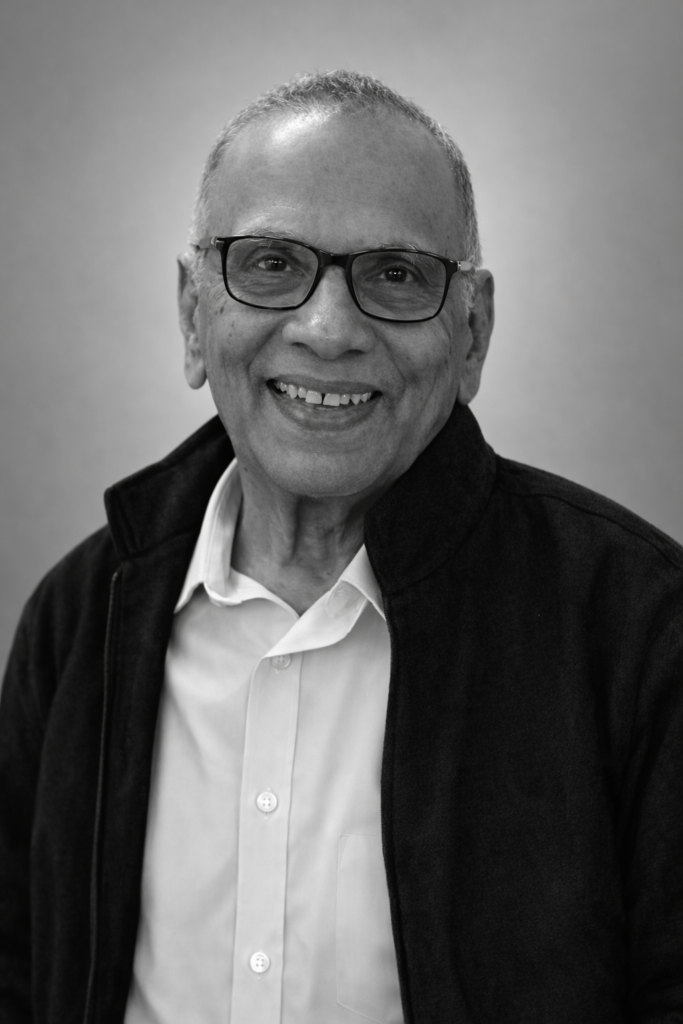
Professor & Head of Physiology · Founding Faculty Member · The Man Who Made Students Feel What They Were Learning
In his final hours, his children placed earphones in his ears. Bhimsen Joshi’s voice rose in a soulful abhang — Teertha Vitthala, kshetra Vitthala — and they were certain, as those who have loved someone long and well become certain of such things, that he could still hear it. They brewed his favourite tea and let a warm spoonful rest on his lips. No monitors, no machines. Just the sounds and scents of a life fully lived, brought to a man who had spent ninety-three years paying attention to beauty in all its forms.
He had chosen, at twenty-nine, not to operate on the human body but to explain it. His father was a surgeon of steady hands and calm words, known across Vidarbha. Young Keshao had stood in the corner of that clinic, watching pain soften and dignity restored, and felt something stir. But the scalpel was not his instrument. The chalk was. What called to him was the why behind the how — the hidden logic of the living body, the poetry of a heartbeat, the elegance of a reflex arc. He became a physiologist and a teacher, and for twenty years at MGIMS Sevagram, beginning on the very first day the institution existed, he was both with a completeness rarely seen.
Buldhana, Nagpur, and the Long Wait
Keshao Narayan Ingley was born on December 9, 1931, in Buldhana, the eldest of five siblings in a joint family that moved with his father’s government postings across Vidarbha. New towns, new schools, new neighbours — a childhood of constant relocation that gave him adaptability and a particular attentiveness to people and places.
He entered Government Medical College, Nagpur, in 1953, joining the sixth batch of students. The course was long and demanding — anatomy and physiology, then pathology and pharmacology, then the clinical years. His batch was the first to undergo an eighteen-month internship that included nine months in district hospital wards and nine in primary health centres. Rural India, with its raw demands and limited resources, was built into his training from the beginning.
When the time came to choose a specialty, he followed the counsel of Dr. Shukla, the venerable Professor of Physiology and Biochemistry: if you want to build an academic life, get an MD. He chose Physiology. He began teaching at GMC Nagpur on February 1, 1960.
Then a bureaucrat’s pen sent him to an Ayurveda college. The posting made no sense — a trained physiologist in a department where his qualification had no application. He declined, respectfully and firmly. “I’ll wait,” he said, “even if I must wait long.” He waited nine years.
In 1969, the call came from Dr. P.S. Vaishwanar, his mentor, who had been asked to assemble faculty for India’s first rural medical college. Dr. Sushila Nayar’s MGIMS in Sevagram was still a vision on paper — no buildings, no laboratories, just dust and fields and a stirring idea. Dr. Ingley hesitated. Starting from scratch required more than resolve. But something in the rawness of it called to him. He agreed to go on deputation.
On the morning of Thursday, July 10, 1969, he arrived in Sevagram alongside Dr. B.V. Deshkar, Dr. M.G. Kane, and Dr. G.M. Indurkar. There were no gates to walk through, no lecture halls to enter. They were not stepping into a college. They were building one.
Building the Department
The Physiology department began not in marble halls but in modest rooms where chalk dust mixed with the black soil of Sevagram. There were borrowed benches, second-hand instruments, and a resolve that compensated for everything the place lacked in equipment. Jagdish and Sahebrao, two lab attendants from those early years, remembered how Dr. Ingley stayed behind long after others had left — unpacking crates, arranging instruments, setting up the lab piece by piece. Every pipette, every kymograph, every stimulator found its proper place. By the time students stepped in, the lab was not merely functional. It was waiting for them.
Lectures in those first months were held wherever a blackboard could be propped up — the Gandhi Ashram, the Adhyayan Mandir. Chalk was precious and blackboards makeshift, but the learning was real. The foundation was being laid by hand, day by day, in the heat of Vidarbha.
He stayed. The deputation became a calling. Over twenty years, from 1969 to 1989, he taught Physiology to twenty batches of MGIMS students — the first encounter each of them had with the body’s hidden rhythms and rules.
The Teacher
He entered the lecture hall briskly, a paan tucked in his cheek, and went straight to the board — no notes, no slides, only chalk and certainty. His fingers moved with precision, drawing the nervous system stroke by stroke: the brainstem curved into view, spinal tracts unfurled like railway lines, synapses sparked to life in arcs and arrows. Watching him draw was like watching the body being born on a blackboard.
His power lay not only in what he knew but in how he made students feel it. When he taught Parkinson’s disease, his face stilled, his limbs trembled, his feet dragged with tragic precision. Stroke: he slumped to one side, arm limp, gait halting. Cerebellar ataxia: he wobbled across the floor, arms outstretched, missteps exaggerated, drawing chuckles that turned into quiet admiration. He did not ask students to remember. He made them feel. They never forgot.
His tools were simple — Samson Wright, Guyton, Ganong, chalk, a pointer — but the experience was unforgettable. To him, Physiology was not a subject but a living force.
The laboratory was his other sanctuary. Every shelf spoke of order: electrodes coiled neatly, kymographs aligned, frogs anaesthetised and handled with respect. First-year students — nervous, tentative — found themselves pithing frogs without trembling, clipping electrodes with exactitude, watching the faint twitch of a muscle dance across a soot-blackened drum. Those inky waves told stories, and under his quiet tutelage, they learned to read them.
In an era when private tuitions flourished and some teachers in Nagpur traded lessons for cash and favours, Dr. Ingley never charged a rupee outside his salary. He never turned away a student who needed help. He believed teaching was a service, not a commodity. By holding that line, he protected the nobility of his craft.
Beyond the Classroom
At eleven in the morning and three in the afternoon, the Physiology department paused. Teacups appeared, cardamom scented the air, and Dr. Ingley arrived with his signature paan and a sparkle in his eye. Professors Sharma, Khapre, Patel, and Naik pulled up chairs. The talk ranged freely — examinations, politics, cricket, campus murmurs. Debates flared and dissolved into shared laughter. These tea breaks held no hierarchy and no agenda. They were the heartbeat of the department finding its rhythm.
He established a reproductive biology laboratory, mentoring Dr. Pradeep Sambarey and Dr. K.S. Bhat to investigate the causes of male infertility in Vidarbha — research that earned both men their doctorates. He built pulmonary function and basal metabolic rate laboratories. He guided postgraduate students including Dr. Deshpande and Dr. Ajay Chaudhari, who would later lead Physiology departments at JNMC Sawangi and MGIMS Sevagram respectively.
He helped nurture Sargam — MGIMS’s annual cultural celebration — watching from the front row with pride, clapping hardest. He and Mr. Tupkar created the institute’s sports department. He attended every football and volleyball match by the Brotherhood Club of Wardha, living each game rather than merely watching it.
Music was the deepest constant. A devotee of Bhimsen Joshi and Jitendra Abhisheki, he never missed a concert and always brought his children, insisting they sit up front. When Bhimsen Joshi sang an abhang, Dr. Ingley would sit upright, eyes closed, fingers tapping gently — not a physiologist, not an administrator, but simply a rasik, a lover of melody. Even in his nineties, each evening he settled into his chair, closed his eyes, and let Marathi classical sangeet wash over him.
On July 11, 1959, he married Sindhu Solao from Amravati district. She later served as warden of the MGIMS girls’ hostel from 1981 to 1988. Their three children — Anjali, Sanjay, and Sonali — all graduated from MGIMS, specialising in Anaesthesiology, Orthopaedics, and Pathology respectively. Their daughter-in-law Aradhana and son-in-law Muthu Kumar were also MGIMS alumni. The family’s roots in the institution ran four generations deep.
After Sevagram, and the End
After retiring in December 1989, he joined the nascent medical college at Sawangi as Dean, then Director, building its faculty with the same quiet persuasion he had always used — making calls, paying visits, remembering names, following up with care. He served the university’s examination and evaluation department until 2006, concluding his formal career at eighty-six.
In his mid-nineties, he retained a mental sharpness that surprised those who rang him expecting a brief exchange. On June 5, 2023, I called him as part of my efforts to document MGIMS’s early teachers. What followed was an hour and a half of effortless, engaged conversation — stories told with precision, memory sharp, affection for the past unmistakable. He painted scenes rather than merely reported them. When the call ended, I found myself quietly moved. He was not recalling the past. He was still teaching.
Each morning in Nagpur, he descended from his sixth-floor apartment and took his place on a worn wooden bench beside the electrician, the auto-rickshaw driver, the plumber, and the shopkeeper. He chuckled at their jokes, passed the kettle without fuss, and never once spoke of the institutions he had built or the positions he had held. To them, he was simply Doctor Saab — a neighbour, a listener, a friend.
In October 2024, he was admitted to hospital after a series of seizures. I visited him there, surrounded by Sanjay, Sonali, Anjali, and his granddaughter Shreya. He looked tired, his voice faint. But when I stepped in, he opened his eyes, recognised me, and smiled. He asked about my health in sentences that came slowly, each word carefully coaxed. We exchanged pleasantries. Then his eyes grew heavy and he drifted into sleep. It was a quiet hour I will always hold dear.
His children brought him home to die. No monitors, no machines. They brewed his tea and placed Bhimsen Joshi’s abhang in his ears. He passed on April 13, 2025, as he had lived — surrounded by devotion, dignity, and the music he had loved all his life.
Mentored Students (MD/MS)
A study on taster, non-tester sickling, G6PD deficiency, color blindness, function test based metabolic rate and protein bound iodine in rural population
The study of some physical and biochemical characteristics of semen in normal and infertile men
Investigations and management of male infertility in rural areas
Effect of drugs and other measures on seminogram in humans
Effect of drugs and other measures on seminogram in human
Investigations and management of male infertility in rural area
Key Milestones
| 1931 | Born, 9 December, Buldhana, Vidarbha |
| 1953 | Entered Government Medical College, Nagpur — sixth batch |
| 1960 | Began teaching Physiology at GMC Nagpur, 1 February |
| 1969 | Arrived Sevagram, 10 July — one of four founding faculty members |
| 1972 | Appointed Professor & Head of Physiology, MGIMS |
| 1981 | Wife Sindhu appointed Warden, MGIMS Girls’ Hostel |
| 1989 | Retired from MGIMS, December — twenty batches taught |
| 1989 | Joined Sawangi Medical College as Dean, then Director |
| 2006 | Concluded formal career at eighty-six |
| 2023 | Gave ninety-minute interview, sharp and engaged, aged ninety-one |
| 2025 | Died, 13 April, Nagpur — aged ninety-three |