Dr. Sutikshna Pande
Professor & Head of Physiology · MGIMS Tenure 1975 – 2010 Born 23 March 1939, Singhpur, Madhya Pradesh Education MBBS (Netaji Subhash Chandra Bose Medical College, Jabalpur) [1967]MD Physiology (Shyam Shah Medical College, Rewa) [1975]
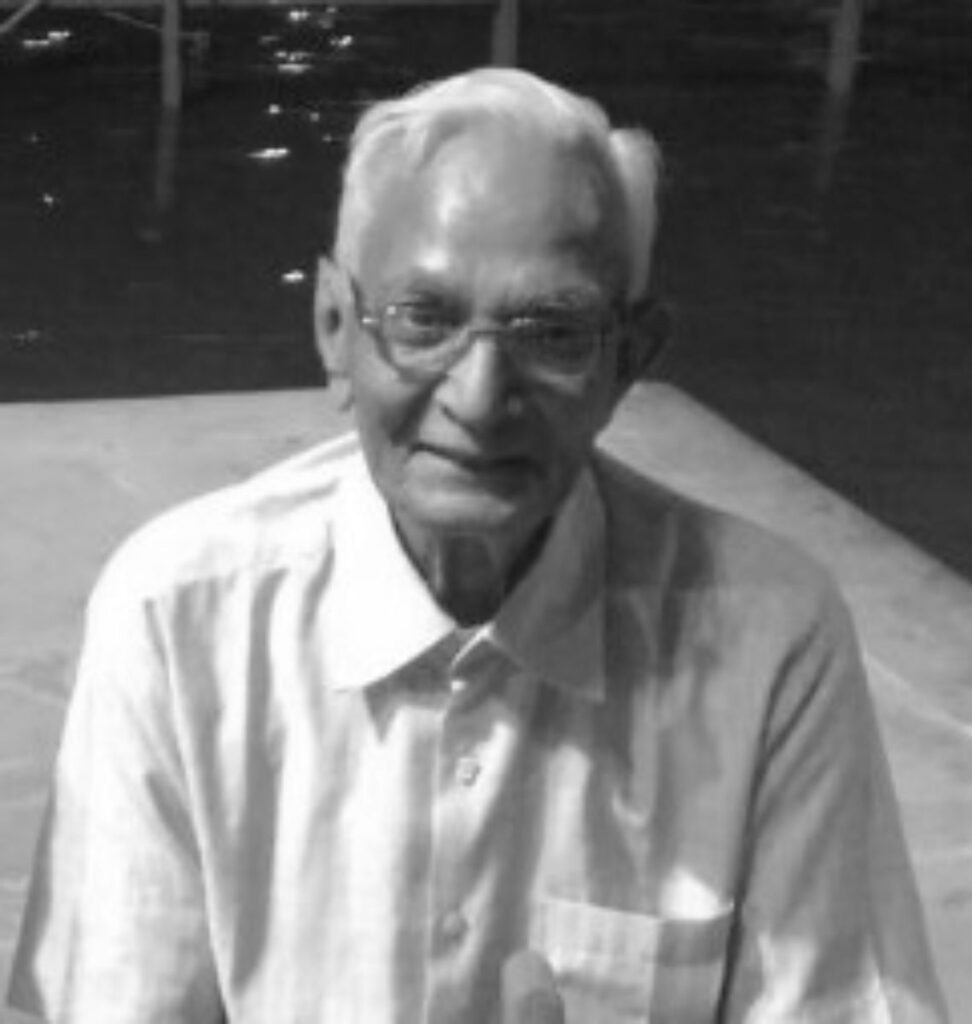
Professor & Head of Physiology · Thirty-Five Years at Sevagram · The Teacher Who Believed in Students Before They Believed in Themselves
He drove at twenty kilometres an hour on Sevagram’s still streets. Whenever residents heard the unmistakably loud horn of his second-hand Maruti and saw him pull up with his courteous offer — “Can I give you a lift?” — the standard reply, delivered with a smile, was: “No thank you, Sir. I’m in a hurry today.”
The joke, gentle and affectionate, captured something true about Dr. Sutikshna Pande. He was unhurried in everything — in speech, in movement, in the measured way he delivered a concept in the lecture hall, waiting for students to catch up before moving forward. In a world that rewarded speed and output — papers published, conferences attended, grants secured — he was a quiet heretic. He published little. He attended few conferences. He taught for thirty-five years with chalk and a blackboard and the conviction that a well-explained idea, delivered simply and patiently, was worth more than any other academic currency.
The students he shaped are now senior doctors across the country. They remember his thick-framed glasses, the striking moustache, the crisp white coat buttoned to the top, the deliberate pauses in his lectures that made them lean forward to catch what came next. They remember that he explained physiology in Hindi when students struggled with English, that he stayed after class with those who were lost, that he treated first-year anxiety as a problem worth solving rather than a weakness to be dismissed. They remember that he believed in them before they believed in themselves.
That was his research output. It did not fit in a publication list.
Singhpur, Wandering Years, and the Accidental Teacher
Sutikshna Pande was born on March 23, 1939, in Singhpur, a small village in Narsinghpur district of Madhya Pradesh. His father was an agricultural officer whose postings moved the family continuously — Narsinghpur, Khandwa, Damoh, Raipur, Jabalpur. Young Sutikshna grew up acquiring the adaptability of someone who must always start again in a new place.
His name came from the Ramayana: Sutikshna was a devoted disciple of the sage Agastya, so dedicated that when he offered Guru Dakshina, his teacher refused it, saying the honour of teaching such a student was reward enough. It was a name that would turn out to be prophetic, though nobody could have guessed it from his early years.
Medicine was not his dream. He entered Netaji Subhash Chandra Bose Medical College in Jabalpur in 1958 to fulfil his mother’s wish, not his own. It did not suit him. English was difficult, the subject did not excite him, and before his first MBBS examination he resolved to quit. The cost of withdrawal — ₹5,000, beyond his mother’s means — kept him enrolled. He found another way out, taking a position teaching at a military school for boys. He kept his medical past a secret.
He loved it immediately.
He showed his students how to dissect frogs. He explained how the heart beats. They were fascinated. Six months into this work, a conversation with one of his students produced a quiet revelation: this was what he wanted to do. He returned to medical school, this time with a clear purpose. He turned morning tea breaks into impromptu tutorials for his batchmates, making optics and physiology accessible through informal explanation. A senior professor, Dr. N.K. Mishra — who would later head the Medicine department at Gandhi Medical College, Bhopal — noticed this unusual sight of a student teaching students and saw in it the markings of someone exceptional.
He graduated in 1967. The years that followed were uncertain — family planning posts in Damoh and Chandipur, district hospital work that brought ethical difficulties he navigated uncomfortably. It took six years to find his place. At Shyam Shah Medical College in Rewa, under the mentorship of Dr. D.N.S. Chowdhary, a wise anatomy professor who recognised his talent and directed him toward Physiology, he finally arrived. He became a demonstrator, then completed his MD in Physiology in 1975. At thirty-six, he had found his calling. He had known it was teaching since he was in a military school explaining how the heart beats. The road there had simply taken longer than it should have.
Sevagram: Three and a Half Decades
He arrived at MGIMS in November 1975. The institution was barely six years old. The Physiology Department had two senior faculty on government deputation — Dr. B.V. Deshkar and Dr. K.N. Ingley — and a recent vacancy left by Dr. I.D. Singh’s departure. Dr. Pande joined as Lecturer, beginning the long steady climb that would take him to Professor and Head by 1999.
His classroom style was neither dramatic nor flamboyant, but it held students in a particular kind of attention — the attention produced by clarity rather than performance. He broke complex physiological principles into simple, digestible truths. He made the frog’s beating heart a gateway into the mysteries of human physiology. He demanded that students grapple with concepts rather than memorise them, asking them to explain rather than recite. His sharp eyes behind thick-framed glasses swept the room; when a student’s attention drifted, a quick “Focus!” followed. He did not shout. He did not need to.
He explained physiology in Hindi for students who struggled with English — a practical accommodation that other faculty rarely made and that students from Hindi-medium backgrounds never forgot. He was strict in the lecture hall and consistently available outside it, in the way that matters most to those who are struggling.
For six years, he served as warden of the boys’ hostel, fostering a disciplined but caring atmosphere, helping new students adjust through orientation camps. For more than three decades, he led the Friday evening all-religion prayers at five o’clock — playing the harmonium, drawing on the Bhagavad Gita for guidance. He had led a Geeta Samiti during his Shyam Shah years, hosting annual eloquence competitions and philosophical debates. The Gita was not a performance of piety. It was the animating philosophy of his life.
Dr. Sushila Nayar recognised this. She frequently acknowledged his spiritual leadership at the institution — the contribution of a man who maintained the Gandhian devotional practice of the campus long after many faculty treated it as a formality.
He was a regular on the early-morning walks — out at four in the morning with Professor O.P. Gupta, or taking evening strolls with Professor Narang. He built his friendships through consistency of presence rather than expressiveness of personality. He was quiet among peers, slightly hesitant with seniors, yet deeply trusted by both. He was the professor who listened, the senior who defended his juniors, the mentor who gave without requiring return.
The Student He Saved
Among the thirteen Physiology MDs who trained at MGIMS between 1969 and 2003, and the many more MBBS graduates whose foundation he built, one name captures what Dr. Pande was to his students with particular vividness.
Devender Sachdeva arrived at MGIMS in 1994, lost and doubting himself. Medical school felt, as he described it, like a mountain he could not climb.
“Dr. Pande saw something in me,” Sachdeva recalled. “He took me under his wing. He didn’t just teach physiology — he taught me how to believe in myself. He talked to me about the Gita, about finding inner strength. It wasn’t just academic advice. It was spiritual guidance, life advice. He never gave up on me, even when I had given up on myself.”
Sachdeva completed his MBBS, specialised in Pharmacology, and now heads the department at Tomo Riba Institute in Arunachal Pradesh. He attributes it entirely to Dr. Pande.
There were others like Sachdeva — students who came to MGIMS uncertain and left with direction, whose trajectories changed because one professor had the patience to see them clearly and the commitment to stay alongside them until they found their footing. This was the research Dr. Pande conducted across thirty-five years. Its results walked into hospitals and departments and lives across the country.
The End of Sevagram, and After
In 1999, he stepped down as department head, passing leadership to Dr. Ramji Singh. He continued as Emeritus Professor for another decade before leaving Sevagram in 2010 for Ujjain, where he taught at Ruxmaniben Deepchand Gardi Medical College for fifteen more years.
When I spoke with him on May 19, 2023, his voice carried a sadness he did not try to conceal. “Sevagram lost its light after Behenji’s passing,” he said. “I felt detached. Students moved on after their Physiology studies. Frustration and disappointment led me to leave.” It was the honest admission of a man who had given a place his best years and found that institutions, unlike devoted students, do not always register what they have received.
He continued teaching into his mid-eighties, donating much of his salary to help patients and those in need — a practice consistent with everything else he had ever done with resources that came to him.
In January 2025, he was diagnosed with Parkinson’s disease and stepped down from teaching at Ujjain. Tremors came, then a walker. He remained active on Facebook, keeping himself informed about Sevagram, connected to the institution that had been the centre of his life for so long.
He married Anusuya Vyas from Gwalior in 1970. They chose not to have children. His students were his family — the slow accumulation of young doctors he had believed in, argued with, explained things to in two languages, and sent out into the world carrying something of his steadiness.
His story, as he himself seemed to understand, was not one of spectacular triumph. It was the story of a man who found his calling in teaching, who invested more than he extracted, and whose legacy lives in the doctors he shaped rather than the papers he published. It is, in the context of this book, one of the most important stories of all.
Mentored Students (MD/MS)
Effect of feed on migrating myoelectric complex in rats
The involvement of monoaminergic mechanism to pain responsiveness in conscious rats
Key Milestones
| 1939 | Born, 23 March, Singhpur, Narsinghpur district, Madhya Pradesh |
| 1958 | Entered Netaji Subhash Chandra Bose Medical College, Jabalpur |
| 1967 | Graduated MBBS |
| 1975 | Completed MD Physiology, Shyam Shah Medical College, Rewa |
| 1975 | Joined MGIMS as Lecturer, November |
| 1999 | Appointed Professor & Head of Physiology |
| 1999 | Stepped down as Head, passed leadership to Dr. Ramji Singh |
| 2010 | Left Sevagram after thirty-five years |
| 2010 | Joined Ruxmaniben Deepchand Gardi Medical College, Ujjain |
| 2025 | Diagnosed with Parkinson’s disease, January — stepped down from teaching |