Dr. Narayan Ingole
Director-Professor of Pathology · MGIMS Tenure 1981 – 2015 Born 11 October 1953, Nagpur Education MBBS (MGIMS, Sevagram) [1976]MD Pathology (MGIMS, Sevagram) [1981]
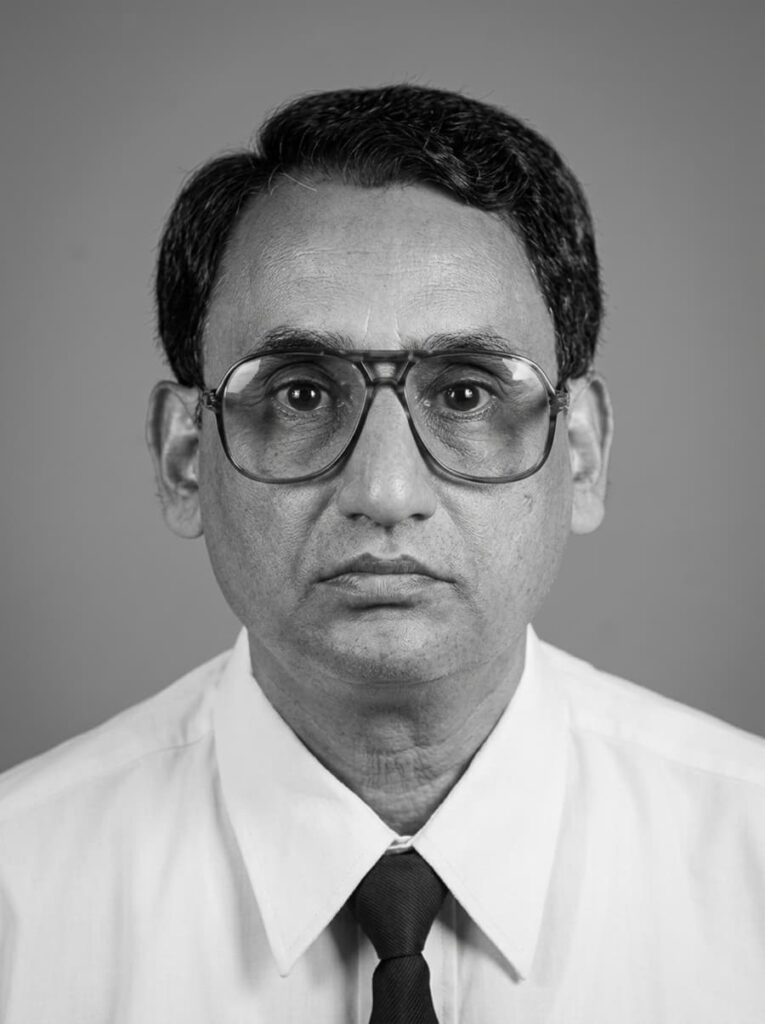
In June 2016, visiting his sister in Nagpur, he sat on a swing. It broke. He fell, injuring his neck. Paralysis followed — arms and legs refusing to obey. Four years of physiotherapy. His wife Jyotsna’s care, constant and patient. Gradual, partial return.
He never asked why.
“Life unfolds as predestined,” he would say. Lord Vishnu, Vitthal, and Rukmini were central to his prayers. He had been a regular visitor to Pandharpur. He carried no regrets and harboured no bitterness — qualities that, after a career which included failing his MD on the first attempt, serving for nearly a decade under a man who had once been his student, and spending thirty-four years building a department in conditions of chronic resource scarcity, had been genuinely earned rather than merely professed.
Nagpur, an Engineering Dream, and a Grandfather’s Sigh
Narayan Shyam Rao Ingole was born on October 11, 1953, in Nagpur, the second of six children. His father brokered deals in the paan market by day and prepared Ayurvedic herbal remedies by evening. His mother Shashikala Bai managed the household without formal schooling. He walked to primary school in Itwari and attended New English High School in Mahal, harbouring ambitions of chemical engineering.
The turning point came when he saw his grandfather — weak, frail, in Indira Gandhi Medical College — sigh and say: “There should be a doctor in the family.” The statement settled in him. He traded his mathematics textbooks for biology and enrolled in a BSc at the Institute of Science, Nagpur.
In 1971, MGIMS called for an interview. The panel included Dr. Sushila Nayar presiding, Maharashtra Health Minister Pratibha Patil among a dozen panellists, and a clerical mix-up that had already approved another candidate using Narayan’s selection papers by mistake. Dr. Nayar was furious — at the staff, at the confusion, at the situation — and delegated the interview to the remaining panellists while she recovered her composure.
Mr. Kakade, a lawyer on the panel, asked: “Have you ever smoked?”
“No, sir.”
“Your friends must be smoking.”
“No, sir. I don’t have friends who smoke.”
A professor: “Do you know the harms of smoking?”
“Sir, I know it can cause lung cancer.”
“What else?”
“I don’t know, sir. But if you give me a chance to study medicine, I will find out.”
He left uncertain. He enrolled in a B.Tech. course at Laxminarayan Institute of Technology. A week into engineering, a telegram arrived: he had been accepted at MGIMS.
At the admission office, a stranger approached him. “I’ll give you ₹5,000. Just let my son take your place.” A fortune in those days. He paid his own fees instead, becoming Roll No. 22 of the MGIMS Class of 1971.
The Student Years and a Failed Exam
The first month was orientation at Gandhi’s ashram — prayers at four in the morning, voluntary labour, khadi spinning, shared campus cleaning. His batch was the first to undergo the full month; the following year, faculty complaints about lost classroom time shortened it to two weeks for all subsequent batches.
He lived in Patel Hostel, then Dharmanand Hostel, then C Block of the new boys’ hostel. Surgery fascinated him. In his final MBBS examinations, he failed it. Six months later, he passed. He completed house jobs in surgery under Dr. Narang and orthopaedics under Dr. Ahuja, intending to pursue postgraduate surgery.
MGIMS offered no postgraduate seats in surgery. BJ Medical College in Pune had places, but they were unpaid. Three years without income was not possible for him. He stayed at MGIMS and enrolled in Pathology — not by passion, initially, but by circumstance. The circumstance eventually became a calling.
In 1978, he joined the Pathology department as Demonstrator. The department then had six lecturers, all MBBS graduates doing their postgraduations simultaneously: Lele, Narang, Khan, S.M. Sharma, Santosh Gupta, and Bhongade. Small rooms, flickering lights, manual blood smears, histopathology slides stained in glass trays, no automated equipment. Teaching slides were scarce because patients were scarce. Faculty sketched microscopic findings on blackboards and reconstructed classic cases from memory.
For his MD thesis, he needed a hundred photographs. Dr. Ahuja lent him his personal Nikon camera. Dr. Moghe insisted on professional photographs from Retina Studio in Nagpur — an expense exceeding a professor’s monthly salary. He found the money.
In April 1981, he sat his MD examination. The external examiner Dr. Shridhar Agrawal from Raipur was a legend for severity — it was said he believed first-attempt passes were not possible, and he proved it across three medical colleges simultaneously, passing only two candidates. Ingole was not one of them.
He returned in October 1981. This time, with different examiners at GMC Nagpur, he passed. His career at MGIMS had begun in earnest.
The Department He Built
He rose through the standard academic ladder — Lecturer, Reader, Associate Professor, Professor — over more than two decades of steady, methodical work. Along the way, an unusual institutional arrangement shaped a significant part of his middle career.
When the university advertised a single professorship, Dr. S.M. Sharma — the department head — chose not to apply. Out of deference to his senior, Ingole also refrained. This left Dr. Nitin Gangane, seven years his junior, as the sole candidate. Gangane was appointed Professor. For nearly a decade, Ingole served in a department formally headed below him by his own former student.
He did not allow it to strain either relationship. Dr. Sushila Nayar, recognising the awkwardness immediately, created an independent professorship in haematology for Ingole — preserving his seniority and insulating him from the institutional fallout. His camaraderie with both Sharma and Gangane remained intact before and after his retirement. This was not a small achievement.
He mentored twenty-five postgraduate students across his career. He led histopathology and haematology, modernised diagnostic techniques, replaced slow haemoglobin electrophoresis methods with faster alternatives, and introduced automated cell counters that transformed blood analysis. As head of the blood bank, he built a year-round blood donation calendar that grew the bank’s annual collection from a handful of donations to 4,000 bottles by the time he retired.
His working method was the method of his era: patience, scrutiny, methodical cross-checking. Hours over slides, books consulted, Dr. Khedikar at IGMC Nagpur telephoned when a case remained uncertain. No flamboyance, no innovation for its own sake. Accuracy achieved through repetition, judgement sharpened through experience.
The Accident, and After
He retired in October 2015. Then came the swing in his sister’s home in Nagpur, the sudden snap, the fall, the paralysis. Four years of physiotherapy. Jyotsna’s care. Gradual, partial recovery — enough to walk with support.
He never once asked why. He is a devout man who believes life unfolds as it is meant to, and this belief, held not as performance but as genuine orientation, carried him through the slow work of recovery with a grace that struck those who knew him as entirely characteristic.
He married Jyotsna Pokale of Wardha on January 12, 1983 — after completing his MD, in keeping with the personal rule he had set himself. Their son Abhishek, an MGIMS alumnus from the class of 1998, completed his MD in Community Medicine at the same institution. The family pattern of MGIMS, continued across generations.
He lives now in his own house on the Wardha-Sevagram road, three minutes from the hospital. His days are peaceful. He carries no regrets. The department he helped build over thirty-four years has automated cell counters, immunohistochemistry, molecular diagnostics, liquid-based cytology, AI-assisted screening — a transformation so complete that the department of the 1980s, with its glass staining trays and borrowed Nikon camera and blackboard drawings, seems like another world.
It was another world. He built the bridge between them, slide by slide, donation by donation, student by student, in the quiet methodical way that was always entirely his.
Mentored Students (MD/MS)
Pancytopenia : A clinicopathologic analysis of 219 cases
Platelet volume parameters in health and disease
Prevalence and co-infection of infectious disease markers in blood donors in a rural hospital in Central India
Leucocyte alkaline phosphatase activity in non-hematological malignancies and its utility as a probable predictor of metastasis with emphasis on breast and colon cancer
Haemostatic Alterations in Sickle Cell Haemoglobinopathies
Thrombocytosis: Age Dependant Etiology and Utility of Platelet Volume indices in Differential Diagnosis
Hemostatic Alteration in Liver Diseases
An Audit of the Fresh Plasma Usage and Study of the Effect of Fresh Frozen Plasma Transfusion on international Normalized Ratio (inr).
A study of ethylene diamine tetraacetic acid (EDTA)- dependent pseudothrombocytopenia
Study of haemostatic profile in patients of type 2 Diabetes Mellitus and Relationship of fibrinogen level to glycemic status (HbA1C) and duration of disease
Key Milestones
| 1953 | Born, 11 October, Nagpur |
| 1971 | Accepted at MGIMS — refused ₹5,000 bribe, became Roll No. 22, Class of 1971 |
| 1971 | First batch to complete full month orientation at Gandhi’s ashram |
| 1978 | Joined Pathology department as Demonstrator |
| 1981 | Failed MD examination, April — Dr. Shridhar Agrawal, external examiner |
| 1981 | Passed MD examination, October — GMC Nagpur |
| 1983 | Married Jyotsna Pokale of Wardha, 12 January |
| 1981 | Joined MGIMS faculty formally, 1 March |
| 1990 | Dr. Nitin Gangane — former student — appointed Professor above him; Dr. Nayar created independent haematology professorship for Ingole |
| 2015 | Retired, 31 October — after thirty-four years |
| 2016 | Accident at sister’s home, Nagpur — fell from swing, paralysis followed |
| 2020 | Gradual partial recovery after four years of physiotherapy and Jyotsna’s care |