Dr. B. K. Mahajan
Professor & Head of Social and Preventive Medicine · MGIMS Tenure 1973 – 1982 Lifespan 15 July 1915, Chuhar Munda, Sialkot, West Punjab — — Education MBBS: University of the Punjab (1940)Diploma in Public Health (DPH): United Kingdom (1962)
Medical & Hospital Administration: London School of Hygiene and Tropical Medicine
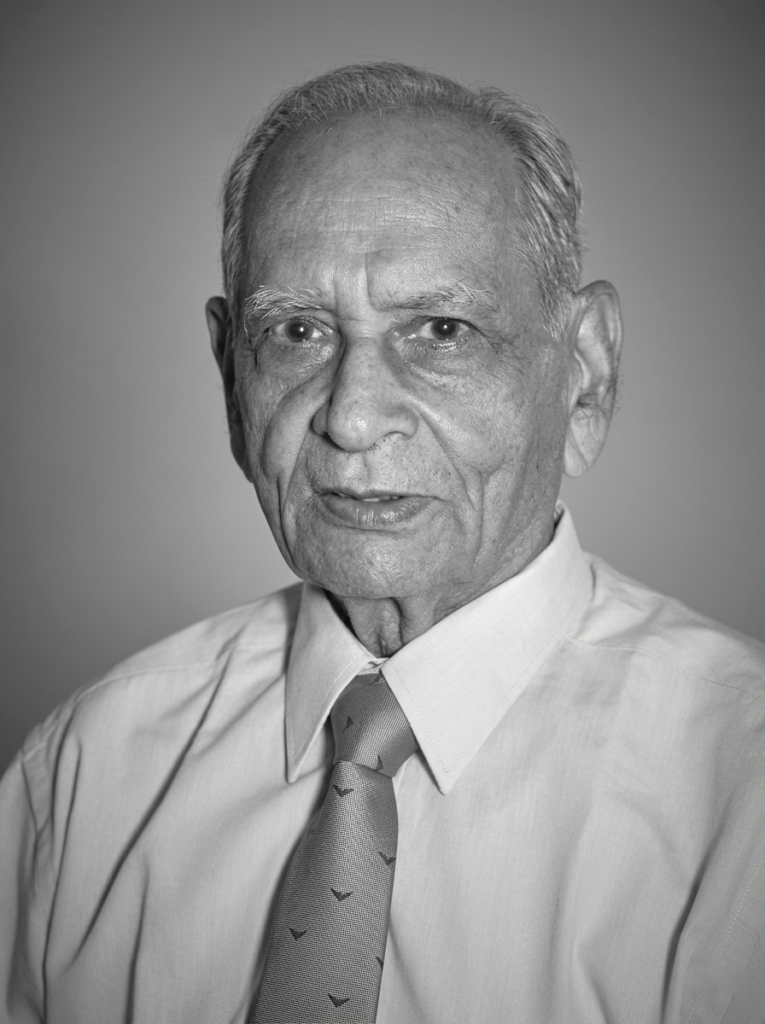
On the morning of July 17, 1973, a train from Delhi pulled into Wardha station carrying a fifty-eight-year-old doctor with a neatly packed suitcase and, by all accounts, no intention of slowing down. Dr. B.K. Mahajan had just finished fourteen years as head of the Department of Preventive and Social Medicine at M.P. Shah Medical College in Jamnagar. He had also spent thirteen years before that in the Bombay State Health Services — as epidemic medical officer, plague control officer, district health officer, deputy director of public health — battling the diseases that moved through poor populations like water through cracked ground. He could, at fifty-eight, have stopped.
Instead, he had accepted Dr. Sushila Nayar’s invitation to come to Sevagram and build a department. He stepped onto the dusty platform at Wardha and hired a conveyance to the campus. What awaited him was a medical college that had been running for four years, a community medicine department in early formation, and a founding director who had already decided that her students would learn medicine from villages, not only from wards.
Mahajan had been preparing for this, without knowing it, his entire career.
From Sialkot to Sevagram
He was born on July 15, 1915, in Chuhar Munda, in the Sialkot district of what was then West Punjab — a landscape that no longer exists as he knew it, erased by Partition thirty-two years before he arrived in Maharashtra. His MBBS from Punjab in 1940 placed him fifth in the university. Prizes and scholarships followed.
His formation was unusually wide. Thirteen years in the Bombay State Health Services gave him the epidemiologist’s habit of mind — the capacity to read a district rather than a patient, to see a disease not as an individual misfortune but as a consequence of water, housing, nutrition, and neglect. In 1961 and 1962, under the Colombo Plan, he trained in preventive and social medicine in the United Kingdom, then studied medical and hospital administration at the London School of Hygiene and Tropical Medicine. By the time he arrived in Jamnagar for his first professorship, he had accumulated the kind of experience that no examination could confer.
The twenty-two research papers he published at Jamnagar covered filariasis, leprosy, smallpox, nutrition, water supply, and primary healthcare — a map of the public health problems that rural India faced and that urban medicine, trained in tertiary hospitals, was not designed to address. When Nayar was looking for someone to run community medicine at MGIMS, Mahajan’s record made him the obvious choice. The question was whether he would come.
He came.
Sleeping on Charpoys
The programme that Mahajan inherited and built was, by the standards of Indian medical education in the 1970s, radical. First-year students — fresh from their school-leaving examinations, barely adults — were sent into villages. Not for a day trip. For ten to twelve days at a time, sleeping on charpoys, eating jowar bhakri, drawing water from wells, living as the people they were being trained to serve actually lived.
Dr. Ashok Mehendale, from the 1973 batch, remembered the geography of those early camps: Sevagram and Warud for the first batch in 1969, then Panar, Kharangana, Kutki, Karanji Bhoge, Barbadi, Mhasala in successive years, each village receiving a batch of students who arrived with their medical bags and left, a fortnight later, with something that no pharmacology lecture could provide: an unambiguous understanding of what poverty looked like from the inside.
“It was a life they had never known — simple yet harsh. And it changed them forever.”
The National Medical Commission made comparable programmes mandatory for Indian medical colleges in 2023. MGIMS had been running them for more than fifty years.
The General Outpatient Department was the other instrument. Conceived with Nayar and executed by Mahajan, the GOPD was designed to function as a primary health centre nested inside a teaching hospital — a place where students saw the common ailments of a rural population before they were routed upward to specialties, where antenatal care sat alongside anti-rabies vaccines and tuberculosis follow-up, where triage was not a bureaucratic function but a clinical education. Students who passed through the GOPD early in their training understood, before they ever entered a specialty ward, that most of what a doctor encounters in practice is neither dramatic nor specialised.
In the classroom, his method was Socratic and unforgiving of passivity. “Tell me,” he asked a student in the middle of a lecture, “if you were to start a malaria control programme in this very village, where would you begin?” There was no rote answer. He wanted them to think like practitioners, not like examination candidates. Dr. V.K. Gupta, from the 1976 batch, remembered that Mahajan kept his lectures anchored to the epidemiological triad of agent, host, and environment — and trusted students to read the rest. “The rest,” he would say, “you can easily find in your textbooks.” What they could not find in textbooks was the thing he gave them in the field.
He went to the villages himself. He walked when he had to, mapping disease patterns, running health camps, taking notes that his students remembered long afterward — not for their length but for what they noticed. He saw the subtle shifts in disease trends, the gaps between what government reports recorded and what was actually happening in a household. His students learned, by watching him, that the most important skill in public health was attention.
In June 1977, Nagpur University recognised MGIMS for postgraduate studies in Community Medicine — the first such recognition in the region. The first four MD students were Dr. Anand Tatte, Dr. G. Subrahmanyam, Dr. M.C. Mathew, and Dr. Luis A.V. Barreto. Nayar and Mahajan guided them together.
Number 14, MLK Colony
Sevagram was unlike anywhere Mahajan had worked before. The pace was slow. The campus was small. He lived at 14 MLK Colony with his wife Aruna, and the house became, in the way that certain houses on small campuses do, a place people gravitated toward — a space where ideas were exchanged and the warmth of the couple inside made the address familiar to everyone on campus.
His closest companion at MGIMS was Dr. M.L. Sharma of the Pharmacology department. Their friendship was a feature of campus life — two senior men of a certain seriousness, and between them an ease and humour that those around them found reassuring. Mahajan’s Punjabi — pure, lilting, carrying the cadences of a Punjab he had left decades before — would emerge in moments of pleasure or teasing. He had a fondness for catching medical students off-guard, leaving them both confused and smiling.
His colleagues found in him a particular quality of fairness. He listened to residents rather than merely instructing them. He sought the views of nurses. He treated the laboratory technicians with a patience and precision that made them trust him. Even the administration softened around him, because he never bullied and never raised his voice, and yet, somehow, always got what he needed.
The Lalit Mahajan Award
On January 24, 1966 — the day Indira Gandhi was sworn in as Prime Minister — an Air India Boeing 707 crashed near Mont Blanc. Among the 117 people killed were the physicist Homi Bhabha and Lalit Mahajan, B.K. Mahajan’s twenty-two-year-old son, who was on his way to the United States to study engineering.
Mahajan did not speak of this often. Those who knew him in Sevagram knew it as background — a sorrow that had been carried for years before he arrived, that had not broken him but had altered him in ways that a man of his reticence would not have named. To keep his son’s memory present in a form that had meaning, he established the Lalit Mahajan Award, given each year to the best student in Preventive and Social Medicine. A father’s loss, redirected toward the subject to which he had given his working life.
What the Nine Years Built
He left Sevagram in August 1982, after nine years. Col. S.K. Chatterjee left the same month. Two founding figures gone simultaneously, a gap that the department would take years to close.
He went to AIIMS, New Delhi, as a senior consultant for the Integrated Child Development Services, working on child health policy at a national level until 1988, then advised the Delhi Council of Child Welfare until 1997. The work continued to move outward, as it always had with him — from the individual patient to the community, from the community to the district, from the district to the country.
What he left at MGIMS was structural. The village immersion programme, the GOPD as a model of integrated primary care, the postgraduate curriculum in community medicine, the cohort of doctors who understood — in their bodies as well as their minds, because they had slept on charpoys and eaten jowar bhakri — that public health was not a specialty practised in hospitals. It was a way of seeing that either developed early or not at all.
Dr. Suneela Garg, from the 1974 batch, remembered his rare capacity to bring together people who did not naturally cooperate — bureaucrats, policymakers, villagers, students — and hold them in the same room long enough to accomplish something. He visited the villages himself, she said, and addressed problems directly rather than delegating them downward.
The Lalit Mahajan Award is given every year. The villages are still visited. The GOPD still runs. The man who sent doctors to sleep on charpoys in Vidarbha’s villages is gone, but the habit he instilled — of looking past the patient to the conditions that produced the patient — is still, fifty years later, part of what MGIMS does.
Mentored Students (MD/MS)
Assessment of Nutritional Status of Preschool children in a rural community around sewagram with special reference to impact of state supplementary feed program
A Study of Perinatal Mortality
Anemia in school children in the age group of 6-14 years
Key Milestones
| 1915 | Born, 15 July, Chuhar Munda, Sialkot district, West Punjab |
| 1940 | Completed MBBS, Punjab — fifth in university |
| 1940 | Joined Bombay State Health Services — epidemic medical officer, plague control officer, district health officer, deputy director of public health |
| 1953 | Joined M.P. Shah Medical College, Jamnagar — Professor & Head of Preventive and Social Medicine |
| 1961 | Training in Preventive and Social Medicine, United Kingdom — under Colombo Plan |
| 1962 | Medical and Hospital Administration, London School of Hygiene and Tropical Medicine |
| 1966 | Son Lalit Mahajan killed — Air India Boeing 707 crash near Mont Blanc, 24 January — 117 killed including Homi Bhabha |
| 1973 | Arrived MGIMS, 17 July — aged fifty-eight |
| 1977 | Nagpur University recognised MGIMS for postgraduate studies in Community Medicine, June — first in region |
| 1982 | Left MGIMS, August — joined AIIMS New Delhi as senior consultant, ICDS |
| 1988 | Advised Delhi Council of Child Welfare — until 1997 |