Dr. Omprakash Gupta
Professor and Head of Medicine · Medical Superintendent · Dean · MGIMS Tenure 1971–2023 Born 2 July 1942, Chirgaon, Jhansi district, Uttar Pradesh Education MBBS, Gajra Raja Medical College Gwalior (1966)MD General Medicine, Gajra Raja Medical College Gwalior (1969)
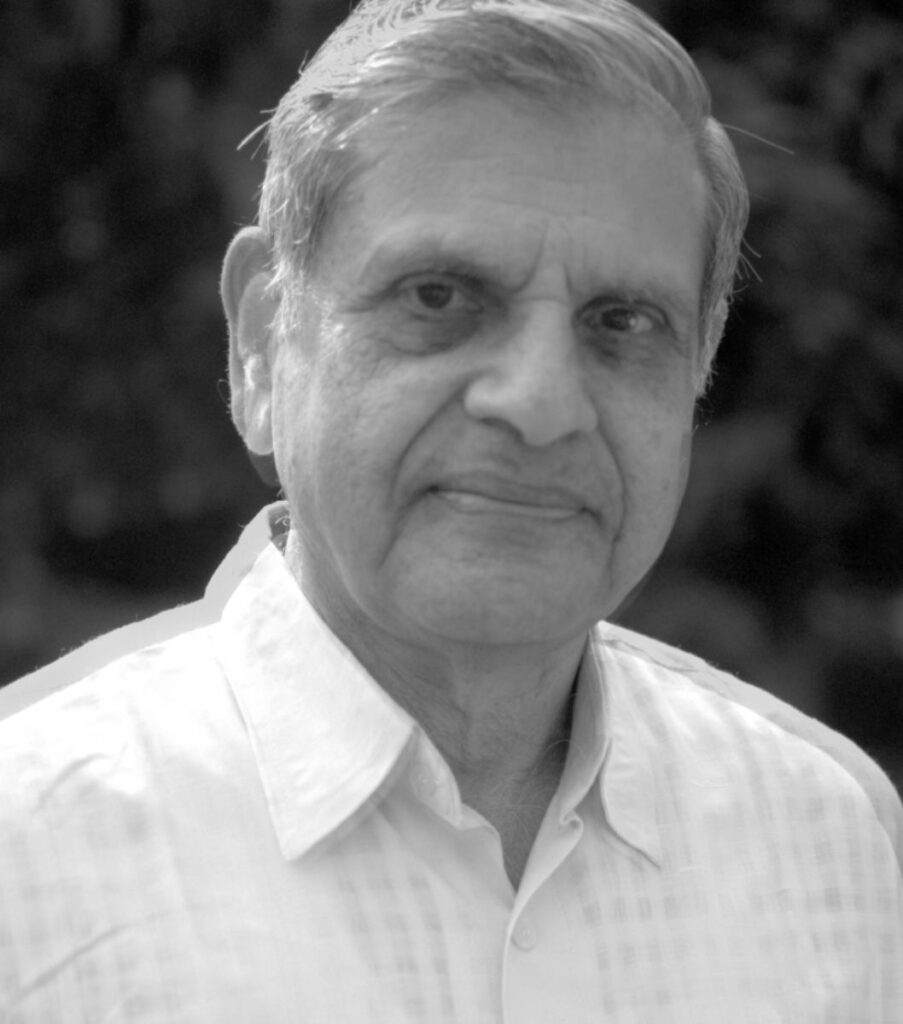
At Eighty, Still Early
In July 2022, at the age of eighty, Dr. O.P. Gupta began volunteering at MGIMS. He had already retired from the headship of the Department of Medicine, from the medical superintendency of Kasturba Hospital, and from a decade as Dean. He had his chest opened for a bypass in 1995 and an angioplasty in 2020. By any reasonable measure, he had done enough.
Yet, at the postgraduate sessions he attended as a volunteer, he was always the first to arrive. He walked briskly. He stood straight. When a presentation contained a subtle clinical error, he found it. When a resident needed encouragement, he offered it. He did not invoke his staggering fifty-one-year institutional history as a reason for anyone to listen to him. He simply sat down and began to teach.
He would stay another year, finally retiring in August 2023. His fifty-two-year tenure is the longest in the history of MGIMS, a span that encompasses the institution’s entire existence from its chaotic third year through its modern sixth decade. Between 1969 and 2022, he taught every single medical student admitted to the college—3,680 future doctors. Today, his students practice medicine across the globe. On February 14th each year, they celebrate his birthday with the warm, grateful reverence reserved for people who were formed by someone whose discipline was absolute, but whose kindness was deeper.
Chirgaon, Gwalior, and the Path to Sevagram
Om Prakash Gupta was born on July 2, 1942, in Chirgaon, Jhansi. The youngest of four children, he completed his BSc in Gwalior and entered Gajra Raja Medical College in 1961. He had initially wanted to be an orthopaedic surgeon, but he found his true calling in internal medicine, completing his MD in 1969.
After a mandatory two-year government service requirement, he arrived at MGIMS on September 20, 1971. He did not apply through a formal advertisement, nor did he leverage a powerful connection. (Dr. Sushila Nayar, the formidable founder-president of MGIMS, hailed from his exact hometown, but he deliberately chose never to mention it. He wanted the position on its merits, or not at all).
He was twenty-nine years old when he joined as a Demonstrator. He would not leave for fifty-two years. His professors had practically demanded he enter lucrative private practice, but he found Sevagram’s serene simplicity and the prospect of a lifetime of teaching far more compelling. “For me,” he later reflected, “the decision was as simple and straightforward as that.”
The Birla Guest House Wards
When he arrived, the Department of Medicine had exactly three faculty members. Within weeks, one left. Dr. Gupta and the department head, Dr. S.P. Nigam, were left to shoulder the entire clinical, teaching, and administrative load of the nascent institution between the two of them.
For nearly fifteen years, Gupta admitted and treated patients in a decaying two-story building originally constructed by G.D. Birla as a guest house for visitors to Gandhi’s ashram. The general wards resembled dormitories, dimly lit by flickering tube lights. There were no mechanical ventilators, no multipara monitors, no infusion pumps, and no central oxygen. The most advanced piece of equipment in the entire building was a single ECG machine.
Every morning at 8:00 a.m., Dr. Gupta met with Dr. A.P. Jain and Dr. Ulhas Jajoo to painstakingly review the ECG interpretations made by residents overnight. This was not a formal protocol; it was the daily discipline required to maintain clinical excellence in a place with virtually no resources. Living a short walk from the wards in MLK Colony—in an era without television or mobile phones—he visited the wards unannounced in the evenings. He did not come to inspect or intimidate; he came to ensure his patients were safe.
The Teacher of 3,680 Students
He became the Head of Medicine in May 1980. Trained in the classic bedside tradition, he taught residents that while machines can confirm a diagnosis, a careful physical examination reveals it. Yet, he was never trapped in the past; he personally introduced echocardiography to the department in 1990, demonstrating that the preservation of clinical skills and the embrace of new technology were entirely complementary.
He did not delegate teaching. He guided thirty-four MD students to completion, listening to every family and every resident with absolute patience, even when the wards were overflowing.
“Dr. Gupta mastered the rare skill of bringing joy and engagement to every task,” recalled Dr. Tejal Lathia. Dr. S.P. Kalantri, who joined his unit in 1983, remembered something quieter: a lunch invitation shortly after Kalantri’s marriage. Gupta and his wife, Geeta, received the young newlyweds as though they were the most honored guests the house had ever seen. The warmth was not reserved for formal occasions; it was simply the daily temperature of the man.
The Dean Who Did Not Act Like One
Dr. Gupta served as Medical Superintendent from 1985 to 1990, and then as Dean from 1994 to 2002. His leadership was defined by what he did not do: he did not project authority, he did not raise his voice, and he fiercely kept the institution clear of the nepotism and favoritism that routinely plague medical administration.
His most profound administrative legacy was introducing multiple-choice questions to the pre-medical entrance test, replacing the vulnerable long-essay format. It was a structural reform that made the selection process fairer, more objective, and impossible to improperly influence.
His quiet administrative grace extended to his relationship with Dr. Sushila Nayar. In her later years, when profound hearing loss caused her visible anguish during administrative meetings, Gupta began sitting beside her. Without being asked, he wrote out the ongoing conversations in longhand so the aging founder could still follow the proceedings of the institution she had built. It was the simple, practical, deeply human response of a physician to a patient in need.
August 1990
In August 1990, at just forty-eight years old, the man who had spent his life treating heart attacks suffered an acute inferior myocardial infarction. It shocked the campus. He was thin, walked briskly, ate sparingly, never smoked, and had pristine blood sugar.
He recovered, eventually undergoing a bypass in 1995 and an angioplasty in 2020. He applied the same rigorous, proactive discipline to his own secondary prevention as he demanded of his residents. The man who had managed heart failure in a Birla guest house with nothing but an ECG machine lived to experience the full, miraculous progression of modern cardiac medicine as a patient—and he returned to work, always the first to arrive.
The Upanishads and the Digital Age
He retired from administration, but his mind never stopped moving. He edited the Journal of MGIMS for eighteen meticulous years. In his later life, encouraged by Mrs. Kamala Desikan, he took up sketching and painting.
Most remarkably, he cultivated a deep passion for poetry. His collection, Roshani ki Anant Talash, reflected the philosophical depth he had always brought to medicine. In a beautiful act of intellectual playfulness, he translated the Mandukya Upanishad—the shortest of the ancient texts—into haiku-style Hindi verse.
Today, at eighty-three, he types with the blistering speed of a professional and posts his chaste Hindi poetry on Facebook, where former students across the globe share it widely. Dr. Kalantri frequently spotted him through the wooden partition of their offices, hunched over his computer screen, deeply engrossed in learning something entirely new from the internet.
What Fifty-Two Years Contains
His wife, Geeta, retired as the Principal of Kasturba Vidya Mandir and continues to serve the women of Wardha. Together, they raised three highly successful children: their son Dilip, now the Head of Surgery at MGIMS; their son Sanjeev, a Vice President at Capgemini; and their daughter Deepti, a Senior Health Service Officer in Mumbai.
When Dr. Gupta finally retired in August 2023 alongside his lifelong colleague Dr. A.P. Jain, their combined departure stripped the department of over a century of clinical wisdom. The atmosphere in the hospital felt noticeably, permanently quieter.
He arrived at twenty-nine, when the institution was barely three years old. He left at eighty-one, having taught every student it had ever admitted. Across those fifty-two years, he turned up early, stayed late, and treated the people in the rural wards as though their care was the absolute center of the medical universe. In Sevagram, it was always supposed to be. And because of Dr. O.P. Gupta, it actually was.
Mentored Students (MD/MS)
Study of alpha-1 antitrypsin deficiency in chronic adult liver diseases
A study of Cor pulmonale in pulmonary tuberculosis
A comparative study of efficacy of anti-reactive drugs in therapy of type II lepra reaction utilizing immunological parameters of acute phase reactors and circulating immune complexes
A study of cardiac autonomic dysfunction in diabetes mellitus
Clinico- immunological correlative study of pulmonary and meningeal tuberculosis with special reference to cell mediated and humoral immunity
A study of latent ischemic heart disease asymptomatic diabetes using treadmill exercise test
Exercise electrocardiography in the evaluation of coronary artery disease in asymptomatic hypertensive individuals
Immunodiagnosis in tuberculosis meningitis
Treadmill exercise testing in bronchial asthma
Mycobacterial antigen detection for Immunodiagnosis of tuberculosis
Left ventricular muscle mass by echocardiography
Primary derived M-mode Echocardiographic parameters for diagnosis of left ventricular hypertrophy
Left ventricular mass in normal individuals with abnormal pressor response to physical and mental stress.
Comparative study of left ventricular function measurement of various parameters in normotensive pregnancy induced hypertensive women
Study of serum fructosamine levels in obese, non-obese, normal individuals and diabetes adults: correlations with glucose tolerance test and serum lipids
A comparative study of noninvasive methods for determination
A study of cardiovascular status in the elderly patient
A study of outcome of critically ill patient requiring intensive care at rural hospital Sevagram ( by modified Apache iii scoring )
A study of cases of myocardial infarction with special reference to risk factors prognostic indications
The study of prevalence of HIV infection in Patients with tuberculosis
Prevalence of rheumatic heart disease among school children a rural area in Vidarbha
A study of hyperinsulinemia in hypertension
Infections atherosclerosis : focus on chlamydia pneumoniae helicobacter pylori
The association of the ankle brachial index with coronary artery diseases
Role of C-reactive protein and cardiac troponin-T as prognostic marker in acute myocardial infarction
The Association of The Ankle Brachial index with coronary artery diseases : A cross sectional study
Study of carotid intimal medial thickness and apolipoproteins in patient of stroke
Prevalence of Left Ventricular Systolic and Diastolic dysfunction in normotensive and Asymptomatic Diabetic Patients
Prevalence of Pulmonary Hypertension in Sickle Cell Anaemia in a Rural Hospital of Central India
A comparative study of C-Reactive Protein and ST score (ECG) as prognostic indicators in a case of acute myocardial infarction in a rural hospital of central India
Key Milestones
| 1942 | Born, 2 July, Chirgaon, Jhansi district, Uttar Pradesh |
| 1961 | Entered Gajra Raja Medical College, Gwalior |
| 1966 | Completed MBBS |
| 1969 | Completed MD General Medicine — under Professor Ajay Shankar |
| 1971 | Joined MGIMS, 20 September — Lecturer in Medicine; chose not to mention that Dr. Nayar was from his hometown |
| 1973 | Promoted Reader |
| 1980 | Head of Department of Medicine, May — Associate Professor |
| 1983 | Full Professor, June |
| 1985 | Medical Superintendent, Kasturba Hospital — until 1990 |
| 1990 | Introduced echocardiography to MGIMS Medicine department |
| 1990 | Acute inferior myocardial infarction, August — thin, non-smoker, normal blood sugar; profuse sweating the presenting sign |
| 1994 | Dean, MGIMS — until 2002; introduced MCQ to pre-medical entrance examination |
| 1995 | Coronary artery bypass surgery |
| 2002 | Editor, Journal of MGIMS — until 2020; eighteen years |
| 2020 | Angioplasty |
| 2022 | Began volunteering at MGIMS postgraduate sessions, July — aged eighty; always first to arrive |
| 2023 | Retired, 31 July — 18,942 days; the longest tenure in this book |