Dr. A.P. Jain
Professor and Head of Medicine · Medical Superintendent · MGIMS Tenure 1974–2023 Lifespan 1 May 1945, Sikandrabad, Bulandshahr district, Uttar Pradesh — 15 March 2025, Sevagram Education MBBS, King George's Medical College LucknowMD General Medicine, KGMC Lucknow
PhD, Nagpur University (1990)
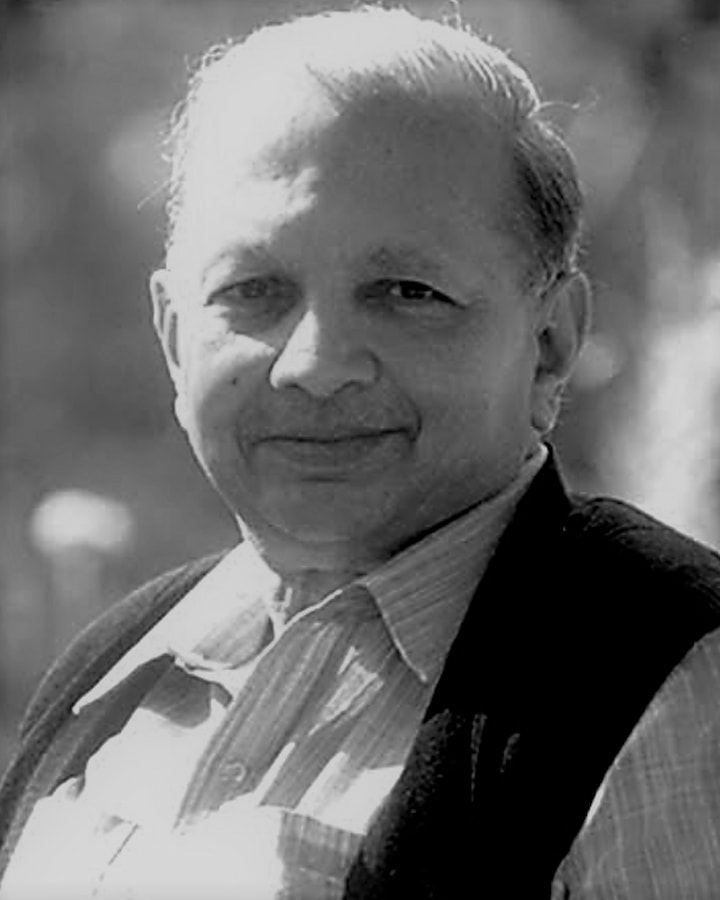
The Last Conversation
Four days before he fell, Dr. A.P. Jain walked into Dr. Kalantri’s office and sat down. They spoke for an hour—about the past, the present, and what he hoped for in the days ahead. His hands trembled, and his steps were heavily unsteady, but there was absolutely no fear in his voice.
He said, simply: “I take life as it comes.” Then, with shaking hands, he pushed back his chair and walked away.
On February 6, 2025, he fell in his bathroom, suffering a devastating brain hemorrhage. He spent four weeks navigating critical care units in Nagpur and Sevagram. He died on March 15, 2025, inside the very ICU where he had taught, treated, and mentored for nearly fifty years—connected, in the end, to the dialysis machines he himself had introduced to the hospital two decades before.
His name, Ajeet, meant unconquerable. Those who knew him found the name astonishingly precise.
Sikandrabad, Lucknow, Sevagram
Born on May 1, 1945, in Sikandrabad, western Uttar Pradesh, he was the sixth of nine children. He completed his MBBS and MD at King George’s Medical College in Lucknow. After briefly exploring psychiatry, he found his permanent, unyielding territory in internal medicine.
He married Sushila in Mumbai in 1972 and returned to Sikandrabad to establish a private practice. The practice did not survive. It failed because his patients expected treatment without payment, and he found himself expected to be a physician without sleep. After a brief, frustrating stint at the Durgapur Steel Plant Hospital—where trade unions attempted to dictate his medical prescriptions—he found a vacancy at MGIMS.
He arrived in June 1974. Sevagram in that monsoon season was a two-trains-a-day village, accessible only by horse-drawn tonga, entirely devoid of hotels or English-medium schools. For a couple raised in Lucknow and Bombay, the adjustment was sharp and unforgiving. But Sevagram had a way of making itself necessary to certain people before they quite understood how it had happened. He intended to stay briefly. He stayed for forty-nine years.
Between the Two Ears
He kept a specific, pointed phrase for medical residents who relied too quickly on laboratory tests: The area between the two ears—the brain—is a physician’s first and most powerful instrument. He meant this literally. He had trained in an era where clinical diagnosis was meticulously built from history, physical examination, and a basic X-ray. He brought that fierce discipline to Sevagram and maintained it across five decades, even as the technology around him exploded. He was not a Luddite—he introduced echocardiography to the department alongside Dr. O.P. Gupta, and he procured the hospital’s first hemodialysis unit. He simply insisted that technology must confirm what the physician’s examination had already suggested, never substitute for it.
At the bedside, he physically crouched down to the patient’s level. He listened not only to their symptoms but to their pauses, their hesitations, the things they started to say and abruptly stopped. He took the pulse. He asked a perfectly timed question. He could trace the invisible arc of an illness through history and bare hands alone. His residents watched this method not as a theatrical performance, but as a masterclass demonstrated repeatedly, available to anyone willing to pay attention.
Eight o’Clock, Without Exception
His postgraduate sessions began at 8:00 a.m. Punctuality was not a preference; it was the baseline condition under which teaching was even possible. The structure was beautifully rigid so the learning inside it could be fluid: Mondays were journal clubs, Tuesdays and Thursdays were bedside cases, Wednesdays were mortality reviews, Fridays were X-ray discussions.
In his early years, he was strict in a way that many residents experienced as sheer severity. He routinely dismissed people from the ward for mistakes. He had absolutely no patience for sloppy clinical thinking, careless documentation, or informal English. He corrected their grammar. He corrected their handwriting. For those who survived the crucible, he was modeling a standard of precision that medicine desperately requires but rarely enforces. Looking back across their careers, his students realized the strictness and the brilliance were inseparable.
He guided thirty-four MD students. He established the DNB Family Medicine program and the PG Geriatric Medicine course, both achieving national recognition. In a beautiful piece of institutional irony, the man who had personally failed the DNB examination in 1983 was awarded the National Board’s “Best Teacher Award” in 2018.
Dr. Nayar’s Physician
In 1995, Dr. Sushila Nayar suffered a heart attack. As the powerful founder-president, she could have demanded treatment at AIIMS. She could have flown abroad.
Instead, she chose Dr. Jain as her physician, keeping him in that role until her death six years later. He was not merely her cardiologist; he was the one person she trusted to understand what she needed and to tell her the unvarnished truth about it. To be trusted completely by a woman who had spent decades ruthlessly assessing the trustworthiness of everyone around her was not a medical credential. It was a measure of absolute character.
The Ataxia and the Restraint
In 2018, he was diagnosed with a rare, progressive genetic ataxia. There is no cure. Suddenly, every physical step became a conscious, dangerous calculation. His hands, which had held a stethoscope with the relaxed authority of half a century of practice, began to tremble violently when he wrote. Vertigo constantly threatened his balance. He was forced to grip the podium during presentations. Yet, he fiercely resisted assistance.
He did not ask why. He simply continued. He led rounds, attended seminars, and participated in journal clubs until his contract ended in August 2023.
But his greatest lesson was not taught in a lecture hall. When his wife, Sushila, suffered a catastrophic cardiac crisis in 2022, and later severe sepsis in 2024, she required life support at Sevagram. On both occasions, Dr. Jain stepped back entirely. The physician who had spent his entire life fiercely insisting on his own clinical judgment chose, when it mattered most, to exercise none of it. He placed his wife’s life in the hands of the treating team without a single question, without interference, and without demanding a second opinion. That breathtaking act of restraint told his colleagues more about his profound trust in the institution than fifty years of ward rounds ever could.
The Full House
He survived long enough to see his legacy multiply. His sons, Pramod and Manish, became professors in Orthopaedics and Paediatrics at MGIMS. Their wives, Sonia and Shuchi, rose to head the departments of Dermatology and Obstetrics & Gynaecology. Today, five distinct clinical disciplines are anchored by a single family at the college where he spent his life.
He died in the ICU he had built, on the machines he had procured, inside the hospital he had served for forty-nine years. In his last recorded conversation, he said he took life exactly as it came. He pushed back his chair with shaking hands. And he walked away, unconquered.
Mentored Students (MD/MS)
A study of clinical profile pulmonary functions, radiological and electrocardiographic features and filarial immunoglobulins in tropical pulmonary eosinophilia
A study of humoral immuno regulatory mechanisms in lepromatous spectrum of leprosy with special reference to its reactions
A study of humoral immunological profile in certain hereditary ( sickle cell haemoglobinopathy ) and acquired ( iron deficiency ) anemias
Study of effects of zinc sulphate and levamisole on immune functions in sickle cell hemoglobinopathy
A multidimensional Clinico etiological approach effect of anxiolytic antidepressant drugs in the irritable bowel syndrome
A clinico-etiological study of moderate severe anemia and bone marrow biopsy as a diagnostic technique
Clinico-Echocardiographic correlation of left ventricular function in acute myocardial infarction
Multidimensional study of the clinical profile of acute myocardial infarction
Evaluation of prognostic factors and recovery profile in stroke
Study of lifestyles and effect of sprouting cereals and legumes on blood glucose in diabetes mellitus
Study of glycemic index of some common foods in diabetics and non diabetics
Comprehensive evaluation of the elderly
Study of risk factors for chronic vascular complications in diabetes mellitus with special reference to Microalbuminuria
Profile of cirrhosis of liver amongst hospitalized patients in rural central India
Study of oxygen free radicals and antioxidants in certain disease states involving endothelial injury ( diabetes mellitus, acute myocardial infarction ) and effect of short term vitamin e supplementation
An endoscopic study of dyspepsia with special reference to helicobacter pylori in rural central India
Hospital based study of medical psychological impact of alcoholism
Observational study of polyarthritis in a rural referral hospital in Vidarbha region
Sociodemographic and clinical profile of headache : A rural hospital based study
Profile of heart failure in rural central India: A hospital based observational study
Evaluation of diagnostic tests in pleural effusions
Correlative study of symptoms and spirometry in adult bronchial asthma
Role of carvedilol as add on therapy in heart failure in Central India: A Randomized Controlled Trial
The study of prevalence of sleep apnea syndrome in COPD patients
Role of lifestyle associated risk-factors in the development of hypertension prevalence of target organ damage in the hypertensive population
Clinical and psychological study of attempted suicide in rural teaching hospital
Study of Aetiology, Clinical Profile, Role of Psychiatric Comorbidity and Effect of Treatment of Dyspepsia
Study of prevalence of peripheral neuropathy in asymptomatic and symptomatic diabetic patients by nerve conduction study and the variables affecting its development
To study the effect of Physiotherapy in Patients of Fibromyalgia in a 6- months follow-up period using Fibromyalgia Impact Questionnaire
Risk factors for chronic obstructive airway disease and predictors of acute exacerbation : A prospective study in rural central India
Study of Prevalence of Pulmonary Hypertension in Adults with Cirrhosis of Liver in Rural Hospital in Central India
Correlation of Health Related Quality of Life and 6 minute walk test with Severity of Chronic Obstructive Pulmonary Disease in Rural India
Screening strategies for identification of COPD in the geriatric population of rural central India: A population based study
Detection of chronic kidney disease in high risk groups
Key Milestones
| 1945 | Born, 1 May, Sikandrabad, Bulandshahr district, Uttar Pradesh — sixth of nine children |
| 1972 | Completed MBBS and MD, King George’s Medical College, Lucknow |
| 1972 | Married Sushila Mittal, 26 January, Mumbai |
| 1972 | Private practice, Sikandrabad — patients expected treatment without payment; practice did not survive |
| 1974 | Joined Durgapur Steel Plant Hospital — trade unions attempted to direct prescriptions; left within a year |
| 1974 | Arrived MGIMS, 21 June — Sevagram accessible by tonga, no hotels, no English-medium schools |
| 1982 | Began guiding MD students — 34 students over three decades |
| 1983 | Failed DNB examination — the same National Board gave him its Best Teacher Award in 2018 |
| 1990 | Completed PhD, Nagpur University — under Drs. Choubey and Harinath |
| 1995 | Became Dr. Sushila Nayar’s personal physician — held that role until her death in 2001 |
| 2007 | Established DNB Family Medicine programme — national recognition; ran until 2018 |
| 2008 | Established PG Geriatric Medicine course — national recognition; ran until 2021 |
| 2018 | Diagnosed with rare genetic ataxia — continued teaching, rounds, and seminars |
| 2018 | National Board of Examinations Best Teacher Award |
| 2023 | Retired, 31 July — 17,937 days after joining |
| 2025 | Died, 15 March, Sevagram — brain haemorrhage; connected in the end to the dialysis machines he had introduced |