Dr. Sudha Jain
Professor of Anaesthesiology · MGIMS Tenure 1985 – 1992 · 2004 – 2022 Born 20 December 1958, Chandrapur, Maharashtra Education MBBS, Indira Gandhi Government Medical College Nagpur (1982)MD Anaesthesiology, Indira Gandhi Government Medical College Nagpur (1985)
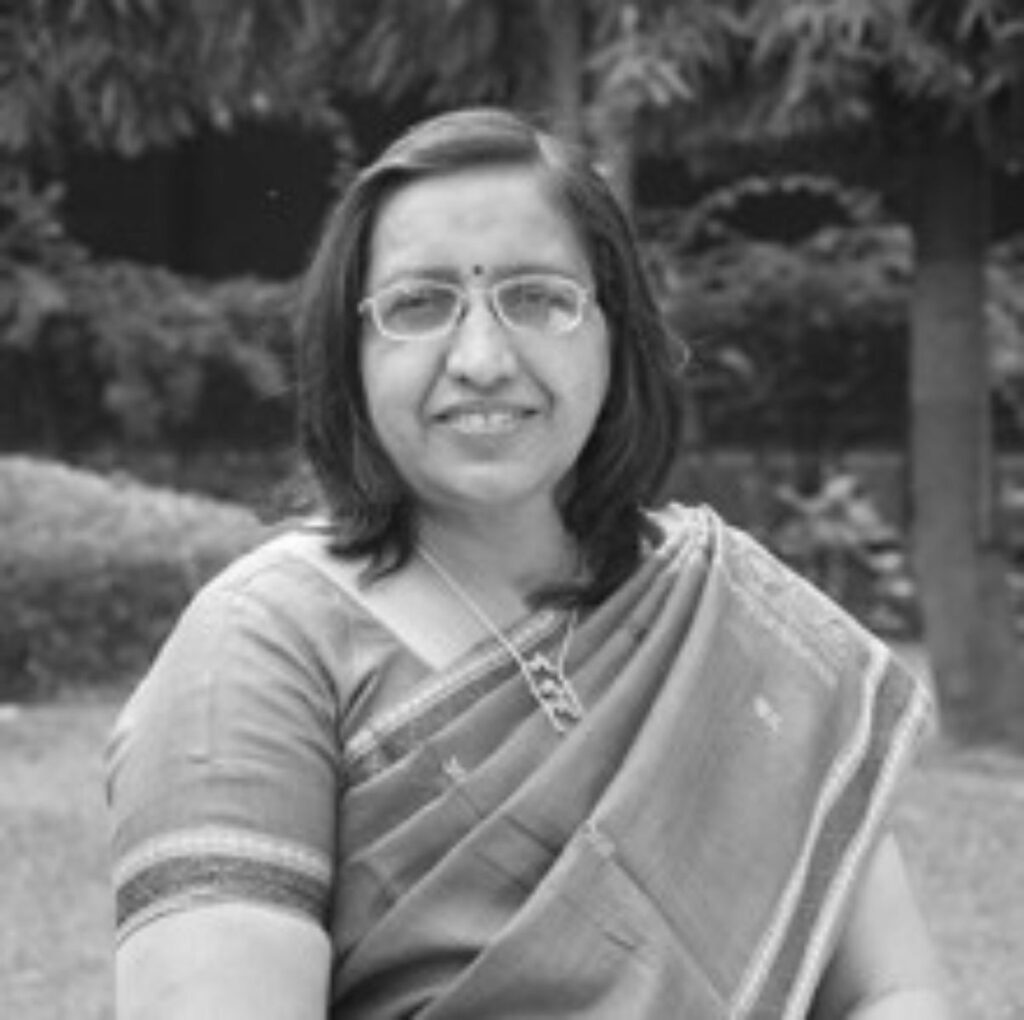
She had desperately wanted to be a surgeon. Dr. A.M. Bhole, the surgery department head at Indira Gandhi Government Medical College in Nagpur, dismissed the ambition with the exact, irritating confidence of a man who has never once had to question his own assumptions. “Surgery is not for women,” he told her. The scalpel, apparently, was too heavy for her hands.
Dr. Aalok Ghosh, a professor of anaesthesiology, offered a radically different view. “Anaesthesia,” he told her, “is a balance of science and skill. It is a thinking doctor’s field.” She was persuaded. She spent the next three years immersing herself in the high-stakes world of inhalational agents and intravenous drugs, completed her MD in April 1985 with a thesis on anaesthetic techniques for direct laryngoscopy, and arrived in Sevagram that November.
It was the beginning of a magnificent, sprawling career that would span leprosy wards in Seoni, high-tech cardiac theatres in Delhi, a rural ICU in Madhya Pradesh, and thirty-two years across two separate tenures at MGIMS. She would ultimately shape the Sevagram anaesthesiology department into something considerably greater than what she had found.
The surgeon who refused to have her lost a good doctor. Anaesthesiology gained a master.
Chandrapur, Nagpur, and the Making of a Doctor
Sudha was born on December 20, 1958, in Chandrapur, the eldest of four children. Her father, Dr. Kapoor Chand Jain, began his career as a laboratory technician at the Government Hospital before transitioning to Ayurvedic medicine, eventually rising to become a Professor and Head of Department at the Government Ayurvedic College in Nagpur. Her mother was the quiet, steady anchor of the household.
Sudha’s early education took place in a Hindi-medium school in Mandi Bamora, Madhya Pradesh. Multiple classes were held simultaneously in a single hall, with students sitting on simple floor mats. It was the kind of elemental, bare-bones simplicity that either permanently defeats ambition or forges unbreakable resilience. In her case, it forged resilience.
She moved to Nagpur for her later schooling, completing her pre-medical studies as a National Merit Talent Scheme scholar who excelled effortlessly in both academics and extracurriculars. In 1976, she gained admission to Indira Gandhi Government Medical College.
When the surgery door was abruptly slammed shut by casual sexism, the anaesthesiology door was opened by genuine respect for her intellect. She walked through it without a single regret. In 1985, seeking stability and a place to actually build something rather than endure the constant specter of government transfers, she answered an advertisement for a Lecturer’s post at MGIMS.
During her interview, Dr. Sushila Nayar grilled her on Ludwig’s angina. Dr. Mankeshwar questioned her on severe tetanus. Sudha answered with growing, unshakeable confidence. While another candidate was initially selected above her, he did not take the post. On November 8, 1985, she arrived in Sevagram.
What She Found in the Operating Theatres
The contrast with her government training environment was immediate and striking. By the standards of 1985, the operating theatres at MGIMS were impressively equipped. There were upgraded Boyle’s Anaesthesia Machines with Mark 2 and Mark 3 Halothane vaporizers. There was an ample supply of nitrous oxide—a gas that was both expensive and absolutely essential for high-risk cases. Thiopental was used routinely for induction, alongside non-depolarising neuromuscular blockers considered far too costly for most government institutions.
While Mayo Hospital in Nagpur—the largest district hospital in Vidarbha—routinely had to suspend major elective surgeries in May because the brutal heat made the operating rooms unworkable, MGIMS was actively constructing centrally air-conditioned theatres.
During her first weeks, the ORs were temporarily housed in the former Burns ward while renovations proceeded. But the institutional commitment to excellence was deeply visible. She found a well-equipped blood bank, a reliable post-anaesthesia care ward, and a culture where anaesthesiologists were integral to the full spectrum of patient care. Here, they monitored complex cancer surgeries with raw clinical skill rather than electronic equipment, bringing deep judgment to the operating table.
She rose to Reader in August 1989. The department remained critically understaffed throughout her first tenure—a massive constraint she managed with quiet, iron determination rather than complaint.
1992: The Decision and the Detour
In 1992, two things happened simultaneously. She cleared the MPSC examination, securing a government posting at the newly opened medical college in Yavatmal. She also married Dr. S.C. Jain, a Surgical Specialist at the Government District Hospital in Seoni. Wanting to be near her new family, she resigned from Sevagram.
But Dr. K.N. Ingley, the former Physiology Head at MGIMS who had recently joined the new medical college in Sawangi, saw in her exactly the person needed to build an anaesthesiology department from absolute scratch. He convinced her to take the challenge. She became Jawaharlal Nehru Medical College’s first Professor and Head of Anaesthesiology. The institution was just twelve kilometers from Sevagram, but a world apart in character—a for-profit venture still finding its identity. She built the foundation, stayed two years, and then moved to Seoni to finally join her husband.
In Seoni, the master anaesthesiologist deliberately pivoted to become a Leprosy Medical Officer. She conducted door-to-door village work, diagnosing, treating, and restoring basic human dignity to patients whose condition carried brutal social stigma. Finding the exact same Gandhian impulse toward service that Sevagram had planted in her, she contributed to the National Leprosy Elimination Programme for three years, presenting her vital work at the World Leprosy Congress in Agra in 2000.
When Seoni District Hospital established a six-bed ICU in 1999, she immediately trained at GMC Nagpur and managed the unit for two years. Relentlessly seeking new skills, she trained as an observer in cardiac anaesthesia at ESCORTS Hospital in Delhi in 2001, returning to assist with cardiac surgeries at Nagpur’s Super-Specialty Hospital.
The Return and the Fight for Mothers
In 2004, she came back home to Sevagram. This time, she brought her husband with her. Taking voluntary retirement from his government service, he joined the Surgery department, while she returned as a Professor on September 1, 2004. The circle was complete, but the arc it described had been far longer and richer than anyone could have anticipated when she first drove away from the campus twelve years earlier.
Her second tenure lasted eighteen years. She mentored eighteen postgraduate students through their MDs in Anaesthesiology, guiding crucial research on induction agents, pain management, and airway management. She led the massive expansion of the department’s operating theatres, watching her specialty completely transform from clinical intuition and Boyle’s machines to advanced electronic monitoring and pulse oximetry.
Of all her monumental achievements, one stood out with particular pride: she fiercely led a government project to train basic MBBS doctors in administering anaesthesia for emergency caesarean sections in highly remote areas where no specialist anaesthesiologist was available. Her own professional association officially resisted the idea. She remained completely resolute. The training went forward anyway. In desperate, rural places where the choice was between an anaesthesiologist who simply wasn’t there, and an MBBS doctor who had been trained to act safely in an emergency, her stubborn insistence mattered directly to the survival of countless mothers and infants she would never even meet.
The Five S’s
Sagar, Seoni, Sadar, Sevagram, Sawangi: five places that shaped her.
She had started her education sitting on a floor mat in Mandi Bamora. She had been bluntly told that surgery was not for women. She had spent three decades learning that absolutely every constraint could be worked around. And she had ultimately returned to the very institution that had first given her the operating theatres she needed to do the miraculous work she was capable of.
Her daughters inherited that exact same drive: Nidhi became a software engineer in the United States; Dr. Deepshikha Jain became a pediatrician (MGIMS Class of 2004); and Dr. Avantika Jain Patni became a pathologist (MGIMS MD 2024). They inherited a mother who had practiced in high-tech teaching hospitals, district clinics, leprosy wards, rural ICUs, and village doorsteps.
After her official retirement on December 31, 2022, Jawaharlal Nehru Medical College in Sawangi reached out once again—their clinical skills lab desperately needed her expertise. Naturally, she went. She served there for two-and a half years before another call arrived in May 2025, this time from the newly founded Dr Rajendra Gode Medical College in Amravati. The offer was for the highest position in the institution: Dean. She accepted the role, and the immense challenge that came with it. Dr. Sudha Jain simply did not seem to know how to stop being useful.
Key Milestones
| 1958 | Born, 20 December, Chandrapur, Maharashtra |
| 1976 | Entered Indira Gandhi Government Medical College, Nagpur — National Merit Talent Scheme scholar |
| 1982 | Completed MBBS |
| 1985 | Completed MD Anaesthesiology, April — thesis on anaesthetic techniques for direct laryngoscopy |
| 1985 | Arrived MGIMS, 8 November — Lecturer in Anaesthesiology |
| 1989 | Promoted Reader, August |
| 1992 | Married Dr. S.C. Jain — Surgical Specialist, Government District Hospital, Seoni |
| 1992 | Left MGIMS — first Professor and Head of Anaesthesiology, JNMC Sawangi |
| 1995 | Moved to Seoni — Leprosy Medical Officer; door-to-door village work |
| 1999 | Managed six-bed ICU, Seoni District Hospital — trained at GMC Nagpur |
| 2000 | Presented leprosy work — World Leprosy Congress, Agra |
| 2001 | Observer training in cardiac anaesthesia — ESCORTS Hospital, Delhi |
| 2004 | Returned to MGIMS, 1 September — Professor; husband joined Surgery department |
| 2022 | Retired, 31 December — after eighteen years in second tenure |
| 2023 | Joined JNMC Sawangi clinical skills lab |
| 2025 | Joined Dr. Rajendra Gode Medical College, May |