Dr. Swarnalata Samal
Professor of Obstetrics and Gynaecology · MGIMS Tenure 1972 – 2008 Lifespan 14 April 1948, Kusupur, Odisha — 26 February 2024, Sevagram Education MBBS, Srirama Chandra Bhanja Medical College Cuttack (1970)DGO, Nagpur University (1975) · MD Obstetrics and Gynaecology (1976)
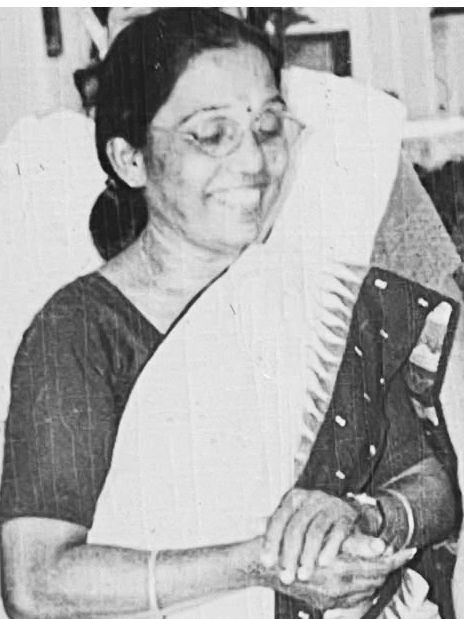
Professor of Obstetrics and Gynaecology · Thirty-Six Years at Sevagram · The Department’s Beating Heart
Kusupur, Cuttack, and the Journey West
Swarnalata Samal was born on April 14, 1948, in Kusupur, a village in Odisha whose rural quietness gave her early formation its particular character — a quiet strength and a deep, unshakeable empathy that would persist through every subsequent environment. She graduated with distinction from Srirama Chandra Bhanja Medical College, Cuttack, in 1970. She chose Obstetrics and Gynaecology because it was the field where the most direct, immediate intervention in women’s lives was possible — where the stakes at every delivery were the absolute highest in clinical medicine.
In 1972, her husband Dr. Nasiruddin Khan — who would later take the surname Samal — joined MGIMS as a house officer in Medicine, eventually becoming a Lecturer in Pathology. Swarnalata joined the OBG department in May 1972 without her postgraduate degree. Together, they made the thousand-kilometre journey from Odisha to Vidarbha, stepping into a new land, a new language, and a culture that bore no resemblance to what either had grown up in. They married in 1973.
They quickly realised that pursuing two postgraduate degrees simultaneously was impossible; their finances simply did not permit it. Dr. Khan made the decision that permanently settled the question: her education would come first. Relieved of financial worry, she earned her DGO with top marks from Nagpur University in 1975, and her MD in November 1976. She returned to MGIMS immediately, rejoining as Lecturer and beginning the long, steady climb that would see her reach Professor in 1985.
The Department She Built Within
When she returned with her MD, the department was remarkably thin. Dr. P. Nayar had retired, Dr. Kasturi Lal had recently left, and Mrs. Hariharan was about to take study leave. The remaining team consisted of just three young lecturers: Dr. Samal, Dr. Kane, and Dr. Shakuntala Chhabra. This small team and the crushing clinical responsibility gave Dr. Samal room to develop as a practitioner far faster than a larger, deeply hierarchical department would have allowed. Her surgical skill became exceptional — she eventually mastered laparoscopic surgery and embraced robotic surgery, a commitment to remaining current that could easily have settled into familiar, comfortable procedures years prior.
Her ability to handle brutal medical cases with absolute calm was the clinical expression of the same temperament that made her so approachable at the bedside. She never added her own anxiety to the panic already present in a complicated delivery. The patient felt seen. The resident felt guided rather than tested.
The Scooter, the Recovery, and the Letter
In the 1990s, a terrible scooter accident left Dr. Samal with a severe head injury that required hospitalisation at a neurology centre in Nagpur. Dark doubts circulated around the campus about whether she would ever regain the sharp cognitive function her surgical work required. Weeks after the accident, she was back in the hospital: delivering babies, performing complex surgeries, and guiding postgraduate students through their theses. The doubting voices were answered by the only answer that actually matters in medicine: the immediate resumption of the work.
The departmental headship came with its own difficulty. When Dr. Chhabra was elevated to Dean in 2007, Dr. Samal was initially passed over. Her decades of service, her clinical excellence, and her relentless mentoring had apparently not been sufficient to determine the succession in her favour. She found this deeply painful. Crucially, she did not accept it passively. She wrote a letter to the management — sincere, highly specific, and utterly unvarnished, setting out exactly what she had done for MGIMS across three decades. Honest without being aggrieved, fiercely assertive without being demanding. The management read it, reconsidered, and appointed her. The quiet woman who had never sought the spotlight was, when the moment required it, more than capable of making the case for exactly what she deserved.
Saraswati Sadan
The home she and Dr. Khan built in Sevagram was named Saraswati Sadan — invoking the goddess of knowledge and learning. Students constantly came to them seeking advice not just on medicine, but on life. They found a family away from family. They found two doctors who had crossed religious boundaries — he was Muslim, she was Hindu — without ceremony, simply because they had found in each other’s deep values a greater commonality than any artificial boundary could mark.
Between 1983 and her retirement, she mentored twenty-one residents through their postgraduate degrees. The students who trained under Dr. Chhabra and Dr. Samal in the same department received two radically different but equally vital formations. The fiercest taskmaster taught them that clinical standards had no exceptions. The department’s beating heart taught them that standards could coexist with warmth — that competence was entirely compatible with gentleness, and that a patient’s unspoken fear deserved to be treated just as urgently as their documented symptom.
The End
After retiring from MGIMS in 2008, she spent ten more years heading the department at JNMC Sawangi, followed by private practice in Wardha. Then came severe dengue encephalitis — a harrowing month in the ICU, her body tested once again. She survived. Then came the devastating death of Dr. Narendra Samal, her husband of fifty years — the man who had put her education first in 1973. On February 26, 2024, her own death arrived at home, leaving behind two sons — an orthopaedician and a physiotherapist.
She had spent fifty-two years in medicine. She loved nature and plants. She brought breakfast to young mothers who needed rest. She fed homeless women in her ward. She spoke in broken English that needed absolutely no refinement, because profound warmth requires no translation. She had never carried the air of a conventional professor. And that was, in the end, exactly what made her one of the most significant ones the institution ever had.
Mentored Students (MD/MS)
A study of prevalence of hepatitis B surface antigen (HBsAg) in pregnant woman and in the cord blood of their newborns
Clinical pathological analysis of recurrent abortions with special reference to hysterography.
Use of hyoscine -n butylbromide (buscopan) as a cervical spasmolytic agent in acceleration of labor
Clinic pathological evaluation of infertility cases with special reference to endometrial glycogen
Prediction of fetal outcome in threatened abortion by maternal serum alpha fetoprotein
Ultrasound evaluation of bleeding in early pregnancy
Endometrial aspiration cytology study and its correlation with histopathology
Clinic pathological bacteriological profile of genital tuberculosis
Comparative study of Para cervical block in labor using bupivacaine lidocaine
Clinic pathological analysis of dysfunctional uterine bleeding
Estimation of fetal weight by Dawn’s method, Johnson’s method and ultrasonographic arson’s formula
Comparative study of oral prostaglandin (PGE) versus intravenous oxytocin in induction and augmentation of labor
Efficacy of transvaginal salpingo-sonography for evaluation of fallopian tube patency in comparison to hysterosalpingography and laparoscopic chromopertubation
The detection of hyperprolactinemia through serum prolactin estimation in infertility cases and its management
Clinical and pathological study of post-sterilized women undergoing hysterectomy with special reference to fallopian tube
Comparative study of ovulatory pattern in spontaneous and induced cycles in infertile women
Comparative study of prostaglandin E1 analogue(misoprostol) vs. prostaglandin E2 dinoprostone for induction of labor
Doppler velocimetric study of maternal uterine, fetal umbilical and middle cerebral artery in hypertensive and normotensive pregnancy
A comparative study of oral mifepristone and vaginal misoprostol to vaginal misoprostol alone for termination of early pregnancy
Comparative evaluation of efficacy and safety of tranexamic acid with ethamsylate and tranexamic acid in control of menorrhagia
Key Milestones
| 1948 | Born, 14 April, Kusupur, Odisha |
| 1970 | Completed MBBS with distinction, Srirama Chandra Bhanja Medical College, Cuttack |
| 1972 | Joined MGIMS, 1 May — Lecturer in OBG; thousand-kilometre journey from Odisha with husband |
| 1973 | Married Dr. Nasiruddin Khan (later Samal) — he was Muslim, she was Hindu; he deferred his postgraduate degree so she could study first |
| 1975 | Completed DGO, Nagpur University — top marks |
| 1976 | Completed MD Obstetrics and Gynaecology, November — rejoined MGIMS immediately |
| 1983 | Began guiding postgraduate students — twenty-one residents mentored until retirement |
| 1985 | Promoted Professor |
| 1990s | Severe scooter accident — head injury; hospitalised Nagpur; returned to surgery weeks later |
| 2007 | Appointed Head of Department — after writing letter to management challenging initial decision to pass her over |
| 2008 | Retired from MGIMS, 30 April |
| 2008 | Head of Department, JNMC Sawangi — ten years; then private practice Wardha |
| 2020s | Severe dengue encephalitis — one month in ICU; survived |
| 2024 | Died, 26 February, at home — husband had predeceased her |