Dr. Chanchal Dhawan
Lecturer in Ophthalmology · MGIMS Tenure 1973 – 1978 Lifespan c. 1946, Shimla — 20 October 2023, Pune Education MBBS, Medical College Patiala (1968)MS Ophthalmology, PGI Chandigarh (1972)
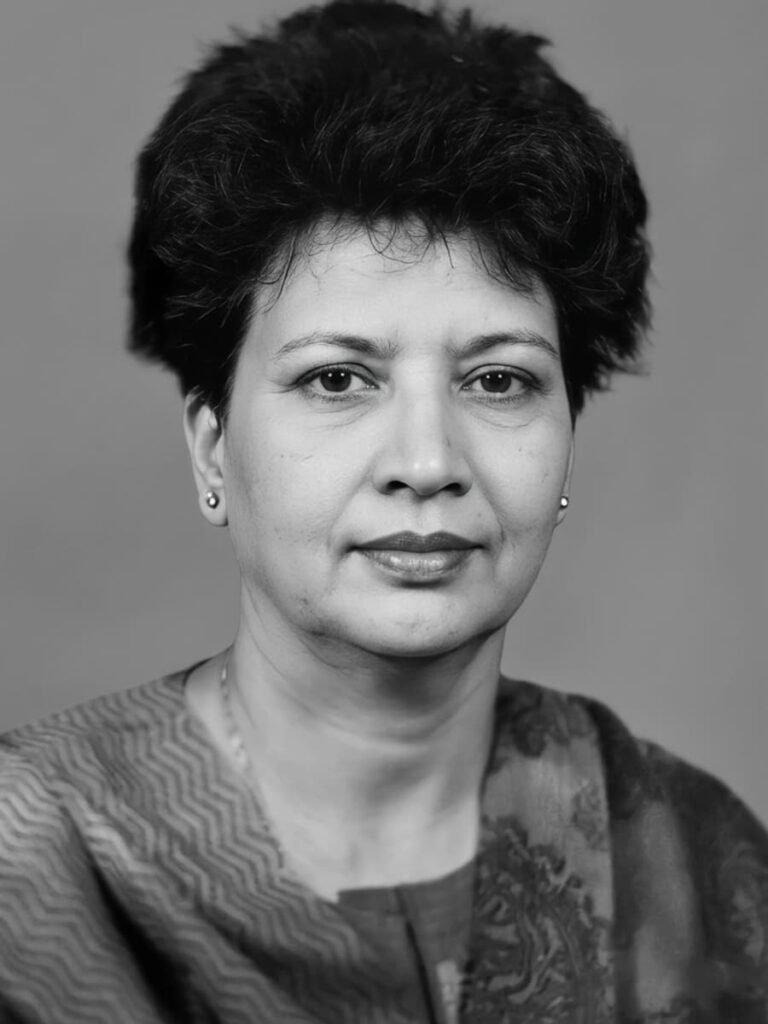
Lecturer in Ophthalmology · Five Years at Sevagram · The Calm That Completed the Sparkle
Shimla, Patiala, and the Crucible of PGI
Chanchal grew up in Shimla, a hill town whose particular quality of light, crisp air, and rolling landscape grants those raised there a permanent relationship with beauty and calm. It is a quietness that tends to persist in the bones, no matter where life takes them. She completed her MBBS at Medical College, Patiala in 1968, moving from the cool hills to the sprawling plains of Punjab, before entering PGI Chandigarh to pursue her MS in Ophthalmology.
At PGI, she and Dr. Sudershan Dhawan found themselves in the same demanding department. She was two years his junior. Their first conversations were rooted in the rigours of medicine — the complexities of the cornea, the delicate pressures of the anterior chamber — but they evolved into conversations about meaning, purpose, and the shape of the lives they wanted to lead. They were married in 1970. When Sudershan left for Sevagram in January 1972, Chanchal remained behind to complete her MS. When her degree was secured, she followed him into the unknown.
Arrival in the Dust of Sevagram
Dr. Chanchal Dhawan arrived in Sevagram in January 1973. The transition from the cool elevations of Shimla and the modern grids of Chandigarh to the fierce heat and red dust of Wardha was stark. MGIMS was barely three years old — a fledgling institution where Gandhian ethos was far more developed than its physical infrastructure. The couple was immediately humbled by the presence of Dr. Anant Ranade, the Ayurved Visharad whose legendary eye camps had restored sight to thousands of villagers across Maharashtra without the formal credentials that usually authorised such work. His presence taught a vital lesson: sheer commitment and raw skill could achieve miracles that institutional structures could not.
Joining as registrar and rising quickly to Lecturer, Dr. Chanchal Dhawan helped transform the department into a genuine partnership. For the next five years, two ophthalmologists of vastly different temperaments and entirely complementary strengths built the clinical and educational foundations of a specialty that had not previously existed at the institute.
The Pedagogy of Quietness
If he was Mohammad Rafi, she was Asha Bhosale. Dr. Bajrang Prasad Pandey, a 1970 batch student who trained under both Dhawans and later retired as Professor of Pharmacology from BHU, offered this precise comparison: Rafi’s voice had a soaring, undeniable presence. Bhosale’s was just as brilliant, but operated in a different register — gentler, sharper, and completely its own. The point was not that one was lesser. The point was that they were genuinely different, each fundamentally necessary, harmonising into a duet that neither could have sustained alone.
Her teaching had a rhythm all its own — quieter than her husband’s theatrical, animated performances, but no less thorough. In the operating theatre, her quietness was her greatest teaching tool. Ophthalmology is a discipline of microscopic margins, where a tremor of the hand can mean the difference between light and darkness. When a student hesitated over a delicate procedure, her steady presence beside them was an anchor. She did not berate or rush; she instructed through the transmission of calm, teaching them that a surgeon’s composure is just as critical as the sharpness of their scalpel.
She was a vital force in the eye camps held in Gadchiroli, Bhamragarh, and Sironcha — remote districts of Vidarbha deeply troubled by Naxalite activity, where specialist care was an unheard-of luxury. In these villages, the Dhawans shed the door-knocking institutional formality of the hospital. They ate simple meals with the locals, shared long conversations under the shade of trees. Dr. Chanchal brought to these dusty camps the exact same quality she brought to the sterile wards: boundless warmth without the need for performance, and elite competence without a trace of arrogant display.
In 1977, the Sevagram campus gave the family its first child, Samriddhi. The village that had provided the crucible for their professional formation had now given them a family.
The Long Arc of a Global Career
They moved to Pune — she as Associate Professor of Ophthalmology at BJ Medical College alongside her husband. Then to GMC Nagpur in 1981. Then, unexpectedly, to Saudi Arabia: thirty-seven years at the National Hospital in Riyadh. For three and a half decades, Dr. Chanchal Dhawan applied the same precision and deep empathy she had honed in Sevagram’s bare-bones department to the gleaming clinics of the desert capital. The grace that had marked her presence in a rural Indian hospital persisted in the modern global one.
The students she had formed in Wardha were growing into professors, department heads, and leading practitioners across India, the UK, and the US. They carried her quiet voice in their own clinical habits — the careful, unhurried slit-lamp examination, the quality of deep attention that ensures every patient is treated as a breathing human being rather than a fascinating medical case.
A Return and a Farewell
Dr. Chanchal and Dr. Sudershan Dhawan returned to Pune in March 2022, carrying the accumulated weight and wisdom of a life beautifully lived. They had been by each other’s side since PGI Chandigarh — since the conversations about medicine had turned into a marriage, and that marriage had turned into a sprawling life across Shimla, Patiala, Chandigarh, Sevagram, Pune, Nagpur, and Riyadh.
She had barely begun to inhabit this final, restful chapter. On October 20, 2023, Dr. Chanchal Dhawan passed away suddenly in Pune. Without her quiet grace, the ophthalmology department the Dhawans built from the red dirt of Sevagram would have been a profoundly different, and undoubtedly lesser, place. She had grown up in the Shimla hills where the light is particular and the calm runs deep into the earth. She carried that light and that calm to every patient she touched.
Key Milestones
| 1946 | Born, Shimla — grew up in the hills whose calm she carried through every chapter of her life |
| 1968 | Completed MBBS, Medical College Patiala |
| 1972 | Completed MS Ophthalmology, PGI Chandigarh |
| 1970 | Married Dr. Sudershan Kumar Dhawan — partnership that would span half a century and multiple continents |
| 1973 | Joined MGIMS, 1 January — Registrar, then Lecturer in Ophthalmology |
| 1973 | Eye camps — Gadchiroli, Bhamragarh, Sironcha; Naxalite-affected areas of Vidarbha |
| 1977 | Daughter Samriddhi born in Sevagram |
| 1978 | Left MGIMS, 28 January — Associate Professor, BJ Medical College Pune |
| 1981 | GMC Nagpur — following transfer orders during infectious disease outbreak |
| 1985 | Joined National Hospital, Riyadh, Saudi Arabia — thirty-seven years |
| 2022 | Returned to Pune, March |
| 2023 | Died, 20 October, Pune — suddenly; likely heart attack |