Dr. Pradip Sambarey
Reader in Obstetrics and Gynaecology · MGIMS Tenure 1984 – 1990 Born 30 December 1955, Nagpur Education MBBS, Government Medical College Nagpur (1977)MD Obstetrics and Gynaecology, Government Medical College Nagpur (1982) ·
PhD (Male Infertility) Nagpur University
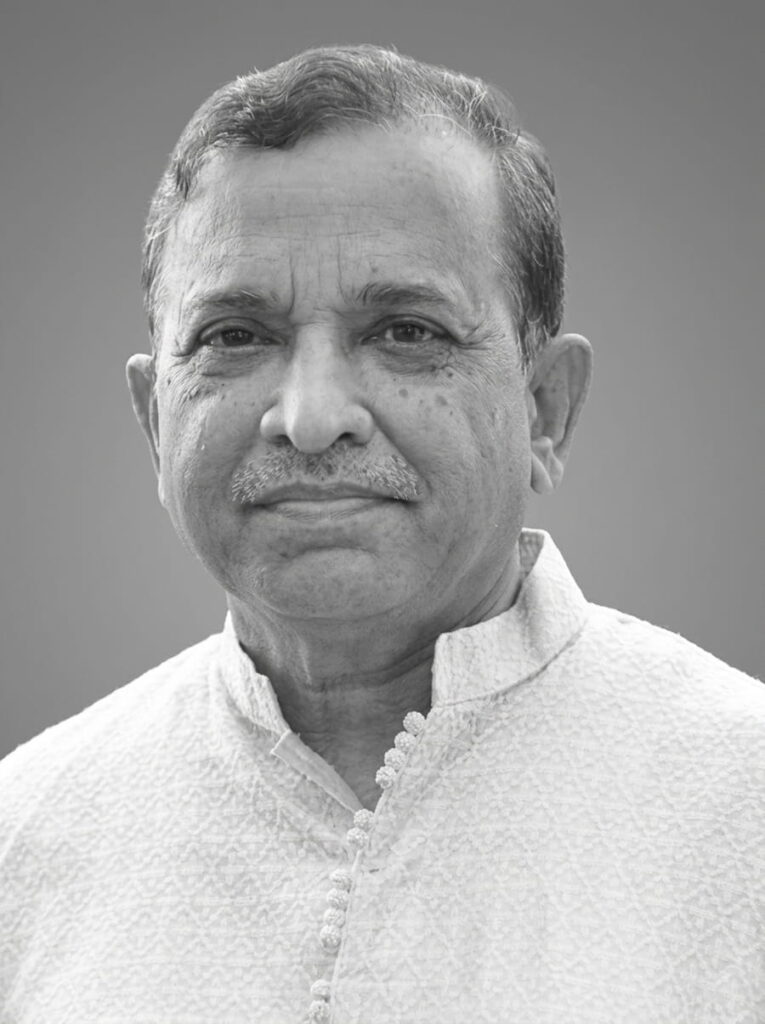
Reader in Obstetrics and Gynaecology · Six Years at Sevagram · Ten Thousand Surgeries, A Hundred Thousand Hours of Teaching
Nagpur, the Merit Scholarship, and the Village Labour Room
Pradip Sambarey was born on December 30, 1955, in Nagpur, to Wamanrao — a stern yet fair central government officer — and his soft-spoken wife. He attended Jamdar Primary School and CP & Berar High School, displaying the quiet, relentless diligence that would distinguish his entire career. In his tenth-grade board examinations, he stood fifth in the entire state. A prestigious national merit scholarship arrived, and stayed with him through his years at Government Medical College, Nagpur.
His internship took him to Kuhi, a remote village where obstetric emergencies decidedly did not move slowly. Inside mud-walled labour rooms, alongside his friends Ajit Pradhan, Dilip Magarkar, and Mohan Gupte, he encountered medicine in its most unmediated form — the desperate cries of newborns, the anxious eyes of expectant mothers, and sudden complications that no textbook had fully prepared him for. This was where he learned that medicine was human, highly unpredictable, and deeply personal.
He graduated MBBS from GMC Nagpur in 1977. In a cohort where most male peers gravitated toward General Surgery or Medicine, he chose Obstetrics and Gynaecology — then considered almost exclusively a woman’s domain. It was a choice that drew quiet scepticism. “During our final MBBS,” he recalled, “the three of us — Deshpande, Laul, and I — scored remarkably well in Obstetrics and Gynaecology. During my internship, I delivered quite a few babies, and somewhere along the way, Gynaecology simply began to draw me in.” He earned his MD in 1982 and arrived in Sevagram on March 1, 1984.
The Department He Entered
He stepped into a department in massive transition. The formidable Dr. Mrudula Trivedi was at the helm, her ward running with clipped precision. Dr. Shakuntala Chhabra was intensely managing associate professor responsibilities alongside her massive rural outreach projects. Dr. Samal, ever composed, served as Reader. The clinical setting was substantial for a rural teaching hospital: 111 teaching beds, 27 reserved for newborns, five labour beds in the department, and two additional beds at the district hospital.
He was a fellow GMC Nagpur alumnus alongside Dr. S.P. Kalantri in Medicine and Dr. Suhas Jajoo in Surgery — familiar faces that made Sevagram’s unique combination of Gandhian austerity and fierce intellectual camaraderie easier to navigate. His clinical approach was methodically paced and deeply measured. Over time, some patients began actively bypassing senior faculty to seek his opinion specifically. This dynamic was noticed, and duly noted, though not always warmly by those who had been bypassed.
The PhD in the Physiology Laboratory
The research direction that would define his scholarly contribution arrived through an adjacent discipline. Dr. K.N. Ingle, Professor of Physiology, ran a laboratory specialising in male infertility testing. Sambarey shifted his ongoing PhD work to MGIMS and redirected it toward the uncharted territory that Ingle’s laboratory opened — exploring male infertility across its full dimensions: biological factors, psychological stressors, age gaps between partners, inter-spousal relationships and their impact on sperm count, and traditional remedies as adjunct approaches in selected cases.
Typing resources were scarce in Sevagram. He typed his massive thesis himself — binding, re-binding, and painstakingly correcting errors through the long, solitary process of preparation. When he finally left in January 1990, official confirmation had not yet arrived. Months later, a letter from Nagpur University reached him: his PhD had been officially approved, the viva waived, and the certificate was in the mail. He became the very first obstetrician in the region to hold a doctoral degree in male infertility.
The Departure and the Legacy They Built
In 1989, the Maharashtra Public Service Commission advertised new posts. He applied. His interview lasted forty minutes; the panel was thoroughly impressed, and he was offered a position in Pune. “Had they sent me to Nanded or Ambajogai, I would have stayed in Sevagram.” It was not dissatisfaction with MGIMS that drove his departure, but the specific geography of the offer combined with the needs of his growing family. Their daughters were young, and Pune promised educational opportunities that Sevagram, for all its clinical richness, could not match. His wife, Dr. Prajakta Divekar — who had joined Sevagram as a registrar in Ophthalmology and risen to Associate Professor — left with him.
From Sevagram, he moved to BJMC Pune in 1990, spending twelve years there. Then Dhule in 2002, where he rose to Professor. Then Ambajogai in 2012. Finally, he returned to BJMC Pune in 2015 as Head of Obstetrics and Gynaecology — leading the department for four years with the quiet, unshakeable authority of someone who had been building toward that role since standing in a mud-walled labour room in the mid-1970s. He retired on December 31, 2019.
His younger daughter Avanti had been delivered in Sevagram by Dr. Swarnalata Samal — a small, deeply poignant link between the professional and the personal. The very institution that had shaped his clinical hands had also, in the most literal way available, brought his daughter into the world. Avanti earned her PhD in Bioinformatics and continues her research in Michigan. Shiwani works in Computer Science in Seattle.
Ten thousand Caesarean sections. But a lifetime of teaching that dwarfed them. The hundred thousand hours of teaching was the actual work.
Key Milestones
| 1955 | Born, 30 December, Nagpur — father central government officer |
| 1973 | Stood fifth in Maharashtra state board examinations — national merit scholarship |
| 1977 | Completed MBBS, GMC Nagpur — internship in mud-walled labour rooms, Kuhi village |
| 1982 | Completed MD Obstetrics and Gynaecology |
| 1984 | Joined MGIMS, 1 March — Lecturer in OBG |
| 1986 | Promoted Reader |
| 1987 | Began PhD in male infertility — Physiology laboratory with Dr. K.N. Ingle; typed entire thesis himself |
| 1990 | Left MGIMS, 31 January — BJMC Pune; PhD certificate arrived months later — viva waived |
| 1990 | First obstetrician in the region with doctoral degree in male infertility |
| 2002 | Professor, Government Medical College, Dhule |
| 2012 | Government Medical College, Ambajogai |
| 2015 | Head of Department, BJMC Pune — four years |
| 2019 | Retired, 31 December — 42-year career; approximately 10,000 Caesarean sections |