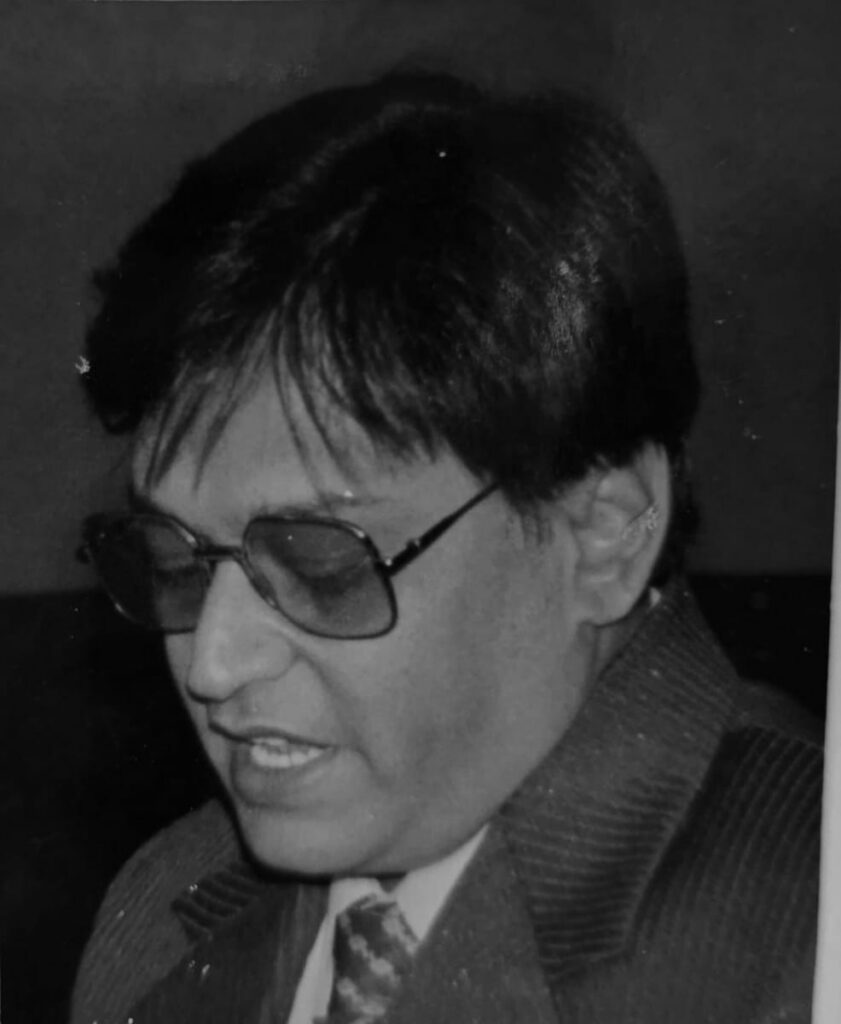
Dr. Ashok Pakhan
Reader in Dental Surgery · MGIMS Tenure 1980–1992 Born 14 November 1953 Education BDS, Government Dental College Nagpur (1976)Postgraduate Diploma in Orthodontics, St. George Hospital Mumbai
The Quiet Contentment
He had desperately wanted to study medicine. He missed the admission cutoff by exactly five marks.
Dentistry was not his choice; it was his only remaining option. In the early 1970s, seats in Indian dental colleges often went vacant. Medicine was the coveted, fiercely contested prize; dentistry was simply what remained after the prestigious allocations were made. He enrolled at Government Dental College, Nagpur, with the quiet, heavy reluctance of someone who had been denied the door he wanted and was forced to make the best of the one that had opened. Yet, by the time he finished, what had begun as pure reluctance had transformed into genuine craft. He had mastered the discipline he once actively resisted.
This is not an uncommon story in Indian medicine of that era—the five marks that permanently redirected a career, the second-choice path slowly becoming the right one. What is uniquely characteristic of Ashok Pakhan is the total absence of resentment in the telling, and the profound contentment that accumulated around the work itself, rather than the status it conferred.
He spent twelve years at MGIMS in a tiny department that offered just ten lectures a year to medical students, possessed no postgraduate program, and received minimal institutional recognition. Yet, he built a fiercely loyal patient following among villagers who returned year after year—sometimes arriving by bullock cart—greeting him with folded hands and genuine gratitude. He never once measured himself against the towering physicians and surgeons around him. His deep satisfaction lay purely in the steady, reliable work of healing. That was enough for him. And it is not a small thing for a man to know that his life is enough.
Murha Kh and the Road to Nagpur
Ashok Pakhan was born on November 14, 1953, in Murha Kh, a remote village sixty kilometers west of Amravati. His father, Jagannath Atmaram Pakhan, farmed the land. His mother, Parvati, kept the home. As their only child, he grew up surrounded by the scent of tilled earth, dry leaves, and cattle at dusk. This specific sensory formation of rural Vidarbha in the 1950s tended to shape two kinds of people: those with a desperate hunger to leave, and those with a profound capacity for rootedness that persisted through whatever came after. Ashok was the latter.
The village had a single primary school. He studied there through the fourth grade, moved away to live with an aunt for middle school, and eventually made his way to Vidarbha Mahavidyalaya in Amravati. In the 1970s, this kind of educational journey—each step negotiated entirely independently, with no parental guidance because none was available, managing admissions and lodging entirely alone—was standard survival for rural boys who wanted to study. There was no one to explain how the system worked. You figured it out, or you did not advance. Ashok advanced.
He enrolled at Government Dental College, Nagpur, after the painful five-mark miss in 1972, earning his BDS in 1976. Though internships were not yet mandatory, he was selected for a grueling, year-long clinical assistantship under seasoned surgeons. He then moved to Mumbai for postgraduate studies in orthodontics at St. George Hospital, writing a thesis on the effects of denture removal.
One day, he spotted a small, unassuming advertisement on a notice board: MGIMS, Sevagram, needed a registrar in dental surgery. Jobs were scarce. He applied, was selected, and in March 1980, he arrived.
The Two-Man Department
The department he arrived at was incredibly small, even by early MGIMS standards. Dr. K.K. Hariharan led it, Ashok was his only colleague, and between the two of them, they handled absolutely everything that came through the door: scaling, extractions, crowns, and bridges. They delivered ten lectures a year to medical students on fractures, tumors, and the intricate, unforgiving mechanics of the human jaw. Dr. Savita Borle joined, followed by Dr. Rajiv Borle, giving the team a few more hands. Then, Dr. Hariharan left in March 1983, and Ashok carried on.
The staff who made the department function were few, but fiercely dependable. Dilip Chinchkhede handled hygiene, Baby Dhole oversaw nursing, and Baba Deshmukh kept the equipment running with the quiet competence of a man who understood that in a resource-starved setting, the equipment’s reliability was just as vital as the surgeon’s skill.
Resources remained severely limited throughout his tenure. There were no resident doctors to supervise and minimal intersection with the elite clinical education happening in the hospital wards and major operating theaters around him. The dental surgery department existed in a state of structural isolation within the medical institution—present, highly necessary, and heavily visited by patients, but not truly integrated into the teaching and research culture that defined the rest of MGIMS.
Dr. Pakhan understood this hierarchy perfectly and made his absolute peace with it. He did not seek recognition he was not positioned to receive. He focused entirely on the patients in his chair, on the precise mechanics of his procedures, and on the trust he was building over years of honest practice. He rose to Reader during his tenure—a promotion earned purely on the sheer strength of his clinical work, rather than the institutional platform that work occupied.
The Quality of Presence
Soft-spoken and deeply unassuming, he moved through his days with quiet confidence. Marathi was his first language; Hindi was available when needed. He listened intently, examined thoroughly, and explained treatments with absolute honesty. He never oversold what Sevagram’s modest dental resources could offer, and he never raised expectations that his limited equipment or fragile supply chain could not meet. Patients always knew exactly where they stood with him.
The devoted following he built was a direct consequence of this transparent quality. Villagers who came once returned with their families. They offered folded hands and simple expressions of gratitude—people who had perhaps never before received from a professional medical institution the specific combination of high competence and deep respect that he offered them without calculation.
Among the clinical highlights of this period was his vital collaboration with Dr. Suhas Jajoo of Surgery. Together with Dr. Savita Borle, they prepared specialized prostheses that helped ENT surgeons manage complex head, neck, and maxillofacial cases directly in the operating theater. It was the kind of cross-departmental contribution that made a tiny, isolated department’s presence felt beyond its own walls.
Sawangi, the Deanship, and the Long Third Act
In 1992, Dr. K.N. Ingley—who had been a professor at MGIMS and was now Dean of the medical college in Sawangi—personally asked Dr. Pakhan to take on the role of Dean at their newly established dental college. He left MGIMS and moved to Sawangi. Because regulations required five years of service as a full Professor before he could formally become Dean, he taught patiently until August 1998.
Then, he held the Deanship for twenty unbroken years.
This staggering two-decade administrative tenure was, in its own way, a perfect expression of the exact same qualities he had displayed in Sevagram: he was steady, reliable, patient, and entirely focused on building something durable rather than accumulating fleeting recognition. He retired at sixty-five in 2018, but stayed on to oversee academic assessments across medicine, dental surgery, Ayurveda, and physiotherapy until 2023, when he finally stepped away from institutional life entirely.
He had married Padma Jhambre in 1983, three years into his Sevagram tenure. Together, they raised three children who grew up in the orbit of institutional medicine: Kulaj (born 1985), Aishwarya (a dermatologist), and Arjavi (a musculoskeletal physiotherapist). The only child of a Murha Kh farmer had successfully produced a family in which clinical practice had become the generational inheritance.
What Sevagram Was and What It Remains
Looking back, he describes his Sevagram years without hesitation as the finest of his life.
The grueling struggle to build a department from nothing had deepened his resolve rather than depleted it. He remembers the patients arriving by bullock cart, greeting the doctors with folded hands. He remembers the slow, purposeful rhythm of a village hospital where the work was the meaning, and the meaning was entirely sufficient. The past lingers, he says, but the work done there remains—standing firm, just like the tilled land he came from.
He had missed the medicine cutoff by five marks, and proceeded to build a magnificent career in the specialty that remained available to him. He arrived in Sevagram without the towering prestige of the physicians and surgeons whose departments filled the hospital’s massive wards. He had understood exactly what his position within the institution was, accepted its structural limits with total grace, and within those narrow limits had done the work with a quality and consistency that produced a reputation in the surrounding villages that no advertisement could ever buy.
Ambition had not driven him. Contentment had. And that contentment was deeply earned—through the tilled earth of Murha Kh, through the five-mark miss and the quiet pivot, and through the twelve years of extractions, crowns, bridges, and lectures on jaw mechanics to medical students who would not become dentists, but who always remembered the soft-spoken Reader who had explained the human jaw to them with honesty, patience, and absolutely no expectation of anything in return.
Key Milestones
| 1953 | Born, 14 November, Murha Kh, near Amravati — only child; father a farmer |
| 1972 | Missed medicine cutoff by five marks — enrolled Government Dental College, Nagpur |
| 1976 | Completed BDS, GMC Nagpur — year-long clinical assistantship under seasoned surgeons |
| 1977 | Postgraduate studies in orthodontics, St. George Hospital Mumbai — thesis on effects of denture removal |
| 1980 | Joined MGIMS, 1 March — Registrar in Dental Surgery; saw small advertisement on a notice board |
| 1983 | Dr. Hariharan left — Ashok carried on alone; married Padma Jhambre |
| 1985 | Son Kulaj born |
| 1986 | Promoted Reader in Dental Surgery |
| 1992 | Left MGIMS, 1 June — invited by Dr. K.N. Ingley to join dental college, Sawangi |
| 1998 | Formally appointed Dean, Sawangi Dental College — held for twenty unbroken years |
| 2018 | Retired at sixty-five — continued overseeing academic assessments until 2023 |