Heat, Harrison, and hotel thali
The euphoria of the election season faded quickly, as such excitements always do, and the academic calendar resumed its indifferent march. Revolutions could wait; examinations could not.
By the time summer settled over Nagpur in 1977, the city felt less like a place to live and more like something to endure. The sun did not merely shine but pressed down with a steady, exhausting force that softened the tar on the roads and turned the afternoon air into something you pushed aside with your hands. By noon the loo began to blow, hot and gritty, as though someone had opened the door of a furnace.
Most students escaped as soon as they could. Trunks were packed, bicycles loaded, tickets booked. They returned to homes where there were verandas, shade, and mothers who insisted on second helpings of food. Hostel No. 2 emptied within days. Footsteps grew rare. A closing door echoed down the corridor longer than it should have, like a sound reluctant to die.
I stayed back.
The final MBBS examinations were only weeks away, and I told myself that the silence would help me study. Without chatter, card games, or late-night gossip, the days would belong to the books.
Silence, I discovered, has its own weight.
To fight the heat, I bought a second-hand desert cooler from a scrap dealer near the bus stand. It was a dented metal contraption that rattled and coughed when switched on and demanded buckets of water every hour. It cooled nothing with conviction. Mostly it exhaled damp air that clung to the skin. By evening my room felt less like a hostel and more like a cave with a leaking roof.
At night I sprinkled water on the bedsheet and lay down carefully, hoping to borrow a few minutes of coolness before sleep slipped away. The days settled into a routine of reading, sweating, and turning pages. Harrison lay open beside Love and Bailey, their thick spines propped like small walls around me, while a thin line of sweat travelled slowly down my back and gathered at the edge of the chair.
Just when the stillness began to feel oppressive, there was a knock on the door.
I opened it to find Omprakash Singhania standing outside with a small suitcase in one hand and that familiar half-smile on his face, the expression of someone who knows the situation is unpleasant but has decided to endure it anyway.
“You’re here too?” I asked.
He nodded. “Couldn’t study at home.”
That was explanation enough.
We were an unlikely pair. I came from a middle-class household in Wardha where money was counted carefully and nothing was wasted. Singhania belonged to a prosperous family and carried himself with an ease I envied. He owned a Lambretta scooter, which in those days was as good as a badge of privilege.
But the final MBBS examination has a way of flattening such differences. Under that pressure, everyone looks the same—tired, anxious, hopeful.
We settled into a rhythm without discussing it. Through the day we studied in our separate rooms, emerging occasionally to test each other.
“What are the signs of mitral stenosis?”
“How will you manage an acute abdomen?”
“Causes of fever with rash?”
The questions came quickly, like table tennis shots. Somewhere between asking and answering, the fear lost its sharp edges. Speaking things aloud made them manageable.
By early evening the heat softened slightly and the sky turned a dusty orange. That was our signal. Singhania wheeled out the Lambretta, kicked it alive with two firm strokes, and I climbed on behind him. As we rode out of the hostel gates, the wind hit our faces and for a few minutes the day’s fatigue dissolved into that simple, boyish pleasure of movement.
We usually headed to Sitabuldi, to a modest place called Alankar near Anand Talkies. It had metal chairs, scratched Formica tables, and a ceiling fan that squeaked in protest, but to us it felt like a small refuge. For two rupees and fifty paise we could order the special thali—dal, rice, two chapatis, a vegetable, and a little curd served in a steel katori.
The food was ordinary and always the same, yet after a day of heat and revision it tasted generous. We ate slowly and talked about everything except what frightened us most. Families, teachers, rumours from the wards, plans for the future. Sometimes we laughed at nothing in particular. Sometimes we simply sat without speaking, grateful for the company.
I tried to pay my share. He waved it away as if it were a trivial matter, and we settled accounts later in ways that neither of us kept track of. What mattered was not the arithmetic.
Looking back, what I remember most from that summer is not the cooler’s rattle or the weight of Harrison in my hands, but those evening rides through warm air and the quiet comfort of a friend who had chosen, like me, to stay back and face the same anxiety.
Examinations test knowledge, but they also test endurance. And endurance, I learned that summer, becomes easier when it is shared—when someone sits across the table, tears a chapati in half, and asks you one more question before the night begins.
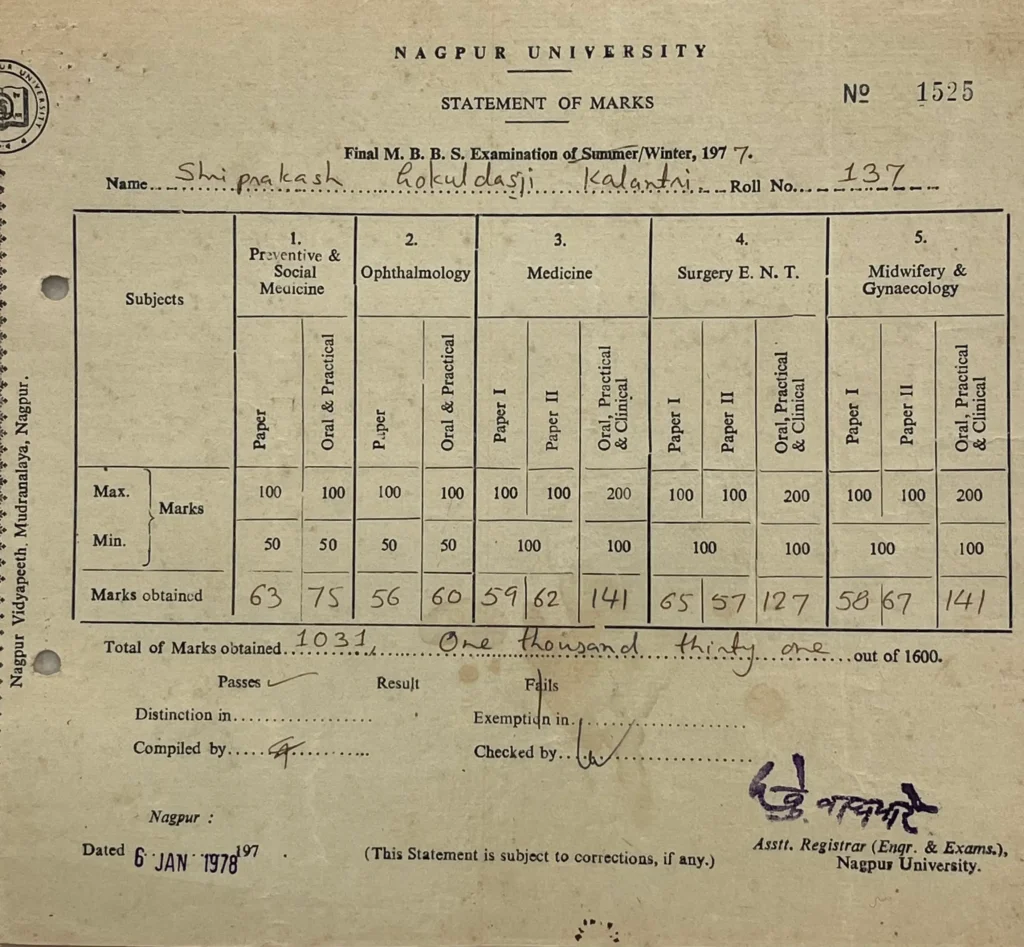
That summer, between the heat, the textbooks, and those evening rides, I learnt a lesson that was not in any syllabus:
Success is rarely a solo journey.
Ambition is heavy. But it becomes bearable—sometimes even enjoyable—when a friend carries it with you, along with a thali.