The Pandemic Years
COVID-19 reaches Sevagram, and the hospital learns what it can bear while trying to practise science in a time thick with fear and rumours.
The Pandemic Years
The Siege of Sevagram
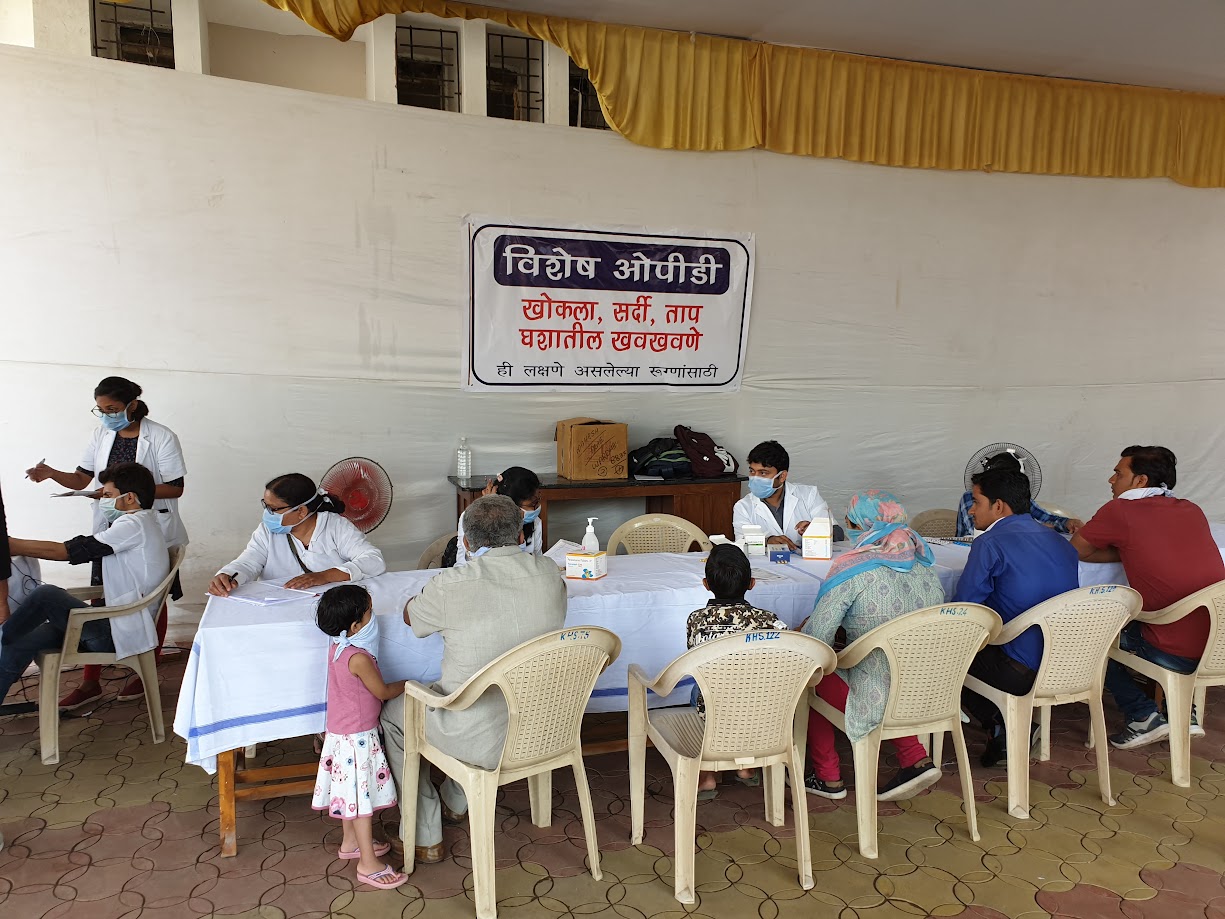
Frontline adaptation: A special outdoor OPD for patients with fever and respiratory symptoms, 2020.
In the long history of Sevagram, we thought we understood crisis. We had weathered monsoon floods that turned the wards into islands, fought cholera outbreaks that pushed our hygiene to the brink, and wrestled daily with the slow, grinding despair of rural poverty.
We were wrong. Nothing in our collective memory prepared us for March 2020.
The pandemic did not announce itself in Sevagram with sirens. It arrived as a cold, paralyzing silence, followed by the sound of carpenters sawing plywood in the anatomy dissection hall. Where first-year medical students had gathered around cadavers only weeks earlier, rows of iron cots sprang up under high colonial ceilings. Twenty miles from the hospital, the Nagpur-Hyderabad national highway lay deserted under a sudden, nationwide lockdown; inside, the air smelled sharply of sodium hypochlorite, and the hospital entered a state of siege.
For an institution anchored in the Gandhian ethos of open doors, COVID-19 posed an immediate, cruel paradox: How do we shelter the contagious without turning our healers into victims?
As Medical Superintendent, I found myself commanding a war room with no reliable maps. The familiar rhythms of academic medicine—measured consensus, bedside teaching, and the quiet luxury of tea-fuelled committee meetings—evaporated overnight. They were replaced by a jagged, urgent vocabulary: manifold pressures, tanker GPS coordinates, black-market remdesivir rumors, and the cold, unsparing arithmetic of mortality.
The battle was twofold, and I knew from the opening salvo which front would test us most. Keeping liquid oxygen flowing through the pipelines was an engineering nightmare, but keeping the hospital sane—anchored to evidence-based science while panic, political pressure, and unproven cocktail cures broke down our doors—was a war for the institution’s soul.
This section is not a detached retrospective; it is the chronicle of an Agni Pariksha—a trial by fire.
These pages record the sleepless hours tracking stranded oxygen tankers inching along the dark highway from Bhilai, the leaden weight of the telephone when telling a lifelong friend that there were no ICU beds left in Wardha, and the quiet heartbreak of watching senior colleagues gasp for breath in the very wards they had once commanded.
Yet, beneath the suffocating plastic of PPE and the unrelenting heat of Vidarbha, I witnessed a courage no medical textbook ever describes. I saw junior residents refuse to leave the bedsides of the dying. I saw nurses finish grueling double shifts on COVID wards, knowing their own feverish children waited at home. And I watched our quietest foot soldiers—drivers, ward attendants, sweepers, dieticians, pharmacists, and lab technicians—move mountains every hour to ensure that food, fuel, and drugs never ran out when the world outside had shut its doors.
This is a record of how fragile life can be, and how stubborn science and human devotion must be in its defense. It is the story of how Sevagram held its ground when the world went silent.