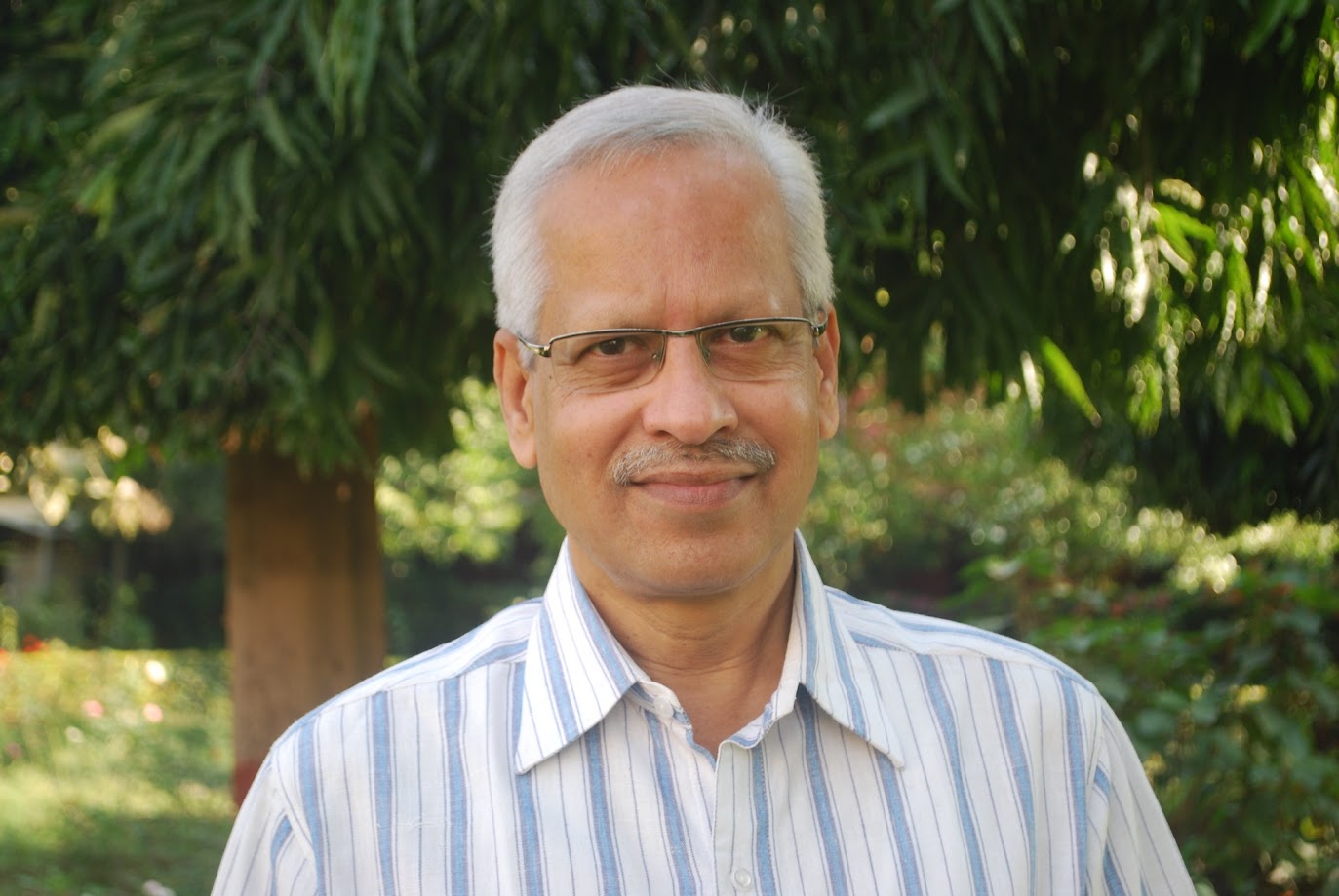
SP Kalantri
“Medicine is not what you do to a patient. It is what you do with them — and sometimes, simply for them.”
In the summer of 1982, a young physician rode a scooter through the gates of a rural teaching hospital in central India with a freshly minted MD and a new stethoscope, expecting to stay a year or two. Forty-four years later, he is still there — though the stethoscope has been joined, in recent years, by a keyboard.
Born in Wardha in 1957 and trained at Government Medical College, Nagpur, S.P. Kalantri joined the Mahatma Gandhi Institute of Medical Sciences, Sevagram, almost by accident, on a salary of ₹650 a month. What began as a temporary posting became a life’s work: Professor of Medicine, later Director-Professor, and for close to thirteen years Medical Superintendent of Kasturba Hospital, where he helped build one of rural India’s earliest hospital information systems, started a palliative care service from nothing, and spent a good part of his tenure trying to keep the pharmaceutical industry’s influence out of a teaching hospital.
At forty-seven, mid-career, he became a student again — this time at the School of Public Health, UC Berkeley — and returned with a permanent interest in evidence-based medicine, clinical epidemiology, and the discipline of admitting what a test or a study actually shows, rather than what one hopes it will.
On 1 September 2026, after forty-four years on the faculty, he stepped down as Director-Professor and became Emeritus Professor — a change of title, he says, rather than of occupation. He still does ward rounds, still teaches bedside medicine without slides, and still sees patients in the palliative care unit he helped build.
Outside the wards, he has spent the last decade on a long-distance bicycle, completing multiple 200-, 300-, and 400-kilometre brevets after the age of sixty and logging well past ten thousand kilometres on the roads around Sevagram and Nagpur. He reads widely — history, cricket, biography, and lately value investing — and writes about the people who share this landscape with him: students, nurses, ward attendants, dhobis, barbers, patients, and teachers. Many of them appear first in his long-running blog, Matter of Fact, and later, more fully, in the pages of this memoir.
In retirement he has become, somewhat to his own surprise, an archivist: he has written and published detailed biographical profiles of all 204 of his GMC Nagpur classmates (GMC 1973), ninety-three of the men and women who built MGIMS from nothing (Architects of MGIMS), and one hundred and fifty of the institute’s earliest graduates (Sevagram Remembered) — three separate digital archives built, largely, from phone calls, old photographs, and institutional records nobody else had thought to organise. In 2026, a forty-minute talk he gave on dying with dignity — delivered without a single slide — was watched more than 175,000 times online, a number that still puzzles him more than it pleases him.
He lives in Sevagram with his wife, Bhavana, whose quiet, decades-long work modernising the hospital’s information systems long predates the current fashion for digital healthcare, and near their son Ashwini — a professor at the same institute — and daughter-in-law Shaily. Their daughter Amrita, a radiologist, lives with her husband Sahaj and their two children in Richmond, Virginia.
Stetho in Sevagram is his memoir — nearly two hundred chapters, written over several years and assembled from notes, letters, memory, and the voices of the people who shaped him: patients, yes, but also parents, teachers, friends, and the small daily dramas of a life lived in one place for a very long time. It is as much a book about a marriage, a family, and a landscape as it is about medicine.
If a story here resonated with you, he would be glad to hear from you.