Mr. Chaturbhuj Taori
Reader, Biochemistry · MGIMS Tenure 1972 – 2008 Lifespan 20 January 1945, Pulgaon, Wardha district — 6 November 2009, near Khadki, Wardha Education MSc Biochemistry (Nagpur University) [1968]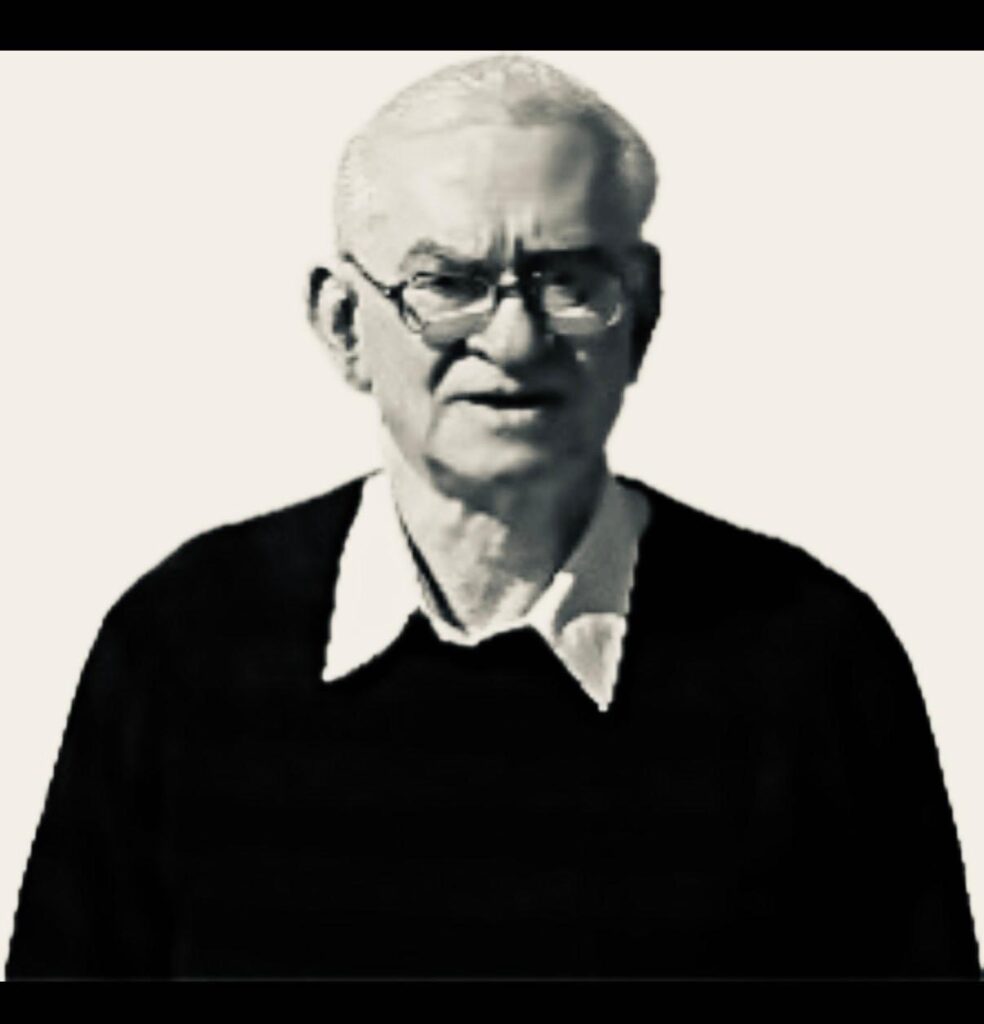
Lecturer & Reader, Biochemistry · Thirty-Six Years at Sevagram · The Man Who Built the Laboratory No One Noticed Until It Was Gone
On November 5, 2009, Gopal Taori handed his parents the keys to a house.
He had bought it in Nagpur — large, beautifully furnished, a real home for their retirement, the kind of gift that takes years of planning and love to give. He also handed his father the keys to a new Maruti Swift Dzire. Mr. Taori wept. His wife Veena wept. Their son had given them everything he wanted to give them, and they knew it, and the afternoon was saturated with that particular happiness that comes when gratitude and love and the passage of time all arrive together at once.
The following afternoon, brimming with joy, Mr. and Mrs. Taori set off for Sevagram. Mr. Taori was behind the wheel. A little ahead of Khadki village, their car collided with a truck. Both of them were gone.
It is rare to journey through life together and depart together. Mr. and Mrs. Chaturbhuj Taori were among those few.
***
Pulgaon, Nagpur, and the Road to Sevagram
Chaturbhuj Taori was born on January 20, 1945, to Kausalya Devi and Bansilalji, the second of five children in a Marwari-speaking family in Pulgaon, Wardha district. His name — Chaturbhuj, meaning one with four arms, an epithet of Lord Vishnu — was auspicious and weighty. He went by C.B. Taori throughout his life, the initials a modest reduction of a name that might otherwise have seemed to promise more than any one person could deliver.
He was a capable student. He matriculated from R.K. High School in 1960, completed his BSc in 1965, and earned his MSc in Biochemistry from Nagpur University in March 1968, securing the second rank on the merit list. Between 1967 and 1970, he worked as a Demonstrator in Biochemistry and Physiology and lectured in Pharmaceutical Chemistry at Nagpur University, under Professor A.K. Dorle. He had built a solid early academic record and found, in teaching, something that suited him genuinely rather than merely adequately.
In September 1972, he joined MGIMS as Lecturer in Biochemistry under Dr. B.C. Harinath. His predecessor Mr. M.G. Nathani had just left. The department at that point consisted of exactly two people: Dr. Harinath, freshly returned from postdoctoral training in the United States, and Taori. The first MBBS batch had been admitted that year, and Biochemistry was still folded into Physiology. Taori took charge of teaching all the Biochemistry classes — with chalk and blackboard, because that was what Sevagram had in 1972 — explaining the Krebs cycle, protein metabolism, vitamins, minerals, the intricate chemistry of the living body, to students who were encountering it for the first time.
He had not expected to discover, on arriving, that his salary at MGIMS was ₹495 per month — lower than the ₹725 he had earned at Nagpur University. He asked for fair pay. His requests were ignored. He stayed anyway, and kept teaching.
***
Two Men, One Department, Different Callings
The division that developed between C.B. Taori and Dr. B.C. Harinath was not one of hostility so much as irreconcilable professional temperament. Harinath was a researcher — single-minded, driven by the immunology of filariasis, building his department’s identity around laboratory discovery and publication. Taori was a teacher — his satisfaction came from the classroom, from making biochemistry accessible to first-year MBBS students, from running the clinical laboratory with meticulous precision and ensuring that the results it produced were reliable.
Neither calling was inferior to the other. But in a department where the head’s priorities were research-centred, a man whose deepest satisfaction came from teaching occupied a structurally frustrating position. The intricacies of microfilarial immunology never captured Taori’s imagination. The department’s identity — which became increasingly synonymous with Harinath’s research programme — left him peripheral to the work that defined it.
He tried to find a research path of his own. His interest lay in diabetes, not filariasis. He sought training, explored registration for a PhD through a former university professor. Dr. Sushila Nayar, who noticed his frustration and wanted to address it, contacted Dr. V. Ramalingaswamy at AIIMS in March 1975 to arrange a training programme in parasite immunology for him, then followed up two months later with the Director General of Health Sciences. Despite her efforts, Taori was denied access to the workshop.
The PhD never materialised. He could not register within MGIMS without working on filariasis. External routes fell through. Mr. Taori would never become Dr. Taori. He carried this with a specific kind of professional sadness — not bitterness exactly, but the settled awareness of a door that had closed and would not reopen.
In 1980, he completed a six-week endocrinology training programme at the National Institute of Nutrition, which sharpened his clinical biochemistry work and enabled him to mentor postgraduate students — guiding Chakrabarti through an MD on diabetes in 1994 and Pati through another in 1997. These were the research contributions available to him within his constraints, and he made them carefully.
***
The Clinical Laboratory and the Meaning of Quality
What he built, and maintained for thirty-six years, was the clinical biochemistry laboratory at MGIMS — a service that generated blood chemistry results for the hospital’s patients, on whose accuracy clinical decisions depended. He took ownership of it from his first year and never relinquished it. He standardised techniques, enforced quality controls, and ran it with an exactingness that had nothing to do with ambition or recognition. “Quality,” he told his team, “is doing it right even when no one’s watching.”
This is the work that disappears from institutional memory most quickly — not because it was unimportant but because it produced no papers, no awards, and no visible monuments. Accurate laboratory results are experienced only in their absence: when they are wrong, when a treatment decision goes awry, when a patient is harmed. When they are right, they are invisible, absorbed into the ordinary functioning of a hospital as though they required no effort. Taori made them right, every day, for three and a half decades. The patients whose diagnoses were accurate because the biochemistry results were accurate will not know his name.
He also led the development of a paramedical course for eleventh and twelfth standard students at J.B. Science College, Wardha — a collaborative programme involving Biochemistry, Pathology, and Microbiology, funded by the Government of Maharashtra’s Vocational Department. He understood that the laboratory sciences needed trained technicians as much as they needed professors, and he invested in the pipeline accordingly.
He retired as Reader in January 2005, having never reached the rank of Professor — the PhD requirement for promotion remained an obstacle he had never been able to clear. He remained in the classroom for three more years, teaching through November 2008 because the work itself still gave him something that retirement could not easily replace.
***
Thirty-Five Batches, and What They Carried
Nearly 2,300 medical students passed through his Biochemistry classes between 1972 and 2008. They learned the Krebs cycle and protein metabolism from a man with chalk on his hands and an MSc rather than a PhD, who had been denied the training he sought and had made peace, not entirely cheerfully, with the career he had rather than the one he had imagined. He taught them well regardless.
His son Gopal entered MGIMS with the class of 1990, earned his MD in Medicine from GMC Nagpur, specialised in critical care, and eventually settled in Australia. His daughter Anuradha followed in 1992, earning her DGO and MD in Obstetrics and Gynaecology. Both children had watched their father teach in the same institution for the entirety of their childhood, and both had chosen medicine.
After retirement, Mr. and Mrs. Taori divided their time between India and Australia, present for the grandchildren that their children were raising on the far side of the world. Their modest house in Dhanwantary Colony — built in the early 1990s, as MGIMS faculty of that generation typically did when they decided to stay permanently — was the home they had made. Gopal’s gift was a different kind of home: the one that said, in the language of houses and car keys and a son’s tears, that the sacrifice had been seen and the sacrifice had mattered.
They did not live in it. They drove toward Sevagram the next afternoon, full of joy, and the road took everything.
Key Milestones
| 1945 | Born, 20 January, Pulgaon, Wardha district |
| 1960 | Matriculated, R.K. High School |
| 1965 | Completed BSc |
| 1968 | MSc Biochemistry, Nagpur University — second rank on merit list |
| 1967 | Demonstrator in Biochemistry and Physiology, Nagpur University |
| 1972 | Joined MGIMS as Lecturer in Biochemistry, 1 September |
| 1975 | Dr. Sushila Nayar attempts to arrange immunology training — denied |
| 1980 | Six-week endocrinology training, National Institute of Nutrition |
| 1994 | Guided Chakrabarti — MD thesis on diabetes |
| 1997 | Guided Pati — MD thesis on diabetes |
| 2005 | Retired as Reader, January |
| 2008 | Last day of teaching, November — thirty-six years after first class |
| 2009 | Died, 6 November, near Khadki village — with wife Veena |