My relationship with Sevagram had begun a year earlier in the sticky heat of May 1982, anchored by a modest post as a Senior Resident and a salary of ₹650 a month. I had come thinking I would simply test the waters—stay if it felt right, or leave to start a private practice in Wardha.
Instead, Sevagram and the department cast a spell over me. Within weeks, I was hooked by the clinical work, the teaching, the genuine warmth from the students, and the quiet satisfaction of writing detailed, handwritten consultation notes that became the talk of the wards. When the advertisement for a permanent post appeared on the notice board in June 1983, I simply applied. The traditional notions of a government job—security, stability, and higher pay—never even crossed my mind. I applied because I had already fallen in love with the place.
***
The Interview Room
The interview room air-conditioner hummed like a bored mosquito, failing to cool the air while making the silence feel official.
Across the table sat Dr. B.S. Chaubey. To Maharashtra’s medical world, he was a titan—Dean of GMC Nagpur, brilliant, feared, and famously short-tempered. To me, he was the examiner who had watched my hands shake over a patient’s liver edge during residency, noting every hesitation.
He bypassed the textbook preamble. No causes of splenomegaly. No management of diabetic ketoacidosis. He already knew what I knew. Instead, he steered straight into his familiar territory—kidney failure, electrolyte shifts, sodium and potassium imbalances, and pulmonary medicine. I answered, leaning on the rigorous habits he had drilled into us. He leaned back, studied me for a long second, and asked the only question that mattered.
“So, Kalantri… you want to teach?”
“Yes, sir.”
“It is not the same as passing exams,” he said.
“I know, sir.”
A few more sharp clinical queries, a curt nod, and I was dismissed.
As I stepped out, the door remained slightly ajar. I heard Dr. Chaubey’s voice carrying across the room to Dr. Sushila Nayar:
“Take him. I know this boy. And he belongs to Wardha. He will not leave you.”
When the result arrived, it was in my favour. On July 1, 1983, I signed the register as Lecturer in Medicine. I was twenty-six—barely older than the postgraduates I was suddenly expected to guide.
The title changed overnight. The feeling didn’t. Inside, I still felt like a student who had wandered into the staff room by mistake.
***
The Morning I Nearly Failed Punctuality
If the interview tested my nerves, the first few months tested my timing.
Punctuality at MGIMS was not a good habit. It was a religion. And one Monday morning, I nearly became a sinner.
I had spent the weekend in Bhopal with my sister and returned by an overnight passenger train, confident I would make it comfortably for my 7 AM lecture to the 1979 batch.
Indian Railways had other plans.
The train rolled into Wardha East—today’s Sevagram station—at 6:35 AM.
I looked at my watch and felt my stomach drop. Twenty-five minutes. In that time I had to get home, wash up, change, and reach the college—six kilometres away.
I ran.
My mother met me at the door, alarmed by my face.
“Tea? Milk?” she asked.
“No time, Aai,” I said, already pulling off my travel shirt.
I splashed water on my face, threw on a clean khadi shirt and trousers, slipped into my sandals, and kicked my Priya to life. The scooter started on the first kick—one small mercy.
I was flying towards Sevagram when I saw it.
The railway crossing.
Gate down. Red light blinking. A long passenger train crawling through like it had all the time in the world.
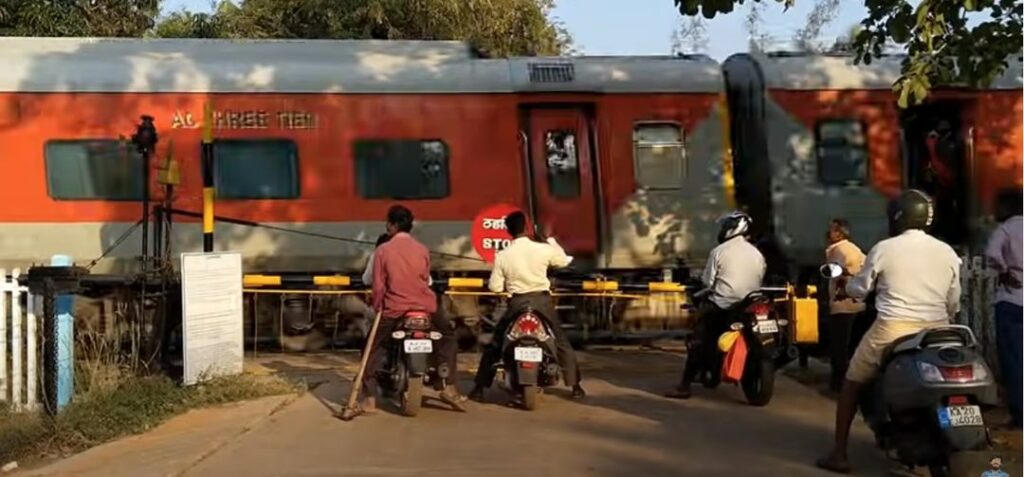
I braked hard. Dust rose. My lecture began in ten minutes.
And then I saw a friend on the other side, waiting to go into Wardha. We locked eyes through the iron bars. He understood immediately.
“Swap?” I shouted.
“Swap!” he shouted back.
I left my Priya there, jumped the tracks like a thief, and ran across. His scooter was an old Lambretta—battered, noisy, and stubborn.
It groaned. It smoked. But it moved.
I drove that Lambretta as if my job depended on it. Maybe it did. The speedometer needle shook its way towards eighty. There were no helmets in those days, only youth and poor judgement.
I reached the college, parked, and sprinted to the lecture hall.
As I entered, the clock clicked to 7:00 AM.
The students looked up, mildly surprised, as if I had been dropped from the ceiling. I stood at the podium, caught my breath, picked up the chalk, and wrote the topic on the blackboard.
Only then did my heart slow down.
I had beaten the clock—by a whisker.
***
The Department of “P”s
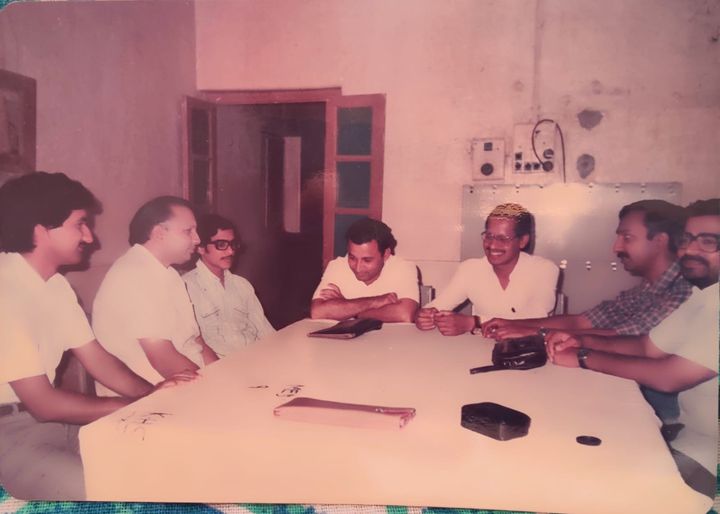
The Department of Medicine in the early 1980s was not just a workplace; it was a small world with its own rules, its own hierarchy—and its own shorthand. We called it the department of ‘P’s.
There was OP—Dr. O.P. Gupta, AP—Dr. A.P. Jain, KP—Dr. Kamal Pervez, JP—Dr. J.P. Sharma, VP—Dr. Vivek Poflee, and now there was SP—me.
While OP and AP cast their long, unyielding shadows as the two pillars of the department, and Ulhas provided its quiet conscience, we were the junior lot. The foot soldiers. The ones who lived in the wards and carried the department on our backs, one admission at a time.
***
The Tribunal
The morning ritual of ECG correction—our daily trial by fire in the creaking, phenyl-scented corridors of the old Birla guest house—continued to test every ounce of our clinical logic. But the landscape of my world had shifted. I was no longer an anxious resident hovering anxiously at the outer edge of the circle, clutching a pink rhythm strip like a confession. I had crossed over. I was now a junior lecturer, sweating through my khadi shirt, trying desperately not to trip over my own vector calculations while Gupta, Jain, and Jajoo sat shoulder to shoulder, holding court over our collective education.