Leprologist · Chairman, LEPRA India · The Man Who Examined Thirty Thousand People in Thirty-Five Villages and Took Notes at the Journal Club Until His Eighties
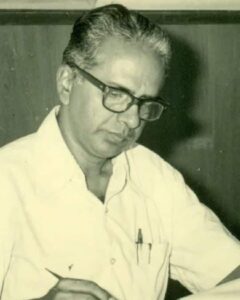
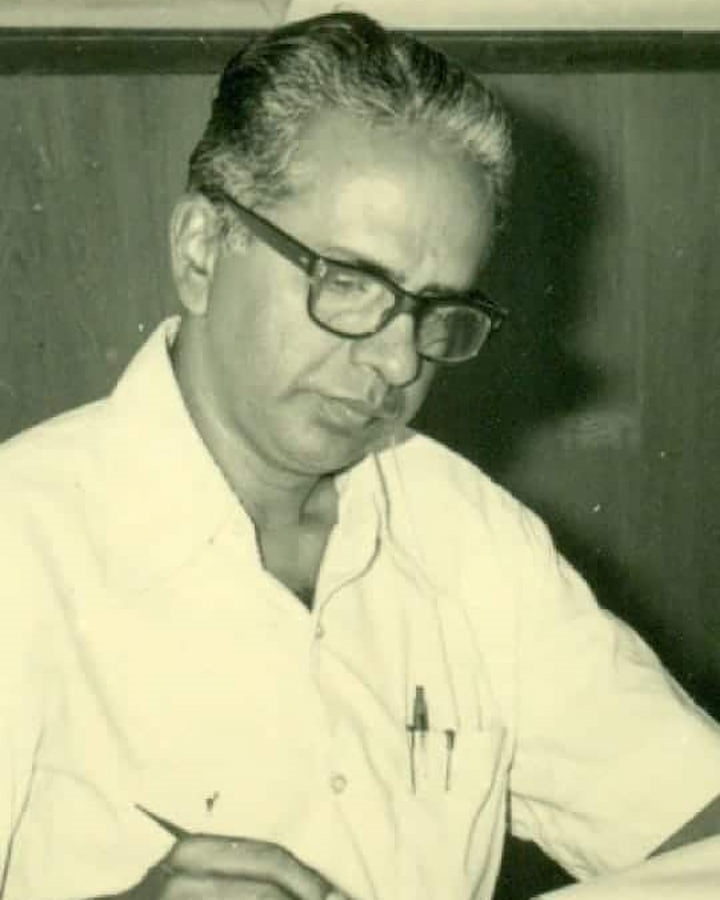
On Friday mornings, a slight elderly man would appear at the Department of Medicine’s journal club. He was not on the faculty list for the session. He had not been invited as a discussant. He came because he wanted to learn, and because he saw no reason why a man of his age and standing should stop wanting to learn.
He was the only one who took notes.
When the presenting resident finished, questions would come from the floor — the usual ones, testing knowledge, probing gaps. Then Dr. K.V. Desikan would raise his hand. His questions were the kind that leave a presenter momentarily speechless: precise, unexpectedly deep, emerging from a lifetime of accumulated knowledge that the twenty-eight-year-old at the front of the room could not have anticipated. The mischievous smile that followed was legendary. He knew exactly what he was doing.
He was in his seventies and eighties during those Friday mornings. He had received the Damien-Dutton Award — the highest international recognition in leprosy work. He had over 150 publications. He had designed and implemented the world’s first Survey, Education and Treatment programme for leprosy, a method the Government of India adopted nationally in 1955 and the WHO subsequently endorsed globally. He took notes at the journal club.
***
The Eleventh Child
Krishnaswami Venkataraman Desikan was born in 1926 as the eleventh of twelve children in a poor family. He entered Mysore Medical College with the MBBS batch of 1944 and distinguished himself by reaching his third year without failing a single subject in any year — a genuine outlier by the standards of an era when medical school attrition was high. He qualified as a doctor in 1949, already shaped by Gandhian ideals that would govern every subsequent decision he made about where to work and why.
Before he reached his final year, he had been diagnosed with leprosy himself.
This is not a minor biographical detail. To be a medical student in the 1940s and contract the disease that most frightened and stigmatised patients — to experience from inside what the diagnosis meant, what it did to the person who received it, how doctors and society responded — was the crucible of his entire career. His treatment brought him into contact with Dr. Cochrane and Dr. Paul Brand at the Christian Medical College, Vellore. Their influence planted the interest. Dr. Ramanujam, a leprologist in Madras, nurtured it. Professor Jagadeeshan of the Hind Kusht Nivaran Sangh connected him to Dr. Sushila Nayar.
The connection to Sevagram had been made. It would take decades to complete.
***
The World’s First SET Programme
In the early 1950s, Dr. Sushila Nayar was secretary of the Gandhi Smarak Nidhi Kushtha Nivaran Samiti at Wardha, working to integrate leprosy control into Gandhi’s constructive work programme. She directed Desikan to undergo formal training at the Ackworth Leprosy Hospital in Wadala, Bombay, before joining her. By the time he completed the training, she had left Wardha to become Health Minister of Delhi State.
Dr. Wardekar, a pathologist who had taken over the Samiti, welcomed him instead. The organisation became the Gandhi Memorial Leprosy Foundation, and Desikan joined it in 1952. Wardekar had identified thirty-five villages around Sevagram for a leprosy control initiative. What followed was the work that would define Desikan’s reputation and, through him, the management of leprosy across India and the world.
He visited all thirty-five villages — on foot, by bicycle, by bullock cart, on horseback, wading across rivulets. He went door to door, examining every man, woman, and child for signs of leprosy. Over five years, he and his team repeatedly examined more than 30,000 individuals and diagnosed 550 with leprosy. He established clinics in three villages and began treating patients with Dapsone. He generated awareness, conducted epidemiological surveys, and motivated patients to seek treatment — changing the relationship between the disease and the community from one of concealment and fear to one of engagement with healthcare.
This was the world’s first Survey, Education and Treatment programme for leprosy diagnosis and management. The Government of India used it as the model for the National Leprosy Control Programme in 1955. The WHO endorsed and globalised it. The strategic logic — systematic survey, community education, accessible treatment — has shaped leprosy control worldwide for seventy years. It was designed and tested in thirty-five villages around Sevagram by a man in his mid-twenties who walked to reach them.
***
From Chilakalapalli to JALMA
In 1957, he was transferred to the GMLF’s Leprosy Control Unit at Chilakalapalli in Srikakulam district, Andhra Pradesh — a semi-tribal area where he was treating nearly 15,000 leprosy patients. He extended his services beyond the unit’s mandated boundaries into tribal villages where no other doctor was present, providing emergency medical care for any condition that presented itself.
In 1962, at thirty-six, he enrolled at Christian Medical College, Vellore — the institution where he had been treated as a student — for a postgraduate degree in Pathology. His MD thesis involved autopsy studies on leprosy patients. He completed it in 1966. It was the beginning of the histopathological work for which he would become internationally recognised.
From Chingleput, where he served as Senior Research Officer at the Central Leprosy Teaching and Research Centre, he conducted a WHO fellowship year at institutions in the United Kingdom, the United States, and Japan — training in mouse footpad experiments and other advances in leprosy research. Back in India, he pioneered studies that used mouse footpad techniques to understand the pathogenesis of the disease.
In 1976, Union Health Minister Karan Singh asked him to take charge as Director of JALMA — the Japanese Leprosy Mission for Asia institute in Agra, recently taken over by ICMR. Within a year, JALMA had established itself as a centre of both outstanding clinical work and serious publication. National and international workshops, symposia, and conferences followed. His co-authorships with colleagues Ramu and Girdhar produced a sustained body of leprosy research across its entire clinical, histopathological, and immunological spectrum. He published over 150 papers in his career, covering descriptive epidemiology, diagnostics, histology, immunology, physiology, therapy, and clinical observation. His bibliography was the map of a discipline he had helped create.
***
The Return to Sevagram
He retired from JALMA in 1987 and came back to Sevagram — full circle, thirty-five years after Gandhi’s constructive work programme had first drawn him to this village and its surrounding district. With support from LEPRA, the British Leprosy Relief Association, he established a leprosy histopathology laboratory at MGIMS and took charge as the first Chairman of LEPRA India, a position he held until 2003. From Secunderabad, LEPRA India conducted leprosy control activities in Andhra Pradesh and the tribal areas of Koraput, Orissa.
He continued research from a small office, writing notes on the backs of envelopes, because that was what was at hand and because the idea mattered more than the medium. He attended the Friday journal club in the Medicine department because he wanted to know what was current and because he saw no reason to stop learning. He asked questions that left residents speechless because he had been thinking about infectious disease for forty years and the depth of that thinking was not something that retirement could diminish.
In 2001, he received the Damien-Dutton Award — the highest international recognition in leprosy. The director of the Damien-Dutton Society spoke of his untiring efforts to bring treatment to the poorest of the poor, to restore self-worth to people whose disease had stripped it from them. His response was characteristically precise: “I feel honoured, but I have to remind myself that I am no greater than several others who have worked, struggled, sacrificed, and remained unknown.”
He meant it. Authorship questions can damage the best professional relationships; Desikan never agreed to put his name to a paper he had not worked on, and never gifted authorship. He gave his juniors the first-author position routinely. He co-authored exactly one paper with his daughter, Dr. Prabha Desikan — a microbiologist, later at MGIMS — who had grown up watching her father walk to villages and examine tens of thousands of people for a disease that others feared to approach. The single shared paper between them is its own kind of testament.
***
The Ninety-Six Years
He lived to ninety-six. In his final years, the maladies of old age kept indoors a man whose nature was to be in motion — in villages, in laboratories, in conference halls, in the journal clubs of departments where he was not on the roster. The body stilled. The mind, by all accounts, did not.
His daughter Dr. Prabha Desikan compiled his biography — K.V. Desikan: An Extraordinary Life — launched at the International Leprosy Congress in Hyderabad in early November 2022, days after his death on October 23. The congress was a gathering of the international leprosy research community. His biography was launched among the people who understood best what his work had meant.
He had been diagnosed with the disease as a medical student and spent sixty years trying to understand it, treat it, and remove the fear and stigma that made it worse than its pathology required. He examined 30,000 people in thirty-five villages near Sevagram in the early 1950s. He returned to Sevagram in 1987. He attended the Friday journal club and took notes.
“I have to remind myself that I am no greater than several others who have worked, struggled, sacrificed, and remained unknown.”
He said this. He did not believe it was false modesty. He believed it was true. It was also, by the evidence of everything else, not entirely accurate.