Dr. Satish Sharma
Professor & Head of Pathology · MGIMS Tenure 1974 – 2015 Lifespan 5 December 1949, Barwaha, Madhya Pradesh — — Education MBBS (Indira Gandhi Government Medical College, Nagpur) [1974]MD Pathology (MGIMS, Sevagram) [1980]
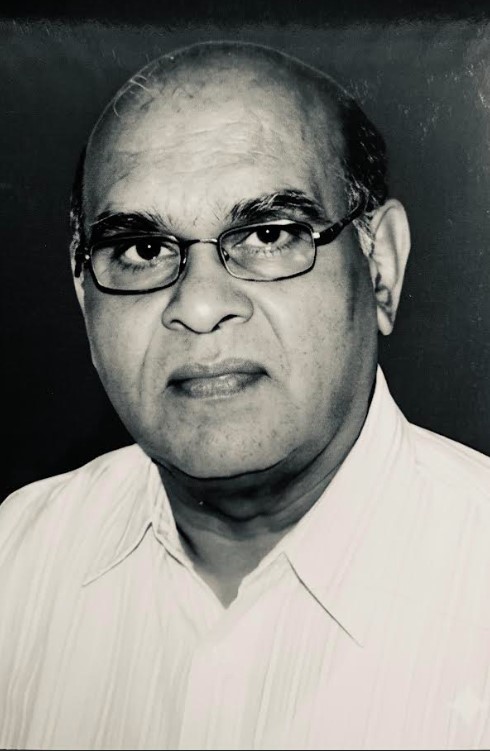
Professor & Head of Pathology · Forty-One Years at Sevagram · The Legacy That Is Quiet, Unresolved, and Real
His father, Dr. M.L. Sharma, was one of the most commanding figures in MGIMS history — charismatic, dynamic, deeply admired, the kind of person around whom institutional memory organises itself. Satish Sharma arrived in Sevagram on July 18, 1974, his father’s forty-fifth birthday, and spent the next four decades working in the same institution, in the department just down the corridor.
He was not his father. He knew it. He did not try to be.
He was a reserved man, almost a loner — soft-spoken, rarely socialising, often seen pacing the corridors in the particular manner of someone whose thinking is done in motion. He was approachable, kind, a good listener. He was not a leader in the way the word usually implies: someone who asserts, directs, and commands. Administration was not his calling. Conflict avoidance was his default. The department, at times, ran itself. Yet he taught pathology at MGIMS for nearly forty years, guided twenty-one postgraduate theses, and understood what a blood smear could tell you better than most people in the country.
His legacy at MGIMS is quiet and unresolved, as his own institution’s assessment of him acknowledged. It is also real.
Barwaha, Nagpur, and the Path to Pathology
Satish Sharma was born on December 5, 1949, in Barwaha, a town on the Narmada River in West Nimar district of Madhya Pradesh, named for the twelve ghats that once lined its banks. His father was twenty years older than him — still a medical student at Government Medical College, Nagpur, when Satish was born. The family lived in a medical colony opposite Ajni railway station, surrounded by doctors and medical teachers. Medicine was not a career Satish chose so much as a world he had always inhabited.
He attended St. Antony’s High School in Ajni, then Patwardhan High School in Sitabuldi, then Mohota Science College. He entered Indira Gandhi Medical College, Nagpur, in the second batch — admitted with 59.8% in his BSc Part I, at a time when 60% was the standard threshold. The margin was thin. In his second MBBS, he found his subject. Pathology — its precision, its detective logic, the way a microscope revealed what the naked eye could not — was what he wanted to spend his life doing.
His father had moved to Sevagram in December 1970, deputed by the Government of Maharashtra to help build MGIMS. On July 18, 1974 — his father’s birthday — Satish arrived to join him. The Pathology department was then under Dr. R.V. Agrawal, who had known the Sharma family since their Nagpur colony days. Agrawal recognised Satish’s interest and took him on. Alongside Dr. Santosh Gupta from the 1971 batch, he threw himself into histopathology in a department that had few patients, fewer specimens, and faculty who sketched microscopic findings on blackboards because teaching slides were scarce.
Learning the Craft
His MD thesis under Dr. K.V. Moghe examined breast tumours — their histology, blood group isoantigens, and sex chromatin — precise work requiring patience and careful eyes. Patient load in Sevagram was low in those years, and Dr. Agrawal solved the exposure problem the same way he had solved it for others: he sent Satish and Santosh to B.J. Medical College, Pune, for intensive immersion in slides and specimens before the final examination.
He described the pathology of his training years with the clarity of someone who had thought carefully about what that era demanded: no auto-analysers, haematology relying entirely on morphology, haemoglobin estimated by Sahli’s method, cells counted manually with a haemocytometer. Histopathology was labour-intensive — tissues processed by hand, microtomy manual, staining basic haematoxylin and eosin. Frozen sections were rare. Immunohistochemistry was unheard of. Complex cases were sent to Nagpur or Bombay. But both Dr. Agrawal and Dr. Moghe had taught him that a well-trained pathologist could do more with a microscope than any machine.
He took that lesson permanently. Through the decades when electronic cell counters became standard and automation reshaped laboratory medicine, he continued to trust the blood smear. RBC morphology fascinated him throughout his career — the way each red cell’s shape and size and colour told a story about what was happening inside a patient’s body. He could classify anaemia from a smear with the confidence of someone who had been doing it for thirty years, because he had been.
He became Reader in 1982 and led the department from 1995 to 2004, later continuing as Professor. A technicality in the promotion structure kept him from reaching Director-Professor — a small irony that those who knew him noted without drama.
The Teacher and the Limitations
Between 1987 and 2009, he supervised twenty-one postgraduate theses covering fine needle aspiration cytology, sickle cell anaemia, leukemia, breast cancer, Helicobacter pylori in gastric lesions, placental histology in adverse pregnancy outcomes, mast cell distribution in leprosy, and frozen section diagnostics. It was a substantial body of mentorship across a broad range of the discipline.
His students remembered him pacing the classroom with chalk, sketching histological details with effortless ease, filling lectures with real-world examples rather than abstract descriptions. He made pathology concrete. He revealed the essence of disease rather than merely cataloguing its appearances.
What he could not do — or would not — was the administrative work of leadership. He avoided enforcing decisions, let things run their course, and withdrew from the institutional confrontations that department heads inevitably face. His junior colleagues absorbed the guidance role in thesis supervision when he stepped back from it. The department, at times, continued without his direction because he did not provide direction. These are the facts, and they sit alongside the other facts without cancelling them.
His father’s shadow was long. Dr. M.L. Sharma had commanded and people had followed. Satish Sharma had the intellect, the experience, the years — and a temperament that made the commanding mode unavailable to him. He lived in the institution, and in the shadow, and left his mark on both in a register quieter than his father’s but not less real.
The Years Beyond
He retired as Professor and Head at the end of 2015, then remained at MGIMS on annual extensions for another six years before moving to Bhopal. He taught at Mahavir Institute of Medical Sciences and later at Shankaracharya Medical College, Bhilai — stepping away finally on October 1, 2023, after forty-nine years in medical education. He was seventy-three.
For nearly a decade, he had managed the Nagpur PMT Centre alongside his departmental responsibilities, ensuring examination logistics ran cleanly. He had captained his school football team for three consecutive years and retained a genuine love for sports — when Dr. O.P. Gupta needed someone to lead the institute’s sports department in the mid-1990s, the choice was immediate.
His sons Pawan and Vijay are both MGIMS alumni — Community Medicine and Anaesthesiology, one settled in Dubai, the other in Hyderabad. He now lives in Dhanvantary Colony, a mile and a half from the medical college where he arrived on his father’s birthday in 1974.
Dr. R.V. Agrawal’s instruction to his students was to focus on a cell and try to understand what it does in health and disease. Satish Sharma heard this and carried it. Over forty years, he pressed his eye to the microscope and did exactly that — reading cells, finding stories, trusting the preparation of the eye more than the output of the machine. Whatever his limitations as an administrator, as a pathologist he was serious and skilled, and in the end a serious and skilled pathologist who teaches for four decades shapes a great many doctors who will carry what they learned into wards and clinics and operating rooms for the rest of their working lives.
That is its own form of legacy. Quiet, unresolved, and real.
Mentored Students (MD/MS)
Study of Hepatitis B Surface antigen and immunological profile in blood donors
An evaluation of accuracy of fine needle aspiration cytology in the diagnosis of lymphadenopathy with histomorphological correlation
Cytological study of effect of chewing tobacco and betel nut on the character of epithelial cells of oral cavity
Study of sputum cytology in male chronic smokers
Clinicopathological retrospective and prospective study of leukemia in a rural community
Frozen section examination in surgical Pathology material: A study of 205 cases
Comparative study of different reporting systems used for reporting cervical / vaginal cytological diagnosis
Evaluation of high resolution USG in diagnosis and management of scrotal disorders
Clinico-epidemiological and histomorphological study of breast tumors in a rural community: a retrospective and prospective study
Hematological profile in patients of sickle cell anemia and sickle cell trait in relation to blood gas analysis
Study of non-neoplastic gastric lesions with special reference to Helicobacter pylori infection
Correlative study of cytological features with histological grading and axillary lymph node status in breast carcinoma
A correlative study of Haemoglobin S percentage and haematological parameters in patients of sickle cell trait
Correlative study of cytological, biochemical and microbiological parameters in benign body cavity effusions
Microwave processed cell block preparation as a diagnostic technique complementary to cervico-vaginal specimens
Placental histology and its correlation with adverse pregnancy outcome and use in estimation of time since fetal death in cases of stillbirth
Erythrocyte sedimentation rate in health and disease
Significance of mast cell density and distribution in various histopathological lesions of leprosy
Role of fine needle aspiration cytology in bone lesions
Study of clinico-pathologic characteristics of infiltrating duct carcinoma of breast with micropapillary carcinoma component
A 9-Year Study of Cytological Profile of Breast Carcinoma with Micropapillary Component
An Audit of Blood Bank Services.
Key Milestones
| 1949 | Born, 5 December, Barwaha, West Nimar district, Madhya Pradesh |
| 1968 | Entered Indira Gandhi Medical College, Nagpur — second batch |
| 1974 | Arrived MGIMS, 18 July — his father Dr. M.L. Sharma’s 45th birthday |
| 1977 | Joined Pathology department formally, 1 August |
| 1982 | Promoted Reader in Pathology |
| 1987 | Began supervising MD theses — continued until 2009 |
| 1995 | Led department as Head of Pathology |
| 2004 | Stepped down as Head — continued as Professor |
| 2015 | Retired as Professor & Head, 31 December |
| 2021 | Left MGIMS after annual extensions — moved to Bhopal |
| 2021 | Taught at Mahavir Institute of Medical Sciences, then Shankaracharya Medical College, Bhilai |
| 2023 | Stepped away from teaching, 1 October — aged seventy-three, after forty-nine years |