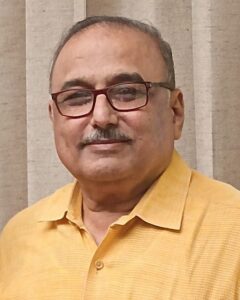
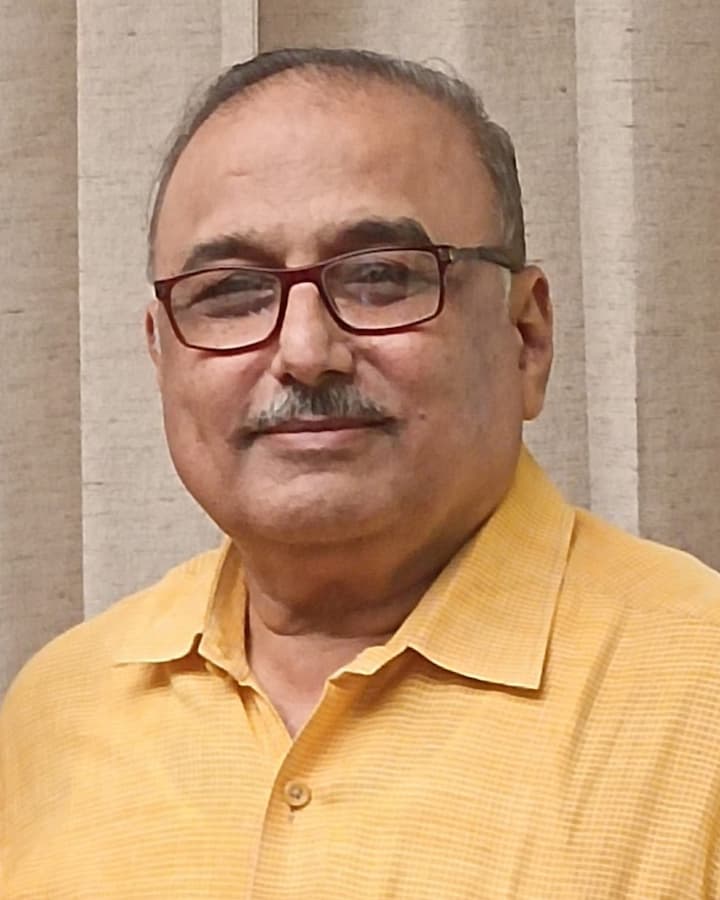
The Map He Refused to Follow
His family had mapped out his future with exceptional care. His brother-in-law had identified Latur as the exact right city. An uncle had found a prime, highly lucrative location for a surgical nursing home in Jalgaon.
He held an MCh in Plastic Surgery from Government Medical College (GMC), Nagpur—which happened to be the very first medical college in India to even offer the degree. With that elite credential, highly prestigious government institutions and massively lucrative private practice in any major city he chose were realistic, immediate possibilities. The future seemed perfectly clear, and the path brilliantly lit.
He chose Sevagram instead.
Located just five miles from his parents’ house, it was the same village where his elder brother Ulhas had already spent years building a legacy in the Medicine department. It was a place where strict Gandhian values shaped the institutional culture, and where patients came from the poorest villages bearing conditions no one else was equipped to handle. He did not choose it because it was convenient; it was geographically near, but professionally modest. He chose it simply because it was the right place.
“Medicine wasn’t just about treating illness,” he had learned watching his brother work. “It was about touching lives.”
Burn victims, leprosy patients with deformed hands and feet, children with severe cleft lips and palates, and men from the nearby Dattapur colony enduring lifelong catheters because no surgeon had ever offered them relief—these were the patients who would fill his operating theatre in Sevagram. He came knowing exactly who was waiting there, and knowing that he was the person who could finally help them. That was a completely sufficient reason.
The Gandhian Grandfather and the Path to Surgery
Suhas Jajoo was born on November 28, 1955, in Wardha. His grandfather, Shrikrishnadas, had been imprisoned during the freedom struggle and had famously turned down offers to serve as Chief Minister of CP and Berar, and as the Union Finance Minister. He chose simplicity and service over massive political power, absorbing Gandhian values as a daily, personal philosophy rather than a political posture. The Jajoos of Wardha were known for their fierce integrity, their deep humility, and the simple khadi they wore from cradle to grave.
Suhas completed his matriculation in Marathi medium in 1972. His first year of BSc at Jankidevi Bajaj Science College presented two massive challenges simultaneously: learning entirely in English, and shifting from Mathematics (his natural strength) to Biology. His elder brother Ulhas urged the painful shift toward medicine. Suhas pushed past the deep frustration, seeking constant help from his professors, and the brutal year of struggle finally opened the door to Government Medical College, Nagpur, in 1973.
He completed his MBBS in 1977. His rural internship at the Bhadrawati Primary Health Centre—served alongside S.P. Kalantri, Omprakash Singhaniya, and Suresh Batra—planted something deeply durable in his understanding of what healthcare in rural India actually required.
He had originally wanted Ophthalmology, but when he secured only a diploma seat, he refused to accept it and pivoted to Surgery. He joined the MS General Surgery program at GMC Nagpur under Dr. P.H. Soni, focused his thesis on sepsis in burns, and discovered in the grueling process that surgery suited him far more completely than he had ever anticipated.
The MCh and the Cadaver Hall
Plastic surgery presented itself as the natural next step. If general surgery offered the capacity to save lives, plastic surgery offered the miraculous capacity to restore them.
He secured the only available MCh seat at GMC Nagpur. Because the surgical techniques were groundbreaking in India, local expertise was incredibly scarce. Suhas found himself forced to learn complex myocutaneous flaps—a highly advanced reconstructive approach for traumatic or oncological defects—in the only place where practical knowledge was freely available to him: the dissection hall.
Day after day, hour after hour, he practiced relentlessly on cadavers. He typed his massive thesis—all three hundred pages of it—entirely by his own hand.
When he finally presented his research at a major conference in Chandigarh, the elite surgical audience was astonished—not only by the quality of the work, but by the sheer method of its acquisition. “How did you learn this on cadavers instead of human subjects?” The question implied pure incredulity. The answer implied a man who had simply found what was available and used it completely.
He earned his MCh in November 1983, and arrived at MGIMS on March 17, 1984—choosing the rural wards of Sevagram over every lucrative option that had been so carefully arranged for him.
The Burn Unit and the 85 Percent
When he arrived, plastic surgery was virtually unknown in Sevagram. Within a single year, he had completely changed that. He repaired cleft lips and palates, giving children with facial deformities outcomes their parents had never imagined possible. He managed complex oral cancer cases that arrived in their brutal final stages, and he addressed severe facial trauma in tight partnership with Dr. Rajiv Borle from Dental Surgery.
But his most transformative contribution was still ahead.
In 1986, he established a dedicated ten-bed Burn Unit at MGIMS. Before this, burn patients received highly erratic and deeply inadequate treatment. Many died not from the burns themselves, but from sepsis and severe malnutrition—the silent, inevitable killers of severe burns in the absence of highly systematic care.
Suhas introduced aggressive wound excision and early skin grafting—massively advanced techniques for that time and place. He replaced weeks of agonizing, fatal deterioration with outcomes achievable in mere days. Patients who would previously have faced a grim, certain prognosis walked out of the hospital within a week.
The results were instantly measurable and absolutely remarkable: 85% of severe burn victims survived under his care. It was a success rate totally unheard of in most rural hospitals of that era. He trained nurses in advanced burn management, refined monitoring protocols, and directed his MS residents to base their theses strictly on burns, sepsis, and malnutrition—because the research questions that most desperately needed answering were the exact ones his patients were dying from.
Sevagram had suddenly become, through the vision and relentless work of one plastic surgeon, an elite center of advanced burn care for rural Vidarbha.
The Endoscope, the TURP, and the Men of Dattapur
He did not stop at what he had been officially trained to do. When Dr. Kher left in 1985, Suhas stepped up as unit head and instantly identified a critical gap in gastrointestinal diagnostics. He traveled to Nagpur to train under Dr. Shrikant Mukewar, returning to introduce upper gastrointestinal endoscopy to Sevagram—the first person to ever do so. A year later, he sought out a renowned urosurgeon in Pune and fully mastered transurethral prostate resection (TURP).
The patients who most desperately needed the TURP were the elderly men of Dattapur—a village five miles from Sevagram where many leprosy patients had been institutionalized. Several suffered from massively enlarged prostates and were condemned to lifelong catheters simply because no surgical option had ever been made available to them.
Lifelong catheters meant recurrent infections, brutal sepsis, diminished quality of life, and the particular, crushing indignity of total dependency without relief. Suhas partnered with Dr. Arun Tikle from Anaesthesia and began performing TURP surgeries on these patients despite the terrifying clinical challenges: plummeting hemoglobin, the massive difficulty of arranging blood before surgery, and incredibly high complication risks. He brought permanent relief to dozens of men for whom society had completely forgotten.
He also performed extensive, brilliant reconstructive surgery on leprosy patients whose hands and feet had been brutally deformed by the disease, inviting the legendary Dr. Paul Brand and Dr. Ernest Paul Fritschi to MGIMS to share their expertise.
The Teaching and the Politics
In the operating theatre, he was the kind of teacher who believed in freely passing on what he knew, rather than jealously guarding it. He let residents perform independent surgeries under his watchful eye. He asked the piercing questions that built clinical reasoning rather than blind compliance: “Why this diagnosis? Why this intervention?” His camaraderie with nurses, ward boys, and laboratory technicians was warm, genuine, and highly consistent. He joked with them, listened closely to their concerns, and treated everyone from junior residents to senior faculty with the exact same quiet respect. In a hospital heavily governed by hierarchy and stress, his presence brought profound warmth.
But his rapidly growing influence unsettled some.
In 1989, a sudden administrative directive ordered him to restrict himself exclusively to plastic surgery. He correctly identified it as a thinly veiled attempt to sideline him. It produced his most articulate and sustained argument: in a rural hospital where specialists were desperately scarce, patients routinely arrived with strangulated hernias, ruptured appendicitis, perforated ulcers, and bowel emergencies, alongside burns and deformities. The restriction was clinically senseless, and he loudly said so.
He flatly refused to choose between general surgery and plastic surgery when both were actively essential to his patients’ survival. The environment rapidly turned hostile. Colleagues silently withdrew their support. Subtle, daily acts of non-cooperation rapidly accumulated. He recognized, with deep sadness, that the battle had violently shifted from the quality of the clinical work to the toxic politics of the institution. Once that shift occurred, staying meant compromising the absolute moral clarity that had brought him to Sevagram in the first place.
After nine magnificent years of service, he left in December 1992.
Jajoo Wadi and the Return to Teaching
He and his wife, Shubhada—a brilliant obstetrician he had married in 1982—established their private practice at Jajoo Wadi, his ancestral home in Wardha.
Their day began at five in the morning in the operating theatre, continued relentlessly through hospital rounds, and stretched deep into the night ensuring every single patient had been seen. The queue outside their clinic never seemed to shorten. No one was ever turned away. Over the following years, they built a highly advanced thirty-bed hospital equipped with modern operating theatres, labor rooms, and diagnostic laboratories—all within the exact same campus where Suhas had been born.
In January 2001, he returned to teaching at Jawaharlal Nehru Medical College in Sawangi as Professor of Surgery. Shubhada joined him three years later. For nearly two and a half decades, they trained entirely new generations of doctors alongside their massive private practice. He mentored nineteen students in plastic surgery, shaping them in the exact manner he had always shaped students: through complex cases, piercing questions, and the unshakeable confidence that comes from being allowed to operate under the eye of someone who truly trusts you.
His daughters, Rucha and Shruti, both became doctors, successfully carrying the medical legacy forward.
The places his uncle had identified for his nursing home, and the city his brother-in-law had proposed—they were not the wrong suggestions. They were simply not Sevagram. They were not Wardha. They were not the place where his grandfather had chosen simplicity over the Chief Ministership, and they were not the place where dying burn patients desperately needed someone who had mastered myocutaneous flaps in a lonely cadaver hall.
He had come to Sevagram by deliberate choice, which was highly unusual. He had stayed for nine years because the work was profoundly real. He had left only because the politics had become more real than the work. And he had ultimately returned to teaching because the fierce instinct toward transmission—toward the next pair of hands, the next surgical mind, the next generation of doctors who would need to kno