Founding Trustee, Kasturba Health Society · Secretary to Jamnalal Bajaj · Disciple of Vinoba Bhave · The Continuity of Sevagram
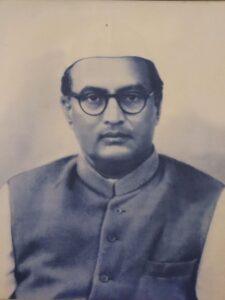
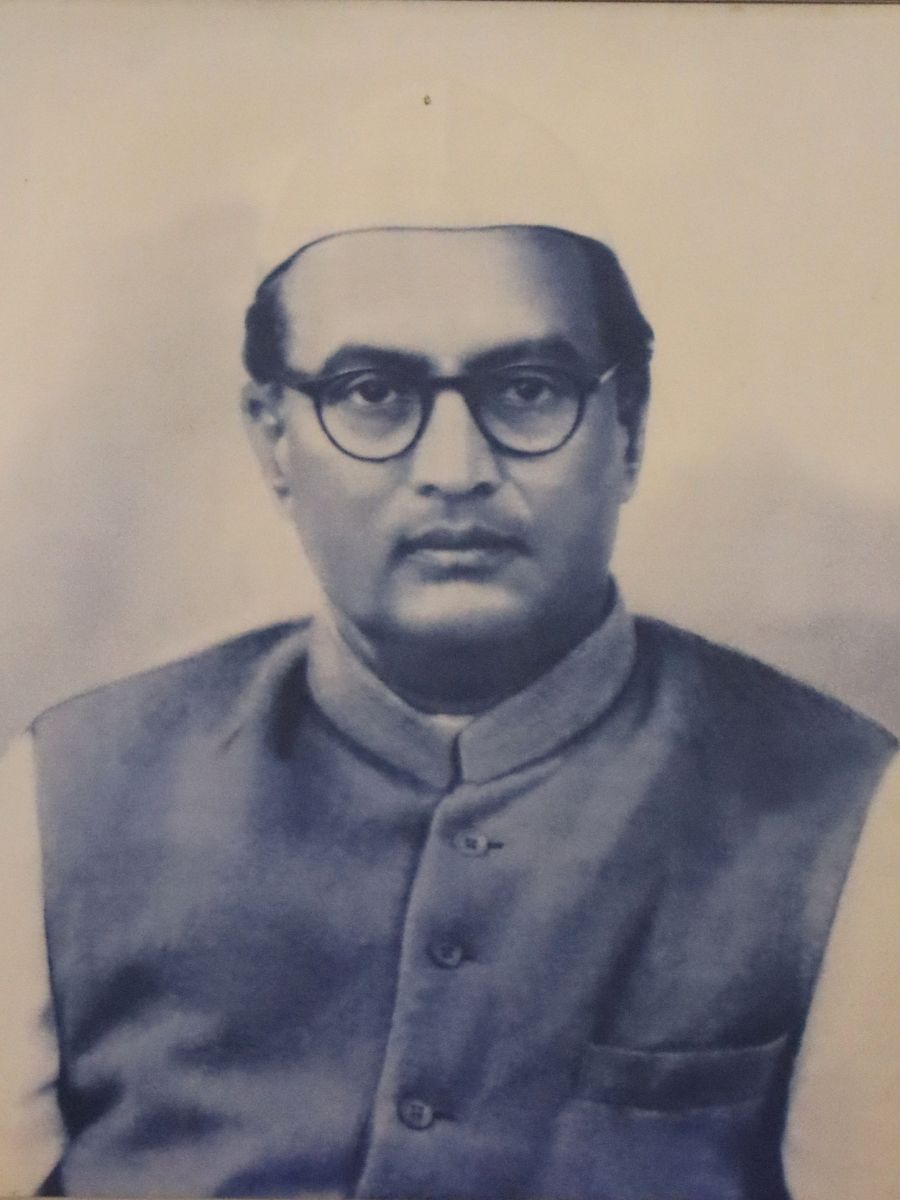
When Raghunath Shridhar Dhotre died in Wardha on May 16, 1967, the President of India sent condolences to his widow. It was a gesture that would have puzzled Dhotre himself, a man who spent fifty years in deliberate retreat from public recognition. He had never contested an election, never sought a platform, never written the memoir his friends urged him to set down. He served — quietly, precisely, behind the scenes of the freedom struggle and its Gandhian aftermath — and then he was gone, his name already fading by the time the condolences arrived.
He deserves to be remembered.
Sabarmati to Wardha
Dhotre was born on June 10, 1897, into a generation that would spend its youth fighting for a country that did not yet exist. In 1918, he came to Sabarmati Ashram alongside Acharya Vinoba Bhave — not as a famous arrival but as a committed young man beginning a life organised around khadi, village upliftment, and service without ambition.
When Vinoba founded Param Dham Ashram in Wardha in 1921 as a branch of the Sabarmati Satyagraha Ashram, Dhotre was with him. Together, they taught at the Ruia Shram School for Women, established by Jamnalal Bajaj. For Dhotre, teaching was not a profession — it was his contribution to what Gandhi called constructive work: the patient, unglamorous nation-building that continued regardless of whether the British were being confronted or not.
Jamnalal Bajaj, who had a sharp eye for reliable men, appointed Dhotre his secretary. It was a role that suited him exactly — administrative, trust-based, demanding precision and discretion rather than oratory or ambition. Under Bajaj’s leadership, Dhotre developed organisational skills that would serve Gandhian institutions for decades: the ability to hold multiple threads simultaneously, to keep records impeccably, and to move between the visionary and the practical without losing either.
The Charkha and the Movement
In the 1920s, as secretary of the Maharashtra Charkha Sangh, Dhotre helped turn spinning into something more than a cottage industry. The charkha was Gandhi’s symbol of economic self-reliance and rural dignity — the act of spinning one’s own cloth as a political statement against colonial dependency. Dhotre’s work was to make this symbol operational: organising, training, distributing, sustaining the infrastructure of a movement that required as much administrative support as ideological conviction.
He was no orator. He inspired not through speeches but through the consistency of his own example and the quality of his quiet encouragement. One of those he influenced was Annasaheb Sahasrabuddhe, who would go on to devote his life to village work in the remote districts of Wardha and later serve as Vice President of the Kasturba Health Society. The thread that runs from Dhotre’s mentorship to Sahasrabuddhe’s decades of rural work to the founding of MGIMS is direct, even if it is invisible in any formal record.
In 1940, Dhotre served as Secretary of the Gandhi Seva Sangh, bringing him into close working contact with Sardar Vallabhbhai Patel, P.C. Ghosh, and Gangadharrao Deshpande — the senior generation of the freedom struggle. After independence, when Dadasaheb Mavlankar became President of the Gandhi Smarak Nidhi, Dhotre was appointed its Secretary, traveling across India to support constructive initiatives and advise the Khadi Board, of which he was a respected informal member though never formally constituted.
Through it all — Sabarmati, Wardha, Delhi, Tryambak — he remained a man without political ambition. He never contested an election. He never sought a public platform. He found his purpose elsewhere.
The House on the Ashram Lane
The Dhotres’ home in Sevagram, adjacent to Jamnalalji’s guest house, was known to everyone who passed through the ashram world as a place of unusual warmth. The ashram itself could be austere, demanding, occasionally overwhelming to visitors unaccustomed to its rhythms. Dhotre’s house was different.
His wife Sharayutai — born August 5, 1910, known to everyone as Akka — ran the household with a gracious hospitality that seemed effortless. There were always refreshments, always laughter, always conversation that moved freely between the serious and the ordinary. Akka never appeared tired or flustered. Every guest was received with the same attentive dignity, whether they were a passing Sarvodaya worker or a senior Congress leader.
Visitors who felt daunted by the moral gravity of Gandhian ashram life found particular comfort in one of Dhotre’s characteristic remarks: “We are ordinary householders, just like you.” It was not false modesty. It was a genuine hospitality — an invitation to lay down the performative weight of ideology and simply be a person among people.
Their home became a sanctuary. In a world of causes and commitments, it offered the rarer thing: welcome.
The Founding Trustee
In September 1964, when the Kasturba Health Society was registered in Nagpur to take formal charge of what would become MGIMS, Dhotre was among its seven founding trustees. He joined Dr. Sushila Nayar, Manimala Chaudhary, Dr. Anant Ranade, Shriman Narayan of the Planning Commission, Laxmidas Shrikant of the Gandhi Smarak Nidhi, and Nalinibhai Mehta — a group bound not by institutional affiliation but by a shared formation in Gandhian values and decades of acquaintance with each other’s character.
Dhotre represented something specific in that group: continuity. He had been in Wardha since 1921. He had known Jamnalal Bajaj personally. He had worked with Vinoba Bhave at the beginning of the Param Dham Ashram. He carried the institutional memory of the ashram world in a way that the others, many of whom had come to Sevagram later, could not. His presence on the founding board was a form of testimony — that this new medical institution was not a departure from the Gandhian tradition but its continuation.
He died on May 16, 1967, three years after the Kasturba Health Society’s founding and two years before MGIMS admitted its first students. Heart and kidney failure. He had been hospitalised in Nagpur, barely conscious in his final days. He did not live to see what the institution became.
His daughter’s daughter did. Bhakti — granddaughter of Raghunath and Sharayutai Dhotre — was a member of the first batch of MGIMS in 1969. The Gandhian values had passed from generation to generation, from khadi to stethoscope, in exactly the way the founders had hoped they would.
The Memoir He Never Wrote
In his later years, friends urged Dhotre to write down his memories. He had the material. He had been present at enough significant moments, alongside enough significant people, to fill a substantial volume. His recollections were sharp, his observations — of great men and their contradictions, of meetings that shaped the nation’s course — reportedly candid and illuminating.
He never wrote it. The memoir was planned, discussed, and left undone. Whether from modesty, from the press of continuing work, or simply from the sense that his life had been lived rather than narrated, the record was never set down. What remains is fragmentary — the testimonies of those who knew him, the institutional traces of his work, the charkhas still turned by hand in Sevagram homes.
It is one of the quiet losses of that generation: the men and women who were present at the founding of things, who knew everything and wrote down nothing, trusting instead that the work itself would be sufficient testimony.
For Dhotre, it mostly was. The Kasturba Health Society endures. MGIMS endures. The school of thought that placed rural healthcare and rural education at the centre of post-independence nation-building endures, however battered. He was part of its planting.
He never sought the limelight. In that retreat, he became — as those who remember him say — the flame by which others found their way. Akka outlived him by thirty-two years, dying on January 29, 1999, still in Sevagram, still the warm centre of whatever company gathered around her. She was, in her way, as much a part of the institution’s founding as her husband — the hospitality that made idealism liveable, the household that gave the movement a human face.