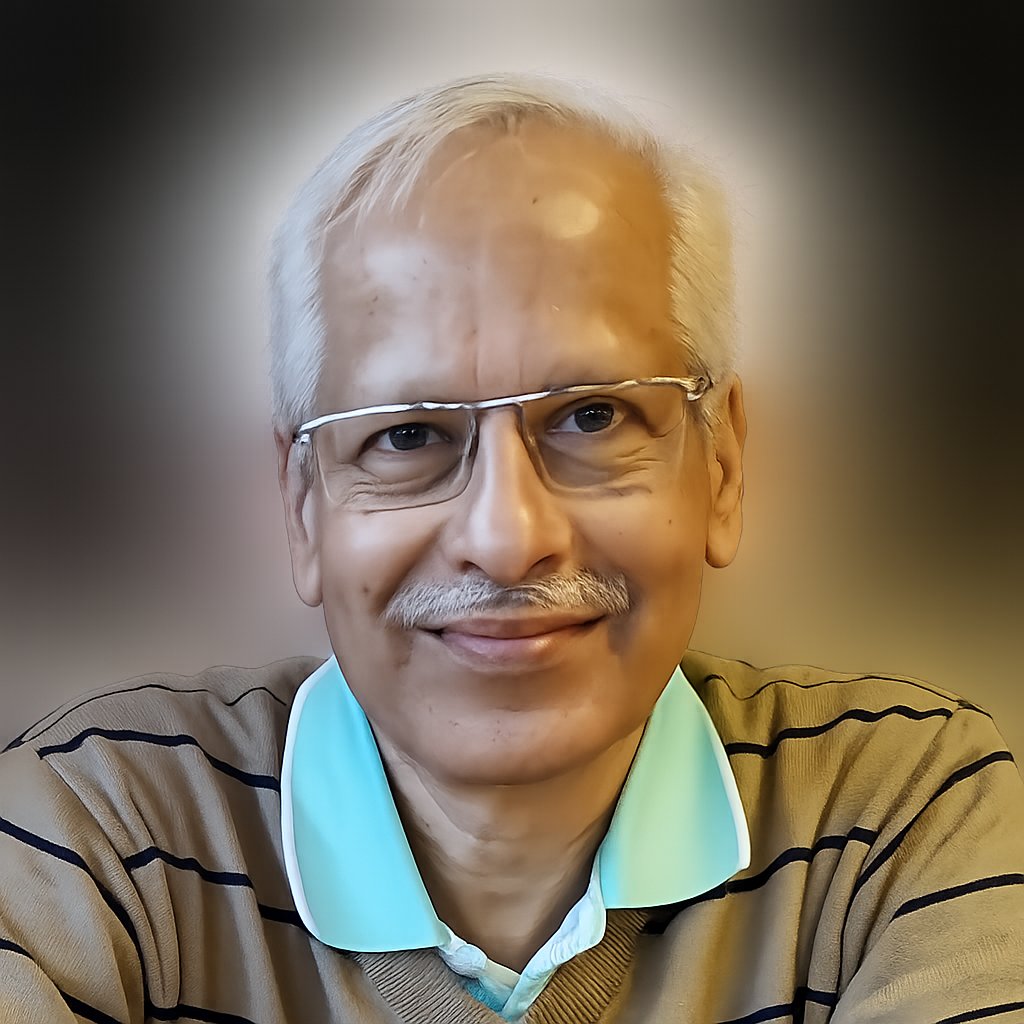
What Institutions Remember—and Forget
The end, when it finally came, was a study in contrasts.
On one side was the work family—the people in the trenches who keep a hospital breathing. The office superintendent, the matron, the biomedical engineers, and the pharmacy chief organised a modest farewell in the MS Office on 21 January. It was unpretentious, practical, and deeply felt.
I spoke in Marathi for nearly twenty minutes, trying to thank everyone for standing by me through the thickets of administration. I was determined not to become emotional. I wanted to leave with the stoic poise of a Sevagram boy. That resolve did not last long.
Colleagues spoke next, recalling midnight emergencies, long days that blurred into nights, and small victories that rarely made it into reports. Shaily presented me with a beautifully crafted frame—a collage of photographs from my years in office. I was deeply moved to learn that Manish, the office attendant, had stayed late into the night at the Wardha bus stand to help assemble it. Their thoughtfulness undid me.
I sent a final message to the faculty, using the cricket metaphor that had come to define how I understood the job.
***
Email to the Faculty: 21 January 2023
Stepping Down
From: SP Kalantri <
[email protected]>
To: MGIMS Faculty & Staff
Date: 21 January 2023
Dear all;
This morning, I hung up my boots and stepped down as Medical Superintendent of MGIMS Hospital.
Twelve years ago, I had taken on this role with reluctance. I was a physician–teacher with no prior experience in hospital administration, and the early days were daunting. It felt like being thrust into Test cricket at Sabina Park without ever having played first-class cricket. The pitch was treacherous, the skies overcast. Some deliveries bounced unexpectedly; others spun sharply from wide of leg to clip the off stump. It took time, but gradually I began to understand the game. Over weeks, I learnt where my off stump was.
Months later, I found my confidence—starting cautiously in the “V” before, eventually, learning to hook and pull without fear.
With time came a wider view. The challenges were immense. Patients, increasingly empowered, demanded care that was more convenient, effective, and affordable. Healthcare professionals, meanwhile, sought more staff, larger budgets, better equipment, and modern infrastructure. Balancing these competing expectations with limited resources often felt like walking a tightrope.
As Medical Superintendent, I experienced both success and failure. Along the way, I received more bouquets—and brickbats—than I probably deserved. Yet this journey allowed me to translate several ideas into reality. Modestly, I believe the hospital became more responsive to the needs of the community during my tenure.
At times, I may have been petulant, taciturn, or unreasonably demanding. Even then, my colleagues stood by me. Their support was my bedrock, and I owe them a deep debt of gratitude.
Why did I step down? Many wondered; few asked. The answer is simple: I was growing stale. It was time to hand over the reins to someone younger, brighter, and filled with fresh zeal. As Vijay Merchant once advised, “Retire when people ask why, not when they ask why not.”
What lies ahead? I hope to return fully to teaching and patient care—particularly palliative care. I wish to rekindle my engagement with research, immerse myself once again in reading and writing, and spend more time with my family—especially with my grandchildren, Diti, Nivi, and Krit.
I look forward to this new chapter, hoping it brings clarity, calm, and the space to rediscover myself.
Best regards,
SP
As I walked out later that day, the contrast was unmistakable.
There was no formal send-off from the top management. No official acknowledgment from the institution I had served for four decades. The silence was unexpected. It hurt more than I had anticipated.
Yet, even that silence offered a final lesson. Institutions have short memories. They value the labour, but they have little time for the emotions of those who leave. Sweat is acknowledged; tears are not.
What endures are not official farewells, but relationships forged in the trenches. I left the MS Office behind, the designation surrendered without regret. I carried with me memories of ten thousand kilometres cycled, of countless patients seen, and of a hospital that was—if only slightly—better than I had found it.
The “SP” bookshelf remained.
The letters on the door changed.
And I was free.