Dr. A.R. Chaudhari
Professor & Head of Physiology · MGIMS Tenure 1983 – 2023 Education MBBS: Government Medical College, Nagpur (1983)MD Physiology: Mahatma Gandhi Institute of Medical Sciences, Sevagram (1987)
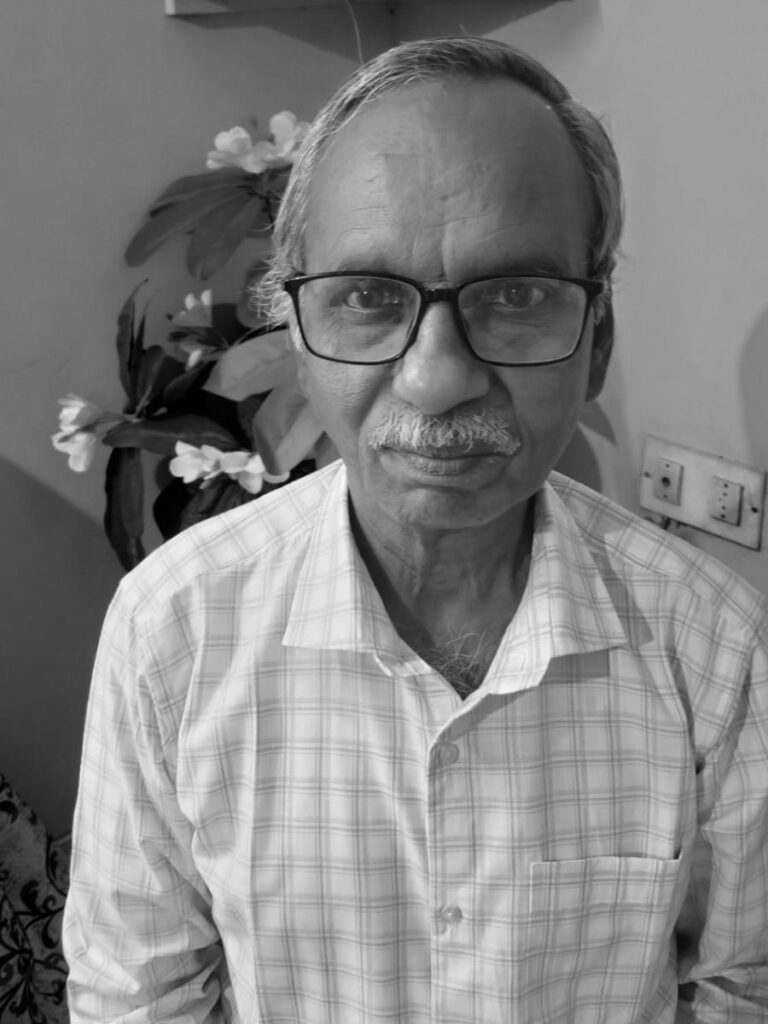
Professor & Head of Physiology · Thirty-Five Years at Sevagram · The Man Who Arrived at Two O’Clock, Every Day, for Thirty-Five Years
At exactly two in the afternoon, he would stride into the Physiology lecture hall, chalk in hand. Not at two minutes past. Not at one fifty-eight. At two. Students who had been in his classes long enough knew to be seated and ready before the hour turned.
His lectures were built the same way — meticulous, structured, delivered with the precision of someone who had thought carefully about what came first and what came next. He drew diagrams on the blackboard rather than projecting them on slides, sketched flowcharts rather than handing out printed notes, and required students to construct their understanding rather than consume his. “The chalk and blackboard force a teacher to think and students to engage,” he said. It was not nostalgia for old methods. It was a considered pedagogical conviction, held and practised for thirty-five years.
He was not a showman. Dr. K.N. Ingley had performed Parkinson’s disease in the lecture hall, wobbling and trembling to make students feel what they were memorising. Ajay Chaudhari did not perform. He explained — carefully, thoroughly, in a low husky voice — and trusted that clarity was its own form of engagement. For the many students who filled the Physiology lecture hall across three and a half decades, it was.
Wardha, Home, and the Elder Brother
Ajay Rameshwar Chaudhari was born on July 11, 1959, in Wardha — the fourth of five siblings, with four brothers and a sister. His father Rajeshwar Chaudhari worked as a railway accountant; his mother Kamalabai ran the household with the quiet efficiency that holds a family together without drawing attention to itself.
The formative influence was his elder brother U.R. Chaudhari, a chemistry professor, whose home in Ramnagar was organised around learning. It was his brother who taught Ajay how to study, how to write, how to structure preparation for examinations. The lessons were absorbed early and stayed permanent. By the time Ajay moved through Buniyadi Bal Mandir, New English High School in Wardha, and J.B. Science College, the habits of disciplined academic work were already second nature.
In 1978, he secured admission to Government Medical College, Nagpur — twenty-fourth rank on the state merit list. He earned his MBBS in 1983, completed his internship, and found himself at the familiar crossroads of a newly graduated doctor: which direction now?
The answer came from Dr. C.B. Taori, a biochemistry faculty member at MGIMS and a close friend of his elder brother. “Why chase a clinical career?” Taori said. “Specialisations take years, and there’s no certainty of getting your desired branch. Physiology has a vacancy — take it.” It was practical advice delivered plainly. Ajay took it. He joined MGIMS as a Demonstrator in Physiology and enrolled in postgraduate studies under Dr. K.N. Ingley.
He had not chosen Physiology out of passion. Passion came later, in the way it often does in academic medicine — through the specific questions a subject opened rather than the subject itself. In Dr. Ingley’s infertility laboratory, peering through a simple microscope at Neubauer chamber counts, something caught his attention and held it. Male infertility: its causes, its mechanisms, and the possibility of doing something about it. He completed his MD in 1987 and joined the department as Lecturer in 1988.
The Department He Joined and the One He Built
He entered a department of seasoned teachers: Dr. Ingley as head, Dr. Sutikshna Pande as Reader, Dr. K.S. Bhat, and Dr. Ramji Singh — a team with strong individual characters and an established culture of twice-daily tea gatherings at eleven and three. Dr. K.S. Sachdeva, who had been Professor of Physiology and Dean, joined those Saturday morning tea sessions and offered a consistent message to young faculty: “You must publish, or you’ll remain an assistant professor for life.” The nudge — “sometimes a shove,” as Chaudhari recalled — pushed him and his colleagues to write and research beyond their lecture notes.
His own research settled on oxidative stress in male infertility — a subject understudied in India at the time. He examined antioxidant impacts on sperm count and motility, blood group antigens, secretor status and their correlation with sperm antibodies. He built a research culture in the department around the infertility theme, directing his postgraduate students into its many subsidiary questions: varicocele as a cause of infertility, immune responses, the edge cases where sperm counts reached near zero. The sperm quality analyser arrived in 2000, replacing the manual Neubauer chamber counts that had characterised the lab’s first three decades. Precision improved; the underlying questions remained as pressing as they had always been.
His books entered the reading lives of MBBS students across the country. Viva in Physiology, published in 1988 — the year he joined as Lecturer — and Textbook of Practical Physiology in 2000 went through four editions each. They became staple reads because they did what he did in his lectures: simplified without falsifying, explained without condescending, gave students what they needed to understand rather than merely what they needed to pass. The combination of blackboard teaching and written texts that reinforced each other was characteristic of a man who thought about learning systematically.
Leading the Department
He took over as Head of Department in 2012, following Dr. Ramji Singh and Dr. Sutikshna Pande. All three had served exactly eleven years as head — a numerical coincidence that became part of departmental folklore. He would serve eleven years himself.
Dr. Pande had been a strict disciplinarian, precise and demanding. Chaudhari carried that structural rigour forward but applied it with a gentler touch — less military in manner, equally serious in standard. Under his leadership, the department modernised its teaching methodologies and established a sports physiology laboratory, expanding the department’s research scope beyond its long focus on reproductive physiology.
He was a fair leader. Residents, colleagues, lab technicians, and nurses found in him someone who did not make them feel their contributions were invisible. He was not given to grand gestures — the small, consistent acknowledgements of a man who noticed what people did and said so — but those around him understood that they were valued. His office, a small paper-filled room, became a place where people came not only for departmental business but for the quiet counsel of someone who listened carefully before speaking.
If he exceeded his lecture slot — spilling occasionally into the Community Medicine hour that followed — Dr. B.S. Garg’s disapproving glare from the doorway was enough to wrap things up. He accepted this with the equanimity of a man who knew exactly what he was doing and why, and who also knew that institutional life requires occasional compromise with the clock.
What He Passed On
His elder daughter Madura topped the state board examinations in 2007 — repeating, in a different generation, the discipline her father had inherited from his own elder brother. His younger daughter Rasika secured third rank in the Nagpur board, entered MGIMS in 2012, and went on to complete her MD in Radiology at GMC Nagpur. Two daughters, two medical careers, both shaped by the household habits of a family where learning was simply what one did.
He retired on July 31, 2023, passing the department to Dr. Shobha Paj, leaving behind a faculty that included Dr. Sachin Pawar, Dr. Nishant Bansod, Dr. Ruchi Kothari, and Dr. Vinod Shende. The department he handed over was larger, better equipped, and more research-active than the one he had joined as Demonstrator in 1983. The continuity was not accidental — it was the accumulated effect of a man who had spent thirty-five years making small, consistent investments in the department’s future rather than his own prominence.
His real legacy was not in the books, though the books were good. It was not in the laboratories, though the laboratories were built with care. It was in the diagrams on the blackboard — drawn at exactly two o’clock, in a low husky voice, with a piece of chalk that forced both teacher and student to think — that would resurface in the memory of MGIMS students decades later, at a moment of clinical difficulty, when the physiology they had learned in Wardha turned out to be exactly what they needed.
Key Milestones
| 1959 | Born, 11 July, Wardha |
| 1978 | Admitted to Government Medical College, Nagpur — 24th rank, state merit list |
| 1983 | Completed MBBS — joined MGIMS as Demonstrator in Physiology |
| 1987 | Completed MD Physiology under Dr. K.N. Ingley |
| 1988 | Joined as Lecturer — published Viva in Physiology |
| 2000 | Published Textbook of Practical Physiology — sperm quality analyser acquired |
| 2007 | Daughter Madura topped Maharashtra state board examinations |
| 2012 | Appointed Professor & Head of Physiology |
| 2012 | Daughter Rasika entered MGIMS — later MD Radiology, GMC Nagpur |
| 2023 | Retired, 31 July — passed department to Dr. Shobha Paj |