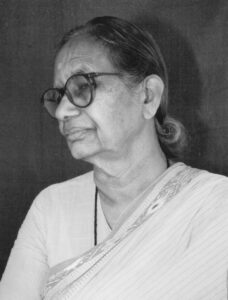
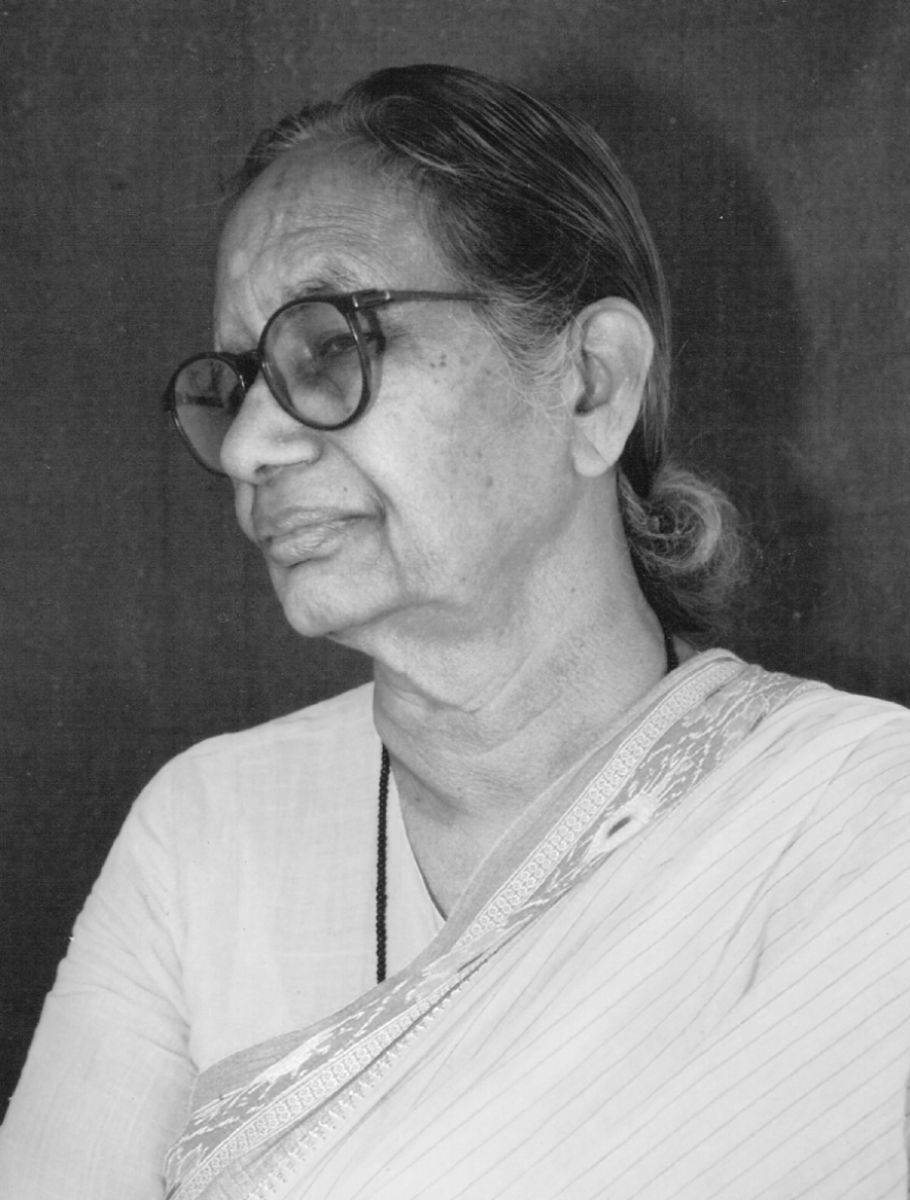
Kamla Desikan

Kamala Desikan

Secretary, Kasturba Health Society · Nurse · Institution Builder

b. 1926, Nalluru, Guntur district, Andhra Pradesh   ·   d. 15 October 2004, Sevagram

Tenure: 1988 – 2003

She spent the morning founding a free school for village children. By evening, she passed away. It was exactly the kind of ending she would have chosen.

Secretary, Kasturba Health Society · Nurse · Sarvodaya Worker · Builder of Schools, Canteens, and Shelters across Five Decades

In the winter of 1938, a young woman stepped off a train at Sevagram carrying a stethoscope, a blood pressure cuff, and a single medicine. She was Sushila Nayar. Twenty-six years later, a young woman from Nalluru in Andhra Pradesh arrived at the same ashram carrying something harder to name — a disposition, perhaps, or a vocation: find the need, and fill it.

She was twenty years old. She was Kamala.

On October 15, 2004, she spent the morning establishing a free tuition centre for village children who could not afford private coaching. She named it Soundari Smriti Shikshan Kendra, in memory of a beloved sister-in-law. By evening, she was dead.

She had passed, as those who knew her observed, exactly as she would have wanted — in the middle of doing something for someone else, without fuss, without ceremony, without a moment wasted on herself.


Nalluru to Sevagram

Kamala was born in 1926 in Nalluru, a village in the Guntur district of Andhra Pradesh, the only child of her parents. Her mother died of tuberculosis within months of her birth. Her father, Buccahyya Garu, an affluent landlord with a keen interest in the freedom movement, remarried. Kamala was raised by her paternal grandmother in a household saturated with admiration for Gandhi — khadi clothing, Sarvodaya philosophy, long discussions about the leaders of the struggle.

At twenty, she acted on it. She packed what she had and traveled to Sevagram Ashram.

At the ashram, she came under the care of Prabhakarji, the hospital manager and keeper of the ashram’s Gandhian flame. He guided her toward nursing training so she could contribute to Kasturba Hospital. Her first encounter with Dr. Sushila Nayar was memorable in an unexpected way: Dr. Nayar operated on her for a tonsillectomy, making Kamala simultaneously a caregiver and the hospital’s first surgical patient. Gandhi visited her after the surgery. She remembered it for the rest of her life — not the pain, but his presence beside the bed.

Her friendship with Manimala Chaudhary began around that time and would last a lifetime.


Goranda, Sixteen Kilometres into the Forest

After helping Dr. Sushila Nayar with refugee rehabilitation following Partition, Kamala felt the pull of something more remote and difficult. Vinoba Bhave’s Bhoodan Yatra had collected donated land from landowners across India and redistributed it among the landless poor. Many of these villages sat in arid, forested, tribal areas that no government official visited voluntarily. The Sarvodaya movement needed people willing to go.

Kamala volunteered for Goranda, a tribal village in the Koraput district of Orissa. To reach it, one took a train to Visakhapatnam, a bus to Parvathipuram, another bus that ran once a week to a roadside halt called Gotla-Bhadra, and then walked sixteen kilometres through hilly, densely forested terrain populated with wild animals. She did this, and then stayed for nearly five years.

The team lived in huts. Food was rice, dal, and brinjal — the only vegetable available. Malaria swept through them all. Kamala was the only person with any healthcare training. She administered intramuscular quinine injections to her colleagues and to herself, nursed everyone through fever and weakness, and kept going. It was, she said, deeply fulfilling work. She had found her calling in the most inconvenient place imaginable, which was exactly where she expected to find it.


A Wedding for Thirteen Rupees

In the Sevagram ashram years, Kamala had met Dr. K.V. Desikan, a leprologist working with the Gandhi Memorial Leprosy Foundation. On July 29, 1957, their wedding was solemnized by Annasaheb Sahasrabuddhe in Koraput, with Sarvodaya workers in attendance. The total expense was thirteen rupees — the mandatory fee for the marriage registrar. They spent their honeymoon, in effect, working.

Desikan was posted to Chilakalapalle in Srikakulam district, where leprosy prevalence was high. Kamala settled alongside him and immediately looked for what needed doing. She found the harijan colony.

Harijans in Chilakalapalle were treated as untouchables — excluded from education, from skill development, from the ordinary dignities of community life. Kamala contacted the Khadi and Village Industries Commission and arranged for fifteen Ambar Charkhas to be set up in the verandah of the local school. Harijan women came. Upper-caste women came too. The two groups sat together and spun. It was, in that place and time, unprecedented.

She taught girls embroidery, drawing, painting, and Hindi. After dinner, truant boys came to their home for help with homework, sometimes sleeping over and returning in the morning. Years later, she and Desikan encountered some of these boys, now established in their professions. The reunion was joyful.


Israel, Agra, and the Garage School

In 1960, Jayaprakash Narayan selected Kamala — in recognition of her work in Goranda — to spend six months in Israel studying the kibbutz model. Ben Gurion addressed her group; she sketched him as he spoke. He autographed the sketch. Golda Meir met with the group and talked with her warmly. A photograph captured the two women in conversation.

When Desikan was appointed Director of the Central JALMA Institute for Leprosy in Agra in 1976, Kamala noticed that children of the institute’s Class IV employees were not going to school. She began teaching them alphabets in the verandah of their home. More children came. She moved to the garage. More came still. She roped in the wives and daughters of JALMA staff to teach. Village children arrived. The garage overflowed.

ICMR permitted use of land on the JALMA premises for a permanent school. Kamala raised the construction funds herself — including from the Reverend Tokiwa, high priest of the Tsubosaka Dera temple in Nara, Japan. The school, Lopamudra Vidya Mandir, grew from primary to secondary to high school, was recognised by the Government of Uttar Pradesh, and continues to educate children who would otherwise have had none.

Simultaneously, she noticed leprosy patients arriving at JALMA on weekends unable to find lodgings — no local establishment would accommodate them. They slept under trees. She located a ramshackle eighteenth-century municipal building nearby, met the Municipal Commissioner — who happened to be the husband of Sheila Dikshit, the future Chief Minister of Delhi — and arranged to transform it into the Kushth Sewa Sadan. She formed a committee, found support from LEPRA and Reverend Tokiwa, procured a cow whose milk generated a small income, and encouraged patients to weave carpets. Some patients, abandoned by their families, asked her to perform their funeral rites when they died. She agreed, and went with their bodies to the cremation ground.

They called her Mataji in Agra. Mother. It was accurate.


Sevagram, at Last

When Desikan retired from JALMA, they returned to Sevagram. Manimala Chaudhary, whose health was failing, passed the secretaryship of the Kasturba Health Society to Kamala — her friend from the ashram decades. Dr. Sushila Nayar made the appointment.

As Secretary, Kamala administered both the hospital and MGIMS with characteristic directness. When quasi-criminal elements arrived on KHS land with banners and political flags intending to claim it, her male colleagues worried about violence. Kamala walked to the site and stood her ground. The group packed up and left.

She developed agriculture on KHS premises, established a dairy farm, planted teak groves that added substantially to the institution’s assets. She set up a crèche for the children of female staff. She noticed that MGIMS students had no reliable source of food between meals. She began making hot vadas at home and selling them from a table in a hospital corridor — no profit, no loss. They sold out the moment they appeared.

Dr. Sushila Nayar allotted space under a staircase. Kamala hired disadvantaged women to cook. The enterprise grew into the Udyami Mahila Mandal — a canteen, then a bakery, then a proper hall, employing many destitute women and feeding the endless stream of students, staff, and patients’ relatives who passed through MGIMS each day. It operates still.

She was diagnosed with an acoustic neuroma and operated at AIIMS. The surgery left her with facial palsy. People she had helped in Agra volunteered to donate blood. She trained a domestic help to massage her face daily for physiotherapy, and went straight back to work.


October 15, 2004

She resigned as Secretary of the Kasturba Health Society on September 17, 2003. On the morning of October 15, 2004, she established the Soundari Smriti Shikshan Kendra — free tuition for village children who could not afford it, named in memory of her sister-in-law. She died that evening.

Her daughter Prabha Desikan — named for Prabhakarji, the man who had first welcomed Kamala to Sevagram half a century earlier — and Prabha’s husband Skand Trivedi, both MGIMS alumni, survive her.

She had arrived in Sevagram as a young woman drawn by Gandhi’s vision and spent the next fifty years building schools, clinics, canteens, hostels, gardens, and cooperatives in places as far apart as a tribal forest in Orissa, an Israeli kibbutz, a leprosy institute in Agra, and a medical college in Wardha. She accumulated no property and no wealth. She accumulated the quiet authority of someone whose actions had always been larger than her words.

Those who knew her remember a woman without ego and without hesitation — who moved from one need to the next with an artist’s eye, a nurse’s hands, and a Gandhian’s absolute conviction that the work was never finished.

She made sure of that herself, right to the end.

Kamala Desikan

Secretary, Kasturba Health Society · Nurse · Sarvodaya Worker · Builder of Schools, Canteens, and Shelters across Five Decades

In the winter of 1938, a young woman stepped off a train at Sevagram carrying a stethoscope, a blood pressure cuff, and a single medicine. She was Sushila Nayar. Twenty-six years later, a young woman from Nalluru in Andhra Pradesh arrived at the same ashram carrying something harder to name — a disposition, perhaps, or a vocation: find the need, and fill it.

She was twenty years old. She was Kamala.

On October 15, 2004, she spent the morning establishing a free tuition centre for village children who could not afford private coaching. She named it Soundari Smriti Shikshan Kendra, in memory of a beloved sister-in-law. By evening, she was dead.

She had passed, as those who knew her observed, exactly as she would have wanted — in the middle of doing something for someone else, without fuss, without ceremony, without a moment wasted on herself.


Nalluru to Sevagram

Kamala was born in 1926 in Nalluru, a village in the Guntur district of Andhra Pradesh, the only child of her parents. Her mother died of tuberculosis within months of her birth. Her father, Buccahyya Garu, an affluent landlord with a keen interest in the freedom movement, remarried. Kamala was raised by her paternal grandmother in a household saturated with admiration for Gandhi — khadi clothing, Sarvodaya philosophy, long discussions about the leaders of the struggle.

At twenty, she acted on it. She packed what she had and traveled to Sevagram Ashram.

At the ashram, she came under the care of Prabhakarji, the hospital manager and keeper of the ashram’s Gandhian flame. He guided her toward nursing training so she could contribute to Kasturba Hospital. Her first encounter with Dr. Sushila Nayar was memorable in an unexpected way: Dr. Nayar operated on her for a tonsillectomy, making Kamala simultaneously a caregiver and the hospital’s first surgical patient. Gandhi visited her after the surgery. She remembered it for the rest of her life — not the pain, but his presence beside the bed.

Her friendship with Manimala Chaudhary began around that time and would last a lifetime.


Goranda, Sixteen Kilometres into the Forest

After helping Dr. Sushila Nayar with refugee rehabilitation following Partition, Kamala felt the pull of something more remote and difficult. Vinoba Bhave’s Bhoodan Yatra had collected donated land from landowners across India and redistributed it among the landless poor. Many of these villages sat in arid, forested, tribal areas that no government official visited voluntarily. The Sarvodaya movement needed people willing to go.

Kamala volunteered for Goranda, a tribal village in the Koraput district of Orissa. To reach it, one took a train to Visakhapatnam, a bus to Parvathipuram, another bus that ran once a week to a roadside halt called Gotla-Bhadra, and then walked sixteen kilometres through hilly, densely forested terrain populated with wild animals. She did this, and then stayed for nearly five years.

The team lived in huts. Food was rice, dal, and brinjal — the only vegetable available. Malaria swept through them all. Kamala was the only person with any healthcare training. She administered intramuscular quinine injections to her colleagues and to herself, nursed everyone through fever and weakness, and kept going. It was, she said, deeply fulfilling work. She had found her calling in the most inconvenient place imaginable, which was exactly where she expected to find it.


A Wedding for Thirteen Rupees

In the Sevagram ashram years, Kamala had met Dr. K.V. Desikan, a leprologist working with the Gandhi Memorial Leprosy Foundation. On July 29, 1957, their wedding was solemnized by Annasaheb Sahasrabuddhe in Koraput, with Sarvodaya workers in attendance. The total expense was thirteen rupees — the mandatory fee for the marriage registrar. They spent their honeymoon, in effect, working.

Desikan was posted to Chilakalapalle in Srikakulam district, where leprosy prevalence was high. Kamala settled alongside him and immediately looked for what needed doing. She found the harijan colony.

Harijans in Chilakalapalle were treated as untouchables — excluded from education, from skill development, from the ordinary dignities of community life. Kamala contacted the Khadi and Village Industries Commission and arranged for fifteen Ambar Charkhas to be set up in the verandah of the local school. Harijan women came. Upper-caste women came too. The two groups sat together and spun. It was, in that place and time, unprecedented.

She taught girls embroidery, drawing, painting, and Hindi. After dinner, truant boys came to their home for help with homework, sometimes sleeping over and returning in the morning. Years later, she and Desikan encountered some of these boys, now established in their professions. The reunion was joyful.


Israel, Agra, and the Garage School

In 1960, Jayaprakash Narayan selected Kamala — in recognition of her work in Goranda — to spend six months in Israel studying the kibbutz model. Ben Gurion addressed her group; she sketched him as he spoke. He autographed the sketch. Golda Meir met with the group and talked with her warmly. A photograph captured the two women in conversation.

When Desikan was appointed Director of the Central JALMA Institute for Leprosy in Agra in 1976, Kamala noticed that children of the institute’s Class IV employees were not going to school. She began teaching them alphabets in the verandah of their home. More children came. She moved to the garage. More came still. She roped in the wives and daughters of JALMA staff to teach. Village children arrived. The garage overflowed.

ICMR permitted use of land on the JALMA premises for a permanent school. Kamala raised the construction funds herself — including from the Reverend Tokiwa, high priest of the Tsubosaka Dera temple in Nara, Japan. The school, Lopamudra Vidya Mandir, grew from primary to secondary to high school, was recognised by the Government of Uttar Pradesh, and continues to educate children who would otherwise have had none.

Simultaneously, she noticed leprosy patients arriving at JALMA on weekends unable to find lodgings — no local establishment would accommodate them. They slept under trees. She located a ramshackle eighteenth-century municipal building nearby, met the Municipal Commissioner — who happened to be the husband of Sheila Dikshit, the future Chief Minister of Delhi — and arranged to transform it into the Kushth Sewa Sadan. She formed a committee, found support from LEPRA and Reverend Tokiwa, procured a cow whose milk generated a small income, and encouraged patients to weave carpets. Some patients, abandoned by their families, asked her to perform their funeral rites when they died. She agreed, and went with their bodies to the cremation ground.

They called her Mataji in Agra. Mother. It was accurate.


Sevagram, at Last

When Desikan retired from JALMA, they returned to Sevagram. Manimala Chaudhary, whose health was failing, passed the secretaryship of the Kasturba Health Society to Kamala — her friend from the ashram decades. Dr. Sushila Nayar made the appointment.

As Secretary, Kamala administered both the hospital and MGIMS with characteristic directness. When quasi-criminal elements arrived on KHS land with banners and political flags intending to claim it, her male colleagues worried about violence. Kamala walked to the site and stood her ground. The group packed up and left.

She developed agriculture on KHS premises, established a dairy farm, planted teak groves that added substantially to the institution’s assets. She set up a crèche for the children of female staff. She noticed that MGIMS students had no reliable source of food between meals. She began making hot vadas at home and selling them from a table in a hospital corridor — no profit, no loss. They sold out the moment they appeared.

Dr. Sushila Nayar allotted space under a staircase. Kamala hired disadvantaged women to cook. The enterprise grew into the Udyami Mahila Mandal — a canteen, then a bakery, then a proper hall, employing many destitute women and feeding the endless stream of students, staff, and patients’ relatives who passed through MGIMS each day. It operates still.

She was diagnosed with an acoustic neuroma and operated at AIIMS. The surgery left her with facial palsy. People she had helped in Agra volunteered to donate blood. She trained a domestic help to massage her face daily for physiotherapy, and went straight back to work.


October 15, 2004

She resigned as Secretary of the Kasturba Health Society on September 17, 2003. On the morning of October 15, 2004, she established the Soundari Smriti Shikshan Kendra — free tuition for village children who could not afford it, named in memory of her sister-in-law. She died that evening.

Her daughter Prabha Desikan — named for Prabhakarji, the man who had first welcomed Kamala to Sevagram half a century earlier — and Prabha’s husband Skand Trivedi, both MGIMS alumni, survive her.

She had arrived in Sevagram as a young woman drawn by Gandhi’s vision and spent the next fifty years building schools, clinics, canteens, hostels, gardens, and cooperatives in places as far apart as a tribal forest in Orissa, an Israeli kibbutz, a leprosy institute in Agra, and a medical college in Wardha. She accumulated no property and no wealth. She accumulated the quiet authority of someone whose actions had always been larger than her words.

Those who knew her remember a woman without ego and without hesitation — who moved from one need to the next with an artist’s eye, a nurse’s hands, and a Gandhian’s absolute conviction that the work was never finished.

She made sure of that herself, right to the end.