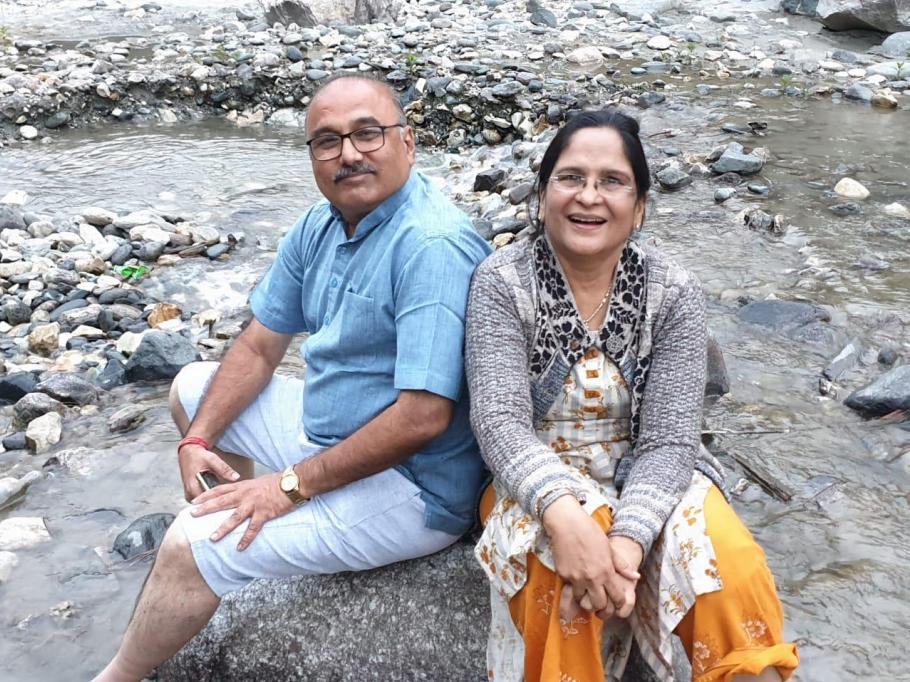
A Gathering of Old Friends
We grew up on the flat, sun-baked plains of Wardha. In a small town, you know your neighbours well. You know how they take their tea, what makes them laugh, the pace of their walk. So when Suhas and Shubhada Jajoo proposed a trip to the Char Dham — the four Himalayan shrines of Gangotri, Yamunotri, Kedarnath and Badrinath — in the summer of 2019, it did not feel like a religious duty. It felt like an old conversation, picked up again.
Five families signed up: Suhas and Shubhada; my wife Bhavana and I; Shrikant Gandhi and his wife Shobha; Sunil Tapdiya and his wife Sunita; and Parmanandji Tapdiya with his wife Shobha. We were old friends, and Suhas and I went back further than the rest — we had studied together at Government Medical College, Nagpur, in the 1970s. He trained in surgery, I in internal medicine. We had learned how to read the human body side by side, as young men.
There was a sixth member of our party, though he came without his family. Chandu Fattepuria had been at school with me at Cradock, long before any of us had thought about medicine. He went on to become an engineer, then left engineering altogether and settled in Indore, where he built a name for himself in the Jain community — for his grasp of Jain customs and rituals, his bhajans, and his gift for leading people. He joined us at Delhi. His wife, Usha, stayed behind; she was not keeping well.
My own journey started with a detour. I had been in Chandigarh, at the Postgraduate Institute of Medical Education and Research, examining MD Medicine candidates. Rather than fly home to Wardha and then travel north again, I arranged to meet the others at Delhi airport.
I remember standing in the terminal, scanning the crowd, until I spotted them coming out after their flight from Nagpur. There is something comforting about finding familiar faces in a busy airport. Ten of us were about to travel through the high ghats, and the original plan — one cramped twelve-seater bus — had already been dropped. Vaibhav, Tapdiyaji’s son who lives in Delhi, had insisted on comfort over economy for the mountain roads. He arranged three Toyota Innovas instead.
Shobha Gandhi rode in our Innova all week — she, Shrikant, Bhavana and I made up that car. Shrikant always took the front seat. Bhavana and I had the middle, and we would offer Shobha the middle seat too, since it was roomier. She always laughed and refused, hopping into the back with the ease of a child, and stayed there the whole trip. She turned out to be the group’s chatterbox, keeping us entertained with stories, jokes and anecdotes that made the long hours on the road disappear. The Tapdiya family filled the second. In the third sat Suhas, Shubhada, and Chandu Fattepuria — our old school friend from Cradock High, who had swapped an engineering degree for a life in business in Indore.
A travel agent, recommended by Dr Yogesh Saboo, a well-known surgeon from Nagpur, had arranged the logistics. Yogesh was a close friend of Suhas’s. His sudden death from a heart attack, at home in May 2026, would later leave a deep ache. But in May 2019, none of us knew that. The road lay open, and we were simply old friends escaping the heat of the plains.
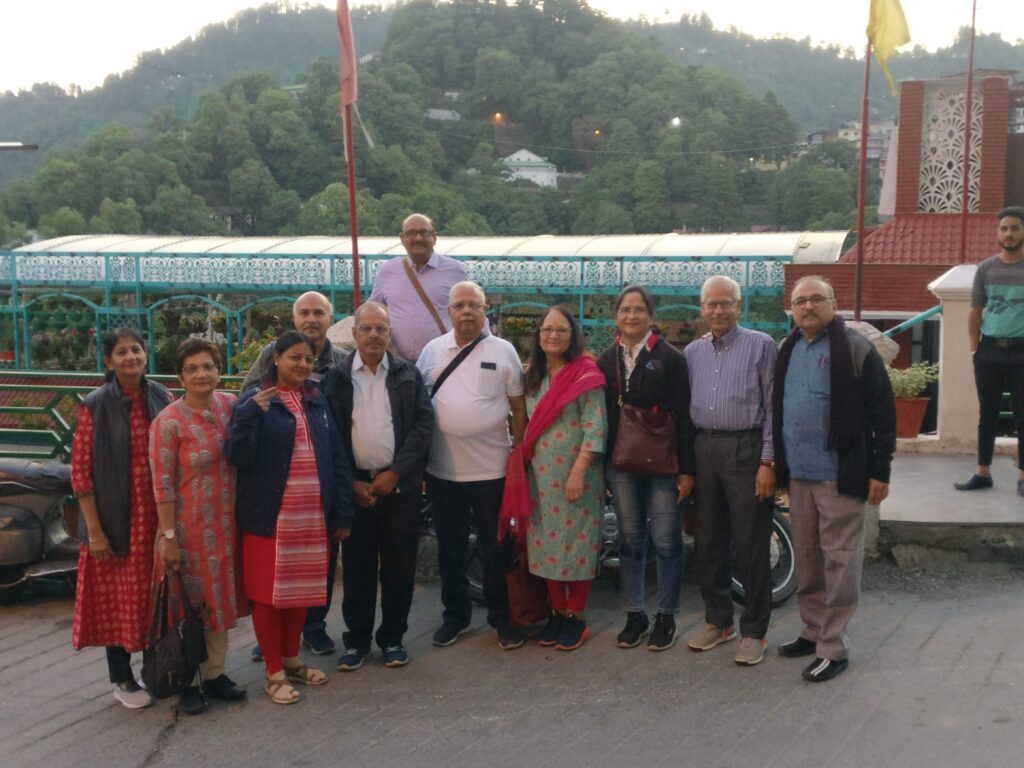
We left Delhi early and reached Rishikesh by two in the afternoon, ready to head north. There we hit a snag. Our drivers discovered that the Char Dham route needed a special permit, and none of the cars had one. The permit office was eighty kilometres back the way we had come. There was nothing to do but turn around. By the time we had covered the hundred and sixty kilometres, back and forth, it was dark. We had to make a two-hour detour and spend the night in a small guest house whose name I no longer remember, before finally picking up the route again the next morning. The journey had begun with a small drama of its own.
Faith, Logic, and a Small White Pill
I am a doctor. My view of the world is shaped by logic, physiology, and the plain facts of the human body. I have never been a deeply religious man. My parents and sisters liked to tell the story of how, before I turned seven, I wore a dhoti and a tilak, read the Ramayana and the Mahabharata, and performed daily poojas.
Adulthood changed that. Years in the lab and on the ward reshape how you see the world. I still believe in something larger than myself, and I still bow before the divine when life asks for an anchor. But I no longer follow the daily rituals of a Hindu household. When I visit the Laxminarayan temple in Wardha, I go for peace of mind, not obligation. This yatra was not, for me, a search for merit or salvation. It was a holiday — a chance to breathe mountain air with people who knew me well.
My worries were more physical than spiritual. I suffer badly from motion sickness, and the thought of eight hours a day on narrow mountain roads filled me with quiet dread.
Then Bhavana handed me a small white pill. She had packed everything from woollen caps to what amounted to a travelling pharmacy. The pill was Cinnarizine, and it cost barely a rupee.
An hour after I took it, the world stopped spinning. As the Innova climbed higher, taking sharp bends where the road simply ended in air, my stomach stayed calm. Bhavana, too, felt none of her usual travel sickness. That one tablet, taken each day, turned what could have been misery into something close to joy. I remember looking out at the green valleys below, feeling nothing but calm, and silently thanking the chemist who had first made that molecule.
The Mountain Tests the Body
As the roads climbed, age and illness made their presence felt. At my stage of life, with my own history of heart trouble, the thin mountain air pushed hard against me. A short climb left me gasping for breath that was not there. We had no choice but to rely on local coolies and Sherpas — many of them young Nepali men who came to the shrines each season to earn a living — and their sturdy horses and donkeys.
There is something uncomfortable about being carried by another human being. I sat on the horse, felt the coolie’s steady footsteps beneath me, and felt a kind of guilt settle in my chest. Here was a young man, half my age, sweat soaking his shirt, carrying my weight up a mountain for a few hundred rupees. It felt unequal — almost feudal — set against the idea of a spiritual journey. I kept my eyes down and said little, caught between medical necessity and a quiet unease.
Shrikant Gandhi, meanwhile, walked the same steep tracks with no stick and no visible strain. He was always a few steps ahead of the rest of us, breathing easily, looking as if the climb cost him nothing.
Shrikant had his own ritual. Whenever he spotted a temple by the roadside, he would ask the driver to stop, step out, and — as if he had been waiting for exactly this moment — produce a small steel thali from his bag. In it he kept everything he needed: rice, flowers, sandalwood paste, red kumkum powder, a few incense sticks, and a small diya. He would perform his pooja right there, unhurried, whatever the hour or the weather. Watching him, I felt the quiet force of real devotion.
Anyone watching him would have guessed his heart was in perfect health. Two years later, doctors found severe blockages in three of his coronary arteries and rushed him into angioplasty. His easy climb up those hills is a lesson doctors should not forget: will, adrenaline and devotion can carry a man further than his arteries would suggest. The body does not always tell the truth in advance.
Two Shrines, Two Faces
Our first two stops could not have been more different. Gangotri matched every idea I had of a Himalayan shrine. Among white granite rock and the roaring, icy channels of the young Ganges, we stood at the VIP Ghat and performed the traditional rituals, our hands numb in the freezing water where King Bhagirath is said to have meditated. It felt clean, timeless, and still.
Yamunotri broke that peace. As we neared the shrine, the crowd thickened into chaos. Pilgrims bathed in the hot springs, cooked over open fires, and left rubbish behind them. The air was thick with smoke and the smell of too many people in too small a space. A hundred metres from the inner shrine, I stopped. I could not go further. I turned back, choosing to keep my own idea of the sacred rather than push through the mess in front of me.
The real heart of the trip, though, did not happen inside a temple. It happened because of a snowstorm.
Five days in, as we prepared to head for Kedarnath, a blizzard swept the mountains. Roads vanished under snowdrifts. The helicopters we had tried to book stayed grounded. We were stuck at the base camp in Sitapur, with no way forward and no way back.
We had to drop Kedarnath from the itinerary and plan a straight run to Badrinath once the weather cleared. But those two unplanned days at Sitapur turned out to be the best part of the whole trip.
Trapped together in the cold, the usual roles and worries of daily life fell away. The women gathered in the small kitchen, laughing over pots of upma and poha, cooking meals that tasted of home. We played cards, told old stories from our medical college days, and laughed the way we had not laughed in years. Even Parmanandji Tapdiya — seventy-four years old, famous back home for his strict, no-nonsense discipline — softened. The cold seemed to loosen something in him. He joined the jokes and the laughter, a side of him none of us had seen before.
Sunil and Sunita, it turned out, make this pilgrimage almost every year. The journey is tiring, but their devotion and their will carry them through. Sunita was born Maharashtrian, but her speech, her customs, the rituals she follows — all of it is Marwadi. Meet her and you would never guess she came from a Maharashtrian family and not a Marwari one. Their easy, constant conversation kept the whole group feeling like family.
Shubhada was thrilled through it all. For years she had dreamed of a holiday that combined faith and travel in equal measure, and this trip gave her both. She and Suhas are both busy doctors, and finding time for a trip like this had never been easy. But over the years they had learned the art of carving out time from a demanding practice, and they enjoyed every minute of the journey.
Those two days made up for every bumpy mile and every hour of travel fatigue. The trip taught me something simple: it is rarely the destination that matters. It is who sits beside you in the car.
Badrinath, and the Road Home
When the storm passed, we reached Badrinath, set between the peaks of Nar and Narayan. The cold there cut through our woollens. Neelkanth Peak rose behind the temple, a wall of white and grey ice against the sky.
Despite the cold, the place felt clean and calm. We visited Narad Kund, watched steam rise off the hot springs at Tapt Kund, and walked to Mana village — the last Indian settlement before Tibet — where the Saraswati river roars beneath the stone slab of Bhim Pul. Standing there, looking at the mountains, I understood what pilgrims come for. Not a transaction with God, but a reminder of how small we are, and how lucky we were to be alive, well, and together.
For Bhavana, the trip was a welcome break. We had done the Har Ki Dun trek together once before, with Suhas, Shubhada, and our children — but that was long ago, in 1999. She has always loved mountains and snow. Like me, she is not a religious person, but she enjoyed every bit of it: the fun-filled days, the snow-filled nights, the roads, the mountains, everything in between.
From Badrinath, we wound down through the Panch Prayag — Vishnuprayag, Nandprayag, Karnaprayag — where rivers meet the Alaknanda in bursts of white and turquoise. We passed Rishikesh, watched the sadhus near Ram Jhula, and headed back to the heat of Delhi and, finally, home to Wardha.
On the way to the airport, we stopped at Akshardham temple for a few hours before our flight. After Yamunotri, the contrast was sharp — clean, orderly, calm. It felt like a different world from the crowds we had seen in the mountains.
Through it all, Chandu kept us laughing with his poems. He writes and sings well, in clear, simple Hindi, and I found myself impressed by his verses. Years ago, in medical college, I too used to write rhyming poems. Watching Chandu now, I felt the old habit stir again, and a few days after we returned — the memory of the Innova’s motion still in my body, the mountain cold still in my mind — I sat down and wrote.
I shared the poem with our Yaatra WhatsApp group:
वो बातें, वो मौसम, नदी का किनारा
वो बर्फीली हवा
वो घाटियां, वो पर्वत का अद्भुत नजारा
वो चंचल इनोवा
वो यमुनोत्री की चढ़ाइयां, वो तंग गलियां
वो घोड़े, वो पालकियां और वो डंडियां
हमको तो राहें ही चलाती थीं, हम खुद बनाते रस्ते
फूलती सांसों के साथ, गिरते-संभलते मस्ती में चलते
वो गर्मी की सुलगती दुपहरी में बर्फीली छांव
हर पल संभालती हमारे डगमगाते पांव
जहां भी जाते, देखतीं हमारी ठिठुरती नजरें
पहाड़ों ने ओढ़ी कैसी ठंडी सफेद चादरें
वो नदी के तट पर श्रद्धा के सुमन
वो पिंडों की थाली, वो गंगाजी को समर्पण
वो कैमरे में कैद मनमोहक मुद्राएं
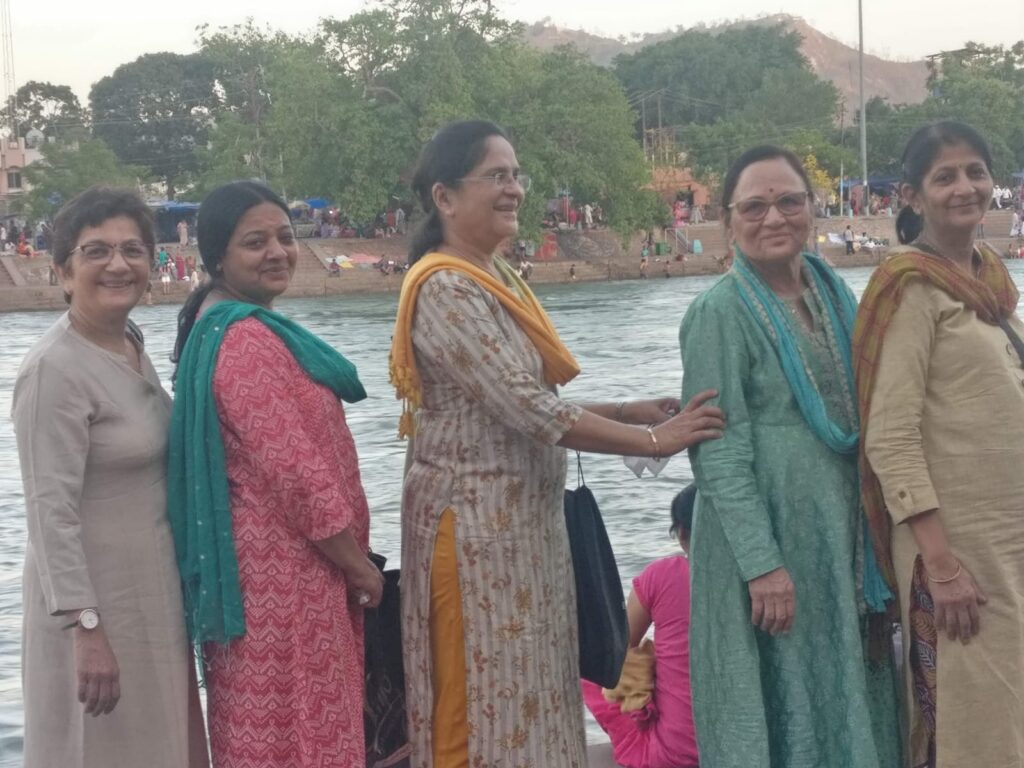
वो अनोखी अदाएं, पुरुषों की समझ में न आएं
सरसराती हवाओं के संग, वो गीतों का गुंजन
भक्ति से भीगता, हमारा मन; नम होते नयन
वो कचौड़ियां, वो उपमा और वो थेपले
खुलकर खाते हम, जीते हर लम्हे
उन तपती किरणों, उस सुलगती धूप से राहत
वो हेलीकॉप्टर के सपने, वो केदारनाथजी की चाहत
हम जो साथ थे, चलने लगे थे रस्ते
मंजिल से बेहतर लगने लगे थे रस्ते
रखें हम संजोकर इन स्मृतियों को, मन के नीले अम्बर में
उड़ना है हम सभी को, केदारनाथजी इस सितम्बर में
We never reached Kedarnath. But looking back from my desk in Sevagram, I think we found what we needed anyway — old friendships, tested and renewed against the Himalayan cold.
Every so often, Shubhada still reminds us that Kedarnath is due. We laugh, and go back, for a moment, to those days.
दिल ढूँढता है, फिर वही, फ़ुर्सत के रात दिन
— मिर्ज़ा ग़ालिब