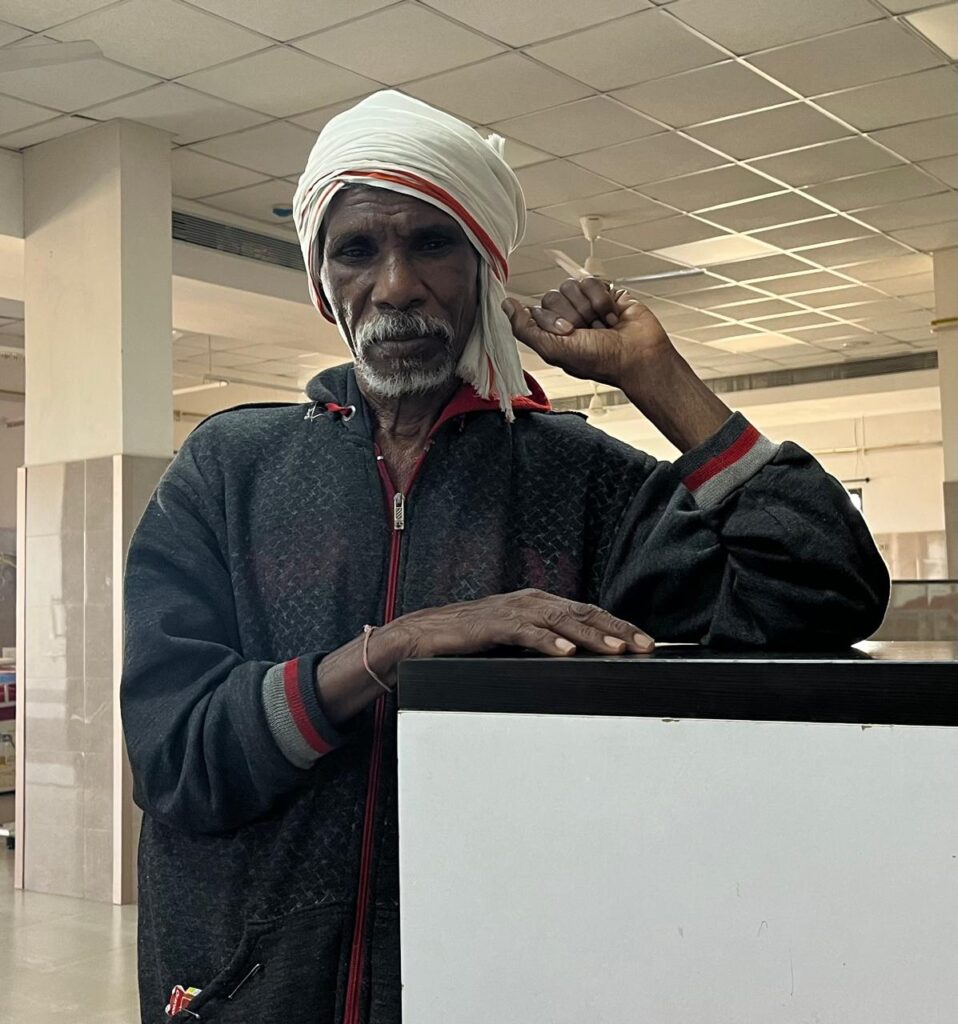
A ward is not a place most people choose to enter. They come because they have run out of other options — because the surgery has been done, the chemotherapy endured, and the body has begun to say, quietly and without negotiation, that it is tired. The palliative care ward of the Department of Medicine at MGIMS Sevagram receives people in this condition every day. They come from small towns and smaller villages. They travel on buses, in auto-rickshaws, on the backs of motorcycles. They arrive with a diagnosis in a brown envelope and a family member who has taken leave from work to be there. Most are poor. Many are frightened. All of them are still, in every way that matters, human beings.
I have been caring for these patients for years, and I have been writing about some of them — their names changed, their dignity preserved — because I believe their stories deserve to be told. Not as case studies. Not as evidence. As lives.
***
India’s Quiet Crisis of Dying
When Dr Sankha Mitra, an oncologist, visited Sevagram some years ago, he said something that has stayed with me. In India, he observed, the poor die in agony in neglect, the middle class die in agony in ignorance, and the rich die in agony on a ventilator. Nobody, he meant, gets a dignified death. Fewer than one percent of those who need palliative care in India can access it. The country ranks among the worst places in the world to die — not because we lack doctors, but because we have never taught them, or ourselves, how to sit with dying.
This is what the palliative care unit at Sevagram tries, imperfectly and daily, to change. The ward has trained nurses. It has resident doctors who have written their MD theses on caregivers. It has a small stock of oral morphine. It has, above all, a conviction that the patient who cannot be cured still deserves to be cared for — that ease and dignity and company are not lesser forms of medicine but its very essence.
***
The Question Nobody Wants to Answer
One evening, a man called me on the phone. He was in his late seventies, a cancer patient I had known for years. We talked about the cricket, his niece’s wedding, the cold weather. Then, out of nowhere, he asked: How much time do I have?
It is the question every doctor fears and every patient deserves an answer to. We were not taught, in medical college, how to answer it. We were not taught to sit with the silence that follows. I gave him a number. He laughed — not from despair, but from relief. He told me he was tired. That he did not want more fighting. That he wanted peace. He knew nothing of living wills or advance directives, but he had arrived, through suffering, at the same wisdom.
The truth, I told him eventually, is that I did not really know. He laughed again. “So you were lying earlier,” he said. “Now you’re being honest.” He was right on both counts.
***
The Middle Path
A twenty-three-year-old man came to us with a brain tumour so large that three neurosurgeons, each experienced and senior, declined to operate. He arrived in the palliative ward barely able to speak, unable to swallow or move his left side. His family cycled through grief the way all families do — denial, anger, bargaining, a slow and painful acceptance. One morning, his father took me aside and asked if he could take the boy to a healer in rural Rajasthan, a man said to cure cancer with sacred ash and a thread on the wrist, on the condition that all modern medicines be stopped.
Years ago, I would have said no. I would have been categorical and, I think, wrong. I told him they could go. Try not to stop the seizure medicines, I said. But follow whatever else the baba advises. The father’s eyes filled with relief. He needed permission to love his son in the only way he had left. Sometimes, the greatest medicine is the understanding we extend — a touch, a word, a bridge between worlds. Doctors are not the keepers of all meaning. We are only one voice in a conversation that families have been having, in their own language, for centuries.
***
A Son Lets Go
A woman came from a village three hours away by bus. She was sixty, frail, and widowed. She had raised her son alone, through years of farming and firewood and labour. The cancer in her breast had spread to her liver, her lungs, her spine. No surgery, no chemotherapy, no radiation could help.
Her son brought her to the palliative ward. He had been sleeping on benches outside wards for days. Here, for the first time, there was a caregiver’s bed beside hers. He lay down and slept. After three days, he came to me and asked if he could take her home. Not because she was better. Because she was dying, and the elders of the family were too old to travel, and they wanted to see her one last time. We waited until she was stable enough for the journey. Then we let her go.
Her illness was not only cancer. It was poverty, exhaustion, fear, and the weight of a system that could ease her pain but could not lift the burden of her circumstances. Palliative care felt, that day, like an imperfect science. But perhaps all we can offer, sometimes, is a fragile and deeply human space where families can say goodbye in their own way.
***
Faith Where Medicine Ends
Pandurang is seventy-three years old, a daily-wage labourer from a village near Hinganghat. He never went beyond primary school. His wife, who weighs twenty-four kilograms, lies in the palliative ward with oesophageal cancer. He has walked the Pandharpur wari thirteen times — hundreds of miles each pilgrimage, always with her beside him. Now he feeds her through a tube, turns her in bed, massages her feet, sits awake through the night.
During rounds one morning, as we began to explain her condition, he interrupted us gently. “This is not in your hands,” he said. “Nor mine. He decides when we come and when we go.” His wife, her voice faint but clear, added: “I am not afraid of dying.” She had a feeding tube. She could not swallow. And she was not afraid.
Pandurang has never read the Bhagavad Gita, but he lives its wisdom. He bowed to no one that morning. But I bowed, quietly, to him.
***
The Fire That Would Not Go Out
She arrived with a colostomy bag at her waist and a full laugh that silenced the monitors. Cancer had taken her cervix and colon and was looking for more. She had been an Anganwadi worker all her life — feeding children, vaccinating them, teaching mothers. She had endured chemotherapy and radiation and the burning of veins and the loss of her old life in the city.
What kept her going, she said, was hope. And food. She described, with the pleasure of a chef and the authority of a woman who has fed many people, the jowar bhakris she would cook on her chullah at home, the gharit mashed with onion and green chillies and mustard oil, the fresh green onions straight from the field. “Just give me strength,” she told us. “Let me shame the cooks in five-star hotels.” We laughed. She was not joking. For her, food was not nostalgia. It was resistance.
***
The Husband Who Became a Nurse
Shankar shut his welding workshop the day Lakshmi’s cancer was confirmed. He spent money he did not have, at hospitals in Nagpur, waiting for a different answer. The answer was always the same. He became her nurse, her shadow, her whole world. He bathed her, dressed her, changed her diapers, cleaned her wounds, fed her through a tube. He never complained. He only asked: what more can we do?
In the palliative ward, away from the ICU’s machines, the morphine eased her pain, the nurses spoke to her gently, and in the quiet hours of an early morning, Lakshmi died with Shankar’s hand in hers. He had not slept for days.
Who looks after the caregiver? Two of my residents have written their MD theses on precisely this — the burden, the invisibility, the cost of devotion. Society calls it duty. We have begun to call it, more honestly, sacrifice.
***
A Daughter Who Never Stopped Showing Up
Neha is in her second year of engineering college. She has been coming to this hospital for four years, accompanying her mother Pramila through twenty-five rounds of radiotherapy, three cycles of brachytherapy, and several lines of chemotherapy. Her brothers are unemployed. Her father, a mason, cannot bear the smell of hospitals. So Neha comes. She has come, she says, hundreds of times.
Pramila now has bone metastases and is on oral morphine. She does not want false hope. She wants her pain managed, her daughter allowed to sleep, her remaining time spent in peace. In the ward, pain and love live side by side — one growing, the other refusing to diminish.
***
When the System Fails First
She was thirty-three, from a village forty-five kilometres from Sevagram, and she put everyone else’s illness before her own for so long that by the time she came back to us, the cancer had taken both lungs, the liver, the spine, the pelvis. For six months between diagnosis and return, she had cooked and cleaned and ferried her father-in-law — who was dying of alcoholic liver disease — back and forth to this same hospital on a scooter, three of them on it together, forty kilometres each way. She thought her own lump would go away. She thought her illness was less serious than theirs. Nobody told her the treatment could be free.
When she finally came back, coughing, unable to breathe, barely able to sit — the surgeon’s file noted one word against her name: defaulter. Nobody had asked why she left. Nobody had followed up. Nobody had told her she mattered.
We washed her, placed her by the window, drained a litre of fluid from her chest, started her on morphine. For the first time in months, she said she felt human. “I am overwhelmed to see such kindness,” she whispered.
We were the ones who felt the weight of that sentence.
***
These stories are not exceptional. They repeat themselves, with different names and different cancers and different families, every week in our ward. What they share is this: behind every dying patient is someone who has been carrying them, often in silence, often at enormous cost to themselves. And behind the silence, almost always, is a love that medicine did not create and cannot cure, but can, when it is paying attention, honour.
That is what this ward tries to do. It does not always succeed. But it keeps trying, one morning round at a time.
All patient names have been changed to protect confidentiality.